

THE PHOTOGRAPH
“Guerrillero Heroico” — Alberto Korda, 1960
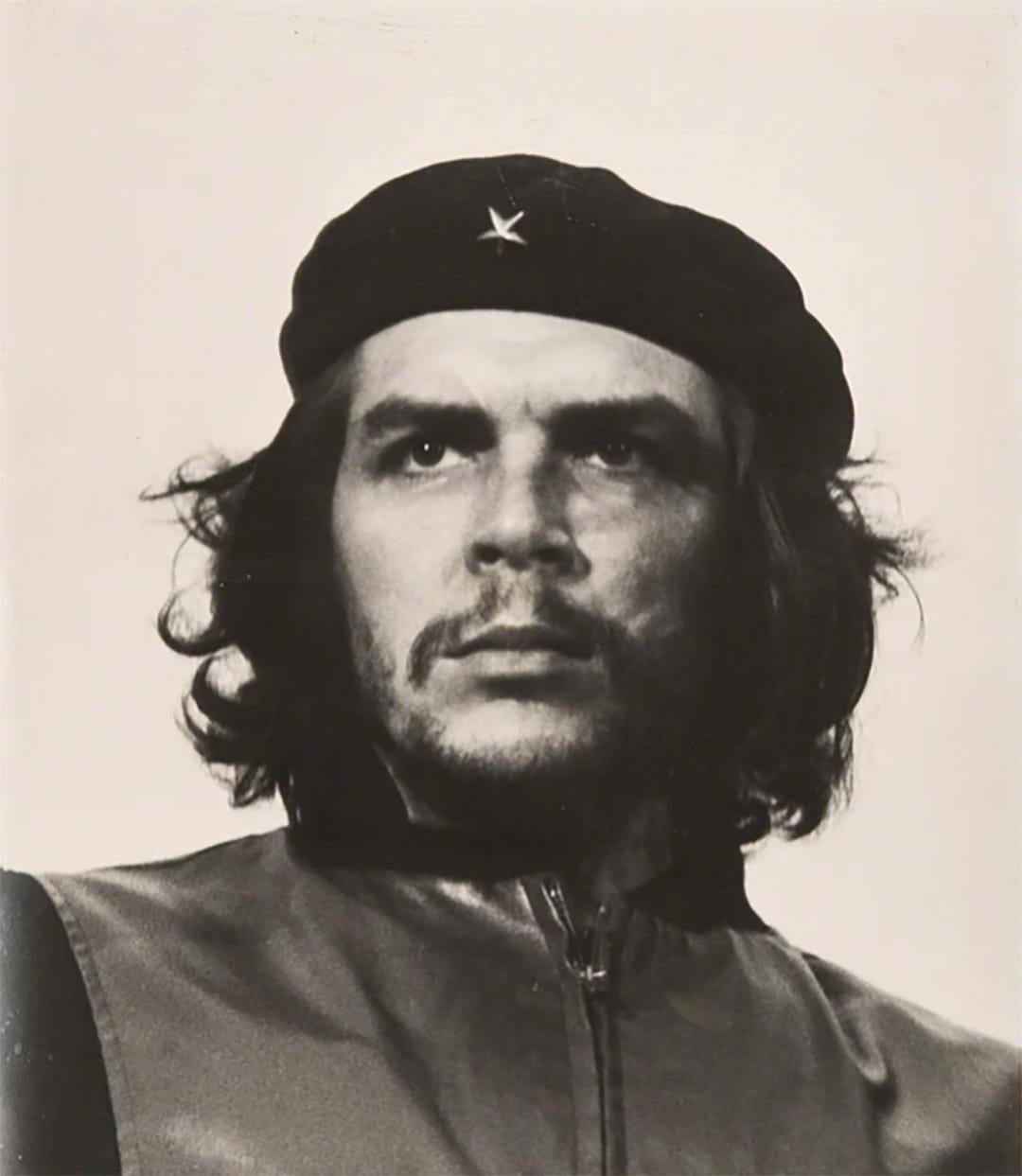
It lasted a few seconds. On March 5, 1960, at a memorial service in Havana for the roughly one hundred people killed when the French freighter La Coubre exploded in the harbor, Alberto Korda — a fashion photographer turned staffer for the newspaper Revolución — was working the crowd below the speakers’ platform when Che Guevara stepped briefly into view at the rail. Korda made two frames with his Leica, one horizontal, one vertical, before Guevara withdrew. His editor passed over the picture; the paper ran Fidel Castro and the visiting Jean-Paul Sartre and Simone de Beauvoir instead. Korda cropped out a stranger’s profile and a palm frond, printed the face — jaw set, eyes fixed somewhere past the horizon — and hung it in his studio, where it stayed, essentially unpublished, for seven years.
What happened next is the strangest distribution story in the history of the medium. In 1967 the Italian publisher Giangiacomo Feltrinelli visited Havana and left with two prints, given free. When Guevara was executed in Bolivia that October, Feltrinelli’s poster went out in the hundreds of thousands; the following year the Irish artist Jim Fitzpatrick reduced the face to high-contrast black on red, and the image detached itself from photography altogether — onto murals, flags, T-shirts, and eventually the very consumer goods Guevara despised. The Maryland Institute College of Art would later call it the most famous photograph in the world; it is routinely described as the most reproduced image in the history of photography.
Korda watched nearly all of it happen without earning a cent, and mostly without objecting — as a supporter of the revolution, he said, he had no quarrel with those who spread Che’s memory. The line he drew was commerce. In 2000, when a Smirnoff vodka campaign used the image, the 71-year-old photographer sued in a London court and won a settlement he donated to Cuban children’s healthcare — establishing, one year before his death, that the world’s most copied photograph did in fact have an author, as Smithsonian Magazine recounts.
WHY IT MATTERS
In a history-minded week, Guerrillero Heroico is the cleanest case study we have of how a photograph escapes its maker: rejected by its own newspaper, released without copyright into a world that copied it billions of times, and reclaimed by its author only at the very end, and only at the point where an icon of revolution was selling vodka. Every argument about virality, authorship, and what an image owes its subject was rehearsed here first – four decades before anyone said “going viral.”
EXHIBITION HIGHLIGHTS
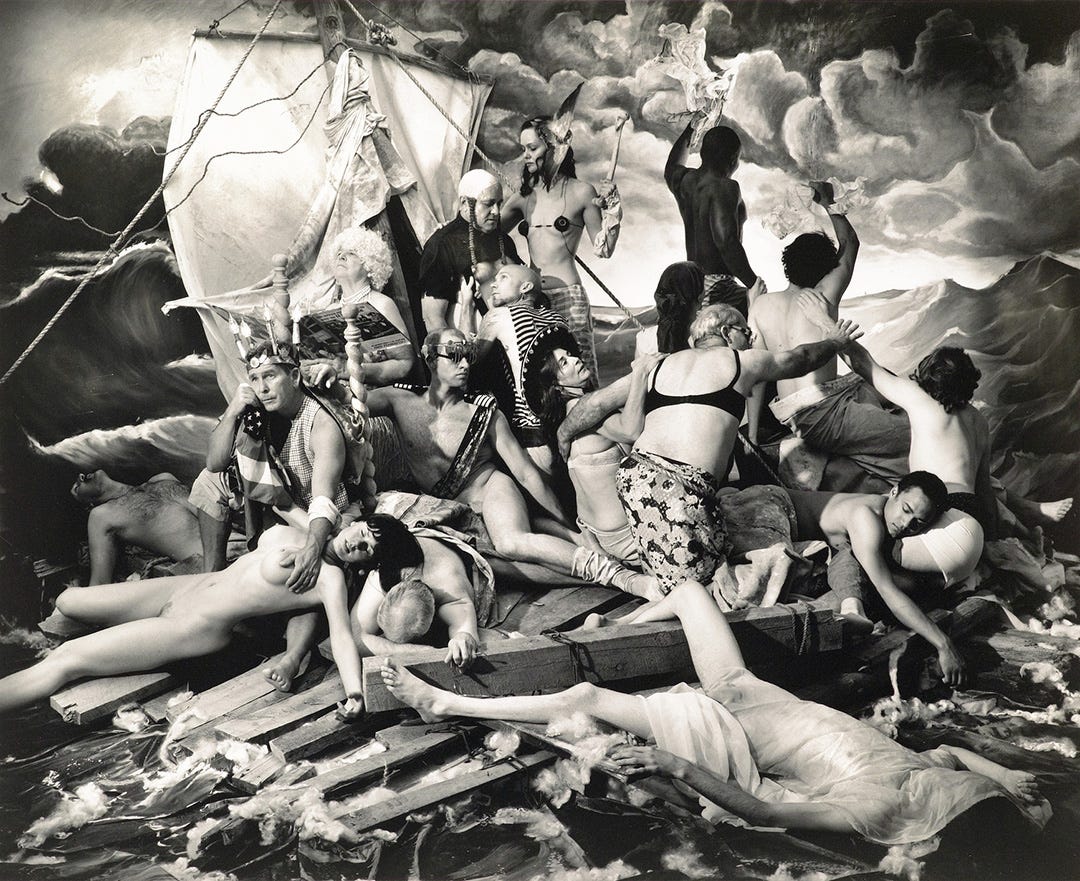
Joel-Peter Witkin: Selected Works 1973–2018
Fahey/Klein Gallery
July 23 – September 26, 2026
Fahey/Klein opens a four-decade survey of American photography’s great transgressor on Thursday, with an artist reception on opening night. Witkin’s meticulously staged tableaux — built from painted backdrops, symbolic props, and bodies the tradition preferred not to see — draw on Goya, Velázquez, and Picasso, then push the prints through scratching, bleaching, and hand-toning until photography verges on painting. Bringing together seminal works and rare prints from 1973 to 2018, it is a timely chance to reckon with one of the medium’s most uncompromising careers.
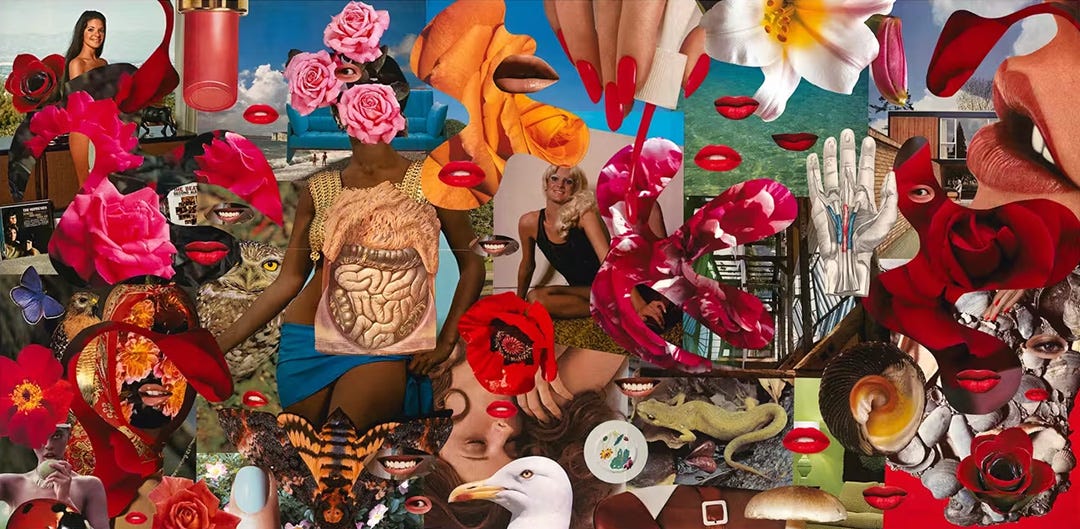
Linder: Danger Came Smiling
Hayward Gallery | Grundy Art Gallery, Blackpool
July 18 – October 3, 2026
The Hayward Gallery’s touring retrospective of Linder — the punk photomontage pioneer who armed British feminism with scissors and glue — arrives at the Grundy in Blackpool for its seaside leg. Across five decades, from the Buzzcocks-era Manchester works that made her name to recent large-scale montages, Linder has spliced the imagery of glamour magazines, pornography, and domestic advertising into razor-edged pictures of how women are looked at. Seeing that body of work in a Victorian seaside town’s public gallery is exactly the kind of collision she has always engineered.
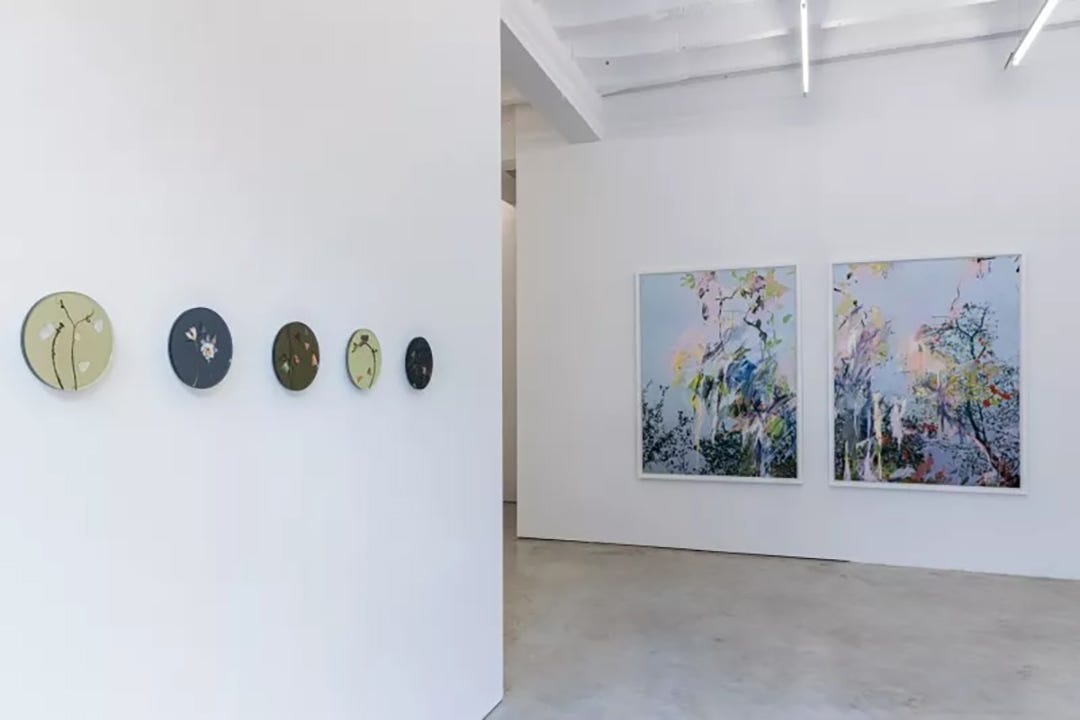
Sandra Kantanen: Bamboo Whispers in Fading Light
Persons Projects
On view through August 29, 2026
The Finnish photographer Sandra Kantanen, one of the leading figures of the Helsinki School, fills Persons Projects’ Berlin space with landscapes that behave like paintings. Trained in part through a long study of Chinese landscape painting, Kantanen photographs mist, water, and vegetation and then works the digital image — blurring, streaking, and layering — until the boundary between photographic record and painted gesture gives way. The new bamboo works are among her most atmospheric: pictures of light failing slowly, held just this side of abstraction.
Florian Luthi: Meteor Ghosts
Centre de la photographie Genève
On view through October 1, 2026
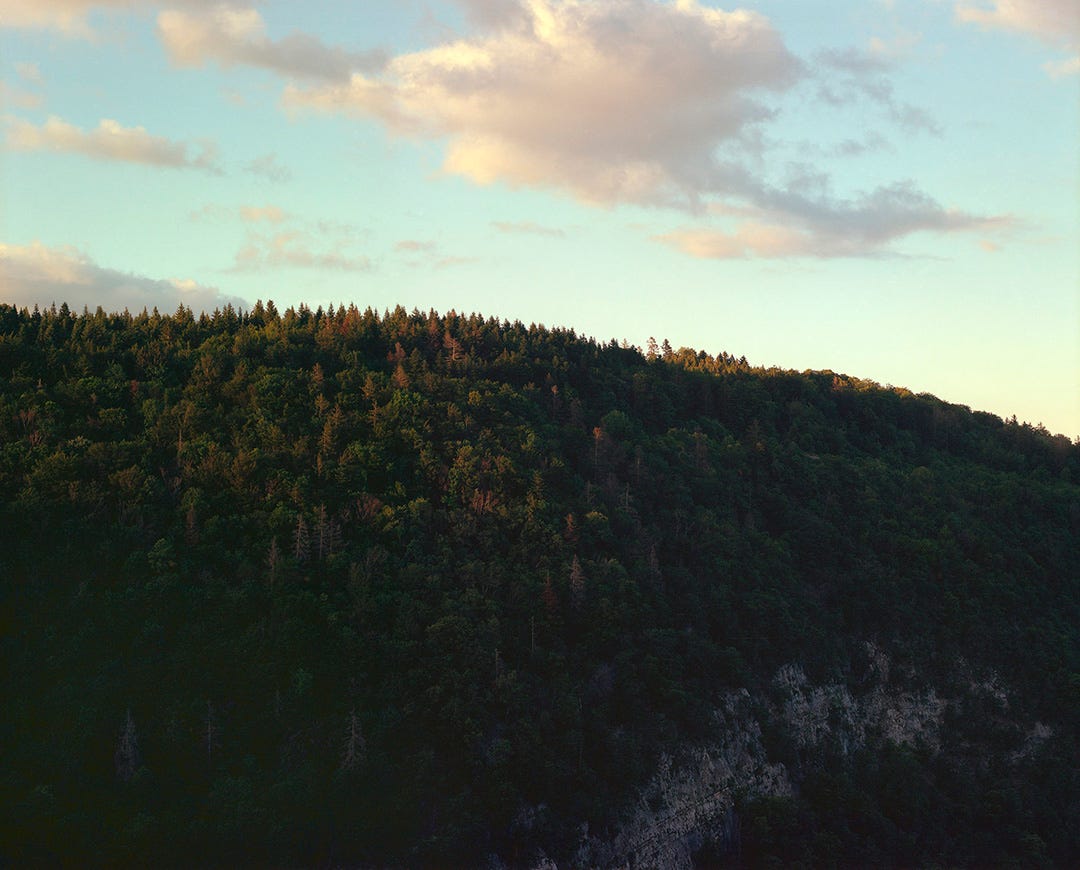
The Geneva artist Florian Luthi returns to the landscapes of his childhood to investigate the wave of UFO sightings that swept France in 1954 — including the story of four children in Prémanon, in the Jura, who reported a luminous object “like a large sugar cube resting on three legs.” Mixing archive material with new photographs of mist-shrouded forests and silent mountain villages, Luthi builds a visual investigation in which memory, myth, and documentary fact refuse to separate. Curated by Aline Bovard Rudaz and Danaé Panchaud, it is a quietly seductive show about why some stories survive their own debunking.
Jon Rafman: Memento Hikikomori
Institute of Modern Art
July 18 – September 27, 2026
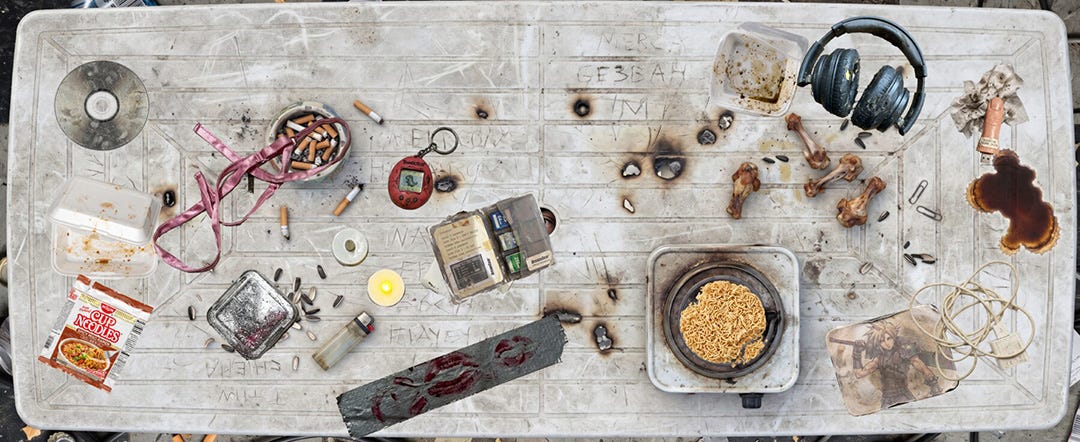
The IMA hosts Jon Rafman’s first institutional exhibition in Australia, and the title compresses his whole project into two words: memento mori, the reminder of death, crossed with hikikomori, Japan’s reclusive digital hermits. Rafman — best known for mining Google Street View and the internet’s forgotten corners — gathers works on the technological mediation of memory, the formation of identity online, and the unconscious of the network. It sits at photography’s outer edge, which is precisely where the questions about what an image now is, are being decided.
WHAT’S ON AROUND THE WORLD
Openings, closings, and the shows worth a trip.
Opening This Week
Just opened
New York
Tops — CLAMP · Opened Jul 9 (Lindsay Perryman’s first US solo; through Aug 28)
Portland, OR
An Honest Day’s Work: Photographs of Labor — Portland Art Museum · Opened Jul 18 (collection)
Stuttgart
UNORDNUNG — Fotosommer Stuttgart 2026 — THE GÄLLERY, Staatsgalerie Stuttgart · Opened Jul 17 (festival flagship; through Sep 13)
This week, day by day
Thursday, July 23
Joel-Peter Witkin: Selected Works 1973–2018 opens — Fahey/Klein Gallery, Los Angeles
Friday, July 24
Ragnar Axelsson: Greenland opens — Kunstfoyer, Munich (60 works by the Icelandic chronicler of the melting Arctic; through Nov 1)
Marlo Pascual: Making Something Out of Something opens — National Museum of Women in the Arts, Washington, DC (found-photography sculpture; through Feb 28, 2027)
Dawoud Bey: Material Histories, Living Landscapes opens — Art Gallery of Ontario, Toronto (members’ preview Jul 24–26; public from Jul 28)
Saturday, July 25
Private Collections Salon & Sale opens — Jackson Fine Art, Atlanta (100+ works from private collections; through Oct 10)
Closing Soon
Berlin
Thomas Demand — Sprüth Magers · Closes Aug 1 (new works)
New York
Manuel Álvarez Bravo (1902–2002) — New York Life Gallery · Closes Jul 24 (historical)
Ideas of Africa: Portraiture and Political Imagination — MoMA · Closes Jul 25
Sophie Rivera: Double Exposures — El Museo del Barrio · Closes Aug 2 (first museum survey)
Santa Monica
Elger Esser: My Days at Ray’s — ROSEGALLERY · Closes Jul 25
Ongoing
A rotating selection of shows worth the trip, beyond the openings and closings above.
Amsterdam
Martine Gutierrez: Wunderkind — Huis Marseille · Through Oct 18 (new Guggenheim Fellowship work)
Eschborn
Human Topographies — Deutsche Börse Photography Foundation, The Cube · Through Aug 16
Frankfurt
GEN Z: Shaping a New Gaze — Fotografie Forum Frankfurt · Through Aug 30
New York
Allen Ginsberg and Vivian Maier: Notes from the Margins — Howard Greenberg Gallery · Through Sep 12 (both born 1926 — a double centennial)
Yves Saint Laurent and Photography — International Center of Photography · Through Sep 28
The Hague
CAN LOVE BE A PHOTOGRAPH — 40 Years of Inez & Vinoodh — Kunstmuseum Den Haag · Through Sep 6
Winterthur
Shadow Creatures — From Spirit Photography to the Ghosts of the Algorithm — Fotomuseum Winterthur · Through Oct 11
FESTIVAL WATCH
Experimental Photo Festival 2026 — Barcelona · July 22–26 (runs inside the issue week; workshops, lectures, residencies, and a parallel online edition devoted to experimental processes)
Fotosommer Stuttgart 2026 — “UNORDNUNG” — Stuttgart, citywide · July 17–26 (32 exhibitions across the city on the theme of disorder; the flagship UNORDNUNG show at the Staatsgalerie’s THE GÄLLERY continues through September 13)
9th Annual Latin American Foto Festival — Bronx Documentary Center, New York · Final week — closes July 26 (large-scale prints across Bronx streets; free)
Les Rencontres d’Arles 2026 — “Worlds in View” — Arles, France · Through October 4 (week three of the European photography summer’s anchor)
Cortona On The Move 2026 — Cortona, Italy · Through November 1 (Italy’s major documentary-photography festival)
OFF THE PRESS


116 Polaroids by David Bailey
Steidl | D.A.P
160 pages
Out July 14 in North America, David Bailey’s newest book is the quietest thing the 88-year-old has ever published: nearly four decades of Polaroids of his wife, the model Catherine Bailey, made continuously since the late 1980s. The man who invented the swinging-London fashion photograph here works in the medium’s most modest format, and the accumulated tenderness is the point — “the average Polaroid takes a few minutes to develop,” Bailey writes. “This book has taken nearly 40 years.” A visual poem from a photographer better known for speed.
Genocídio do Yanomami by Claudia Andujar
Void
Hardcover with French folds, 176 pages
Previously unpublished photographs made between 1971 and 1989 among the Yanomami of the northern Amazon, by the 95-year-old Swiss-born Brazilian artist who became their most consequential ally — co-founding the Pro-Yanomami Commission and campaigning for the territorial demarcation finally won in the early 1990s. The images revisit her radical 1989 MASP installation Yanomami Genocide: Death of Brazil, using experimental techniques — high contrast, distortion, movement — to render a shamanic culture under existential threat. Newly shortlisted for the Arles Book Awards’ Prix du Livre d’Auteur, it is as urgent now as the work it reprises was then.
Atlantic Coast by Anastasia Samoylova
Aperture | Norton Museum of Art
Hardcover, 144 pages, 91 images
Published last November and still gathering serious reviews, Anastasia Samoylova’s Atlantic Coast is this history-minded week’s natural photobook: a full retracing of Berenice Abbott’s 1954 journey down US Route 1, made on the project’s seventieth anniversary. From Fort Kent, Maine, to Key West, Samoylova photographs in color and black and white the communities the Interstate Highway System left behind — dislocation, tenacity, and a shifting American dream, with an essay by Aruna D’Souza. It extends a storied lineage of American road-trip photography while arguing with it.
OPEN CALLS
Head On Photo Awards 2026 — Final deadline August 16, 2026 (early-bird pricing ends July 20). AUD$80,000 prize pool across Portrait, Landscape, and Exposure categories, judged 100% anonymously on merit alone; finalists are exhibited at Head On Photo Festival in Sydney in November and included in a hardcover catalogue.
ON THIS DAY
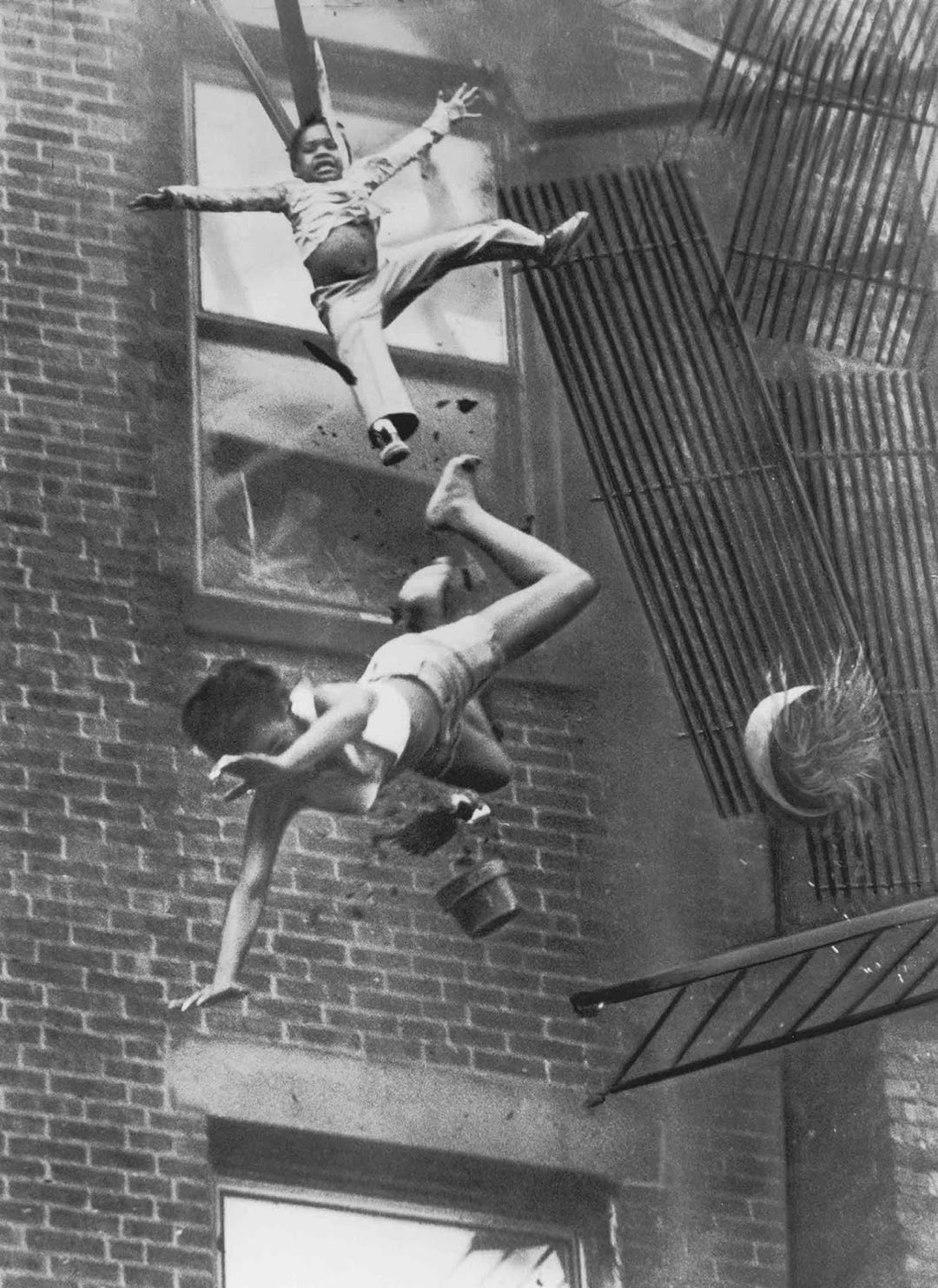
July 22, 1975 — Stanley Forman of the Boston Herald American was riding to a routine fire call on Marlborough Street when the fifth-floor fire escape gave way. His motor-driven sequence caught 19-year-old Diana Bryant and her two-year-old goddaughter Tiare Jones in mid-fall — the young woman died of her injuries; the child, her fall broken by Bryant’s body, survived. The photographs ran in newspapers around the world the next morning, won the 1976 Pulitzer Prize for Spot News Photography, and set off two arguments that have never ended. The first was practical, and photography won it: in the photograph’s wake, Boston and cities across the United States toughened fire-escape safety codes — a rare, measurable case of a single picture changing law. The second was ethical: readers flooded editors with objections to publishing a photograph of a person’s last second of life, and the case became a staple of journalism ethics courses on the line between witness and spectacle, as the record of the photograph attests. Fifty-one years on, both arguments are still the medium’s arguments.

THE INTERNATIONAL REVIEW OF PHOTOGRAPHY
To advertise an exhibition, book, fair, or open call to photography collectors, curators, and gallerists worldwide, email internationalphotographynews@gmail.com
Guevara’s good but obviously rum was his choice not vodka, Witkin’s raft’s not the best Witkin. Linder definitely mediocre.
The famous portrait also adorns packets of cane sugar.