

THE PHOTOGRAPH
“Serra Pelada Gold Mine” — Sebastião Salgado, 1986
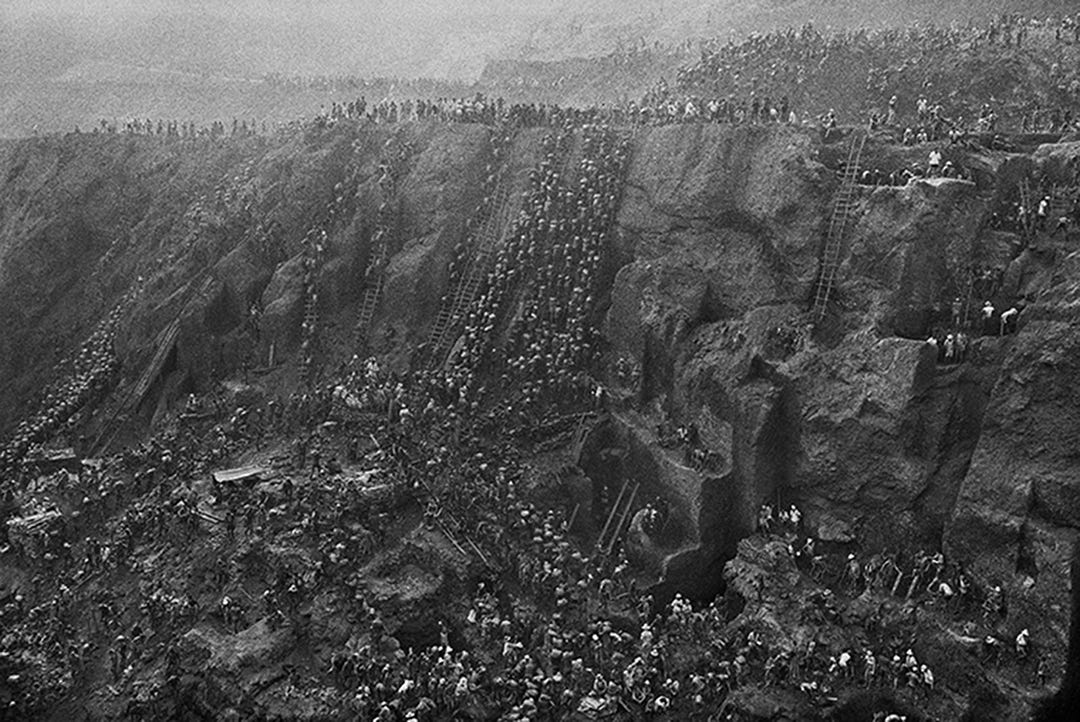
A vast earthen pit, and inside it perhaps fifty thousand men — caked head to foot in the same ochre mud, nearly indistinguishable from one another, swarming a wall of crude wooden ladders with sacks of earth on their backs. No machinery. Almost no color. Just bodies, and the pit. Sebastião Salgado made the picture at the Serra Pelada gold mine in the Brazilian state of Pará in 1986, and it became the defining frame of his series Workers and one of the most reproduced documentary photographs of the late twentieth century.
What gives it its force is the way the individual dissolves into the mass. Salgado spent roughly a month at the mine, where men had clawed an entire mountainside open by hand chasing a gold strike, and he photographed them not as a crowd of separate lives but as a single laboring organism — something between Bruegel and the building of the pyramids. The eye searches for one face to hold onto and cannot find one, which is precisely the point.
There is a fact about Salgado that the photograph quietly explains. Before he was a photographer he was an economist, trained and working in development economics — including a stint with the International Coffee Organization — well into his late twenties, before he ever picked up a camera seriously. The Serra Pelada pictures are, in a sense, an economist’s portrait of labor: value torn from the earth by the cheapest input there is, the human body.
Salgado died on May 23, 2025, at eighty-one, just over a year ago. Phillips held a dedicated memorial sale this spring, Sebastião Salgado: A Life’s Voyage, and his work is now being absorbed, steadily, into the museum canon. With that absorption the oldest argument about him returns: that his luminous, meticulously composed black and white aestheticizes hardship — makes suffering beautiful, and therefore bearable, even consumable. His defenders answer that the beauty is the argument; that to photograph the poorest workers on earth with the gravity usually reserved for saints and kings is to insist, unanswerably, on their dignity, as the Tate notes in its own collection record for the work.
WHY IT MATTERS
The fight over Serra Pelada was never really about exposure or composition. It is about who gets to decide what a photograph of suffering is for — the photographer, the viewer, the market, or the people in the frame, who were paid in the gold they dug and never in the pictures. As the institutions that mostly overlooked documentary photography during Salgado's working life now move to canonize it after his death, that question stops being academic. It is, this week, the whole question.
EXHIBITION HIGHLIGHTS
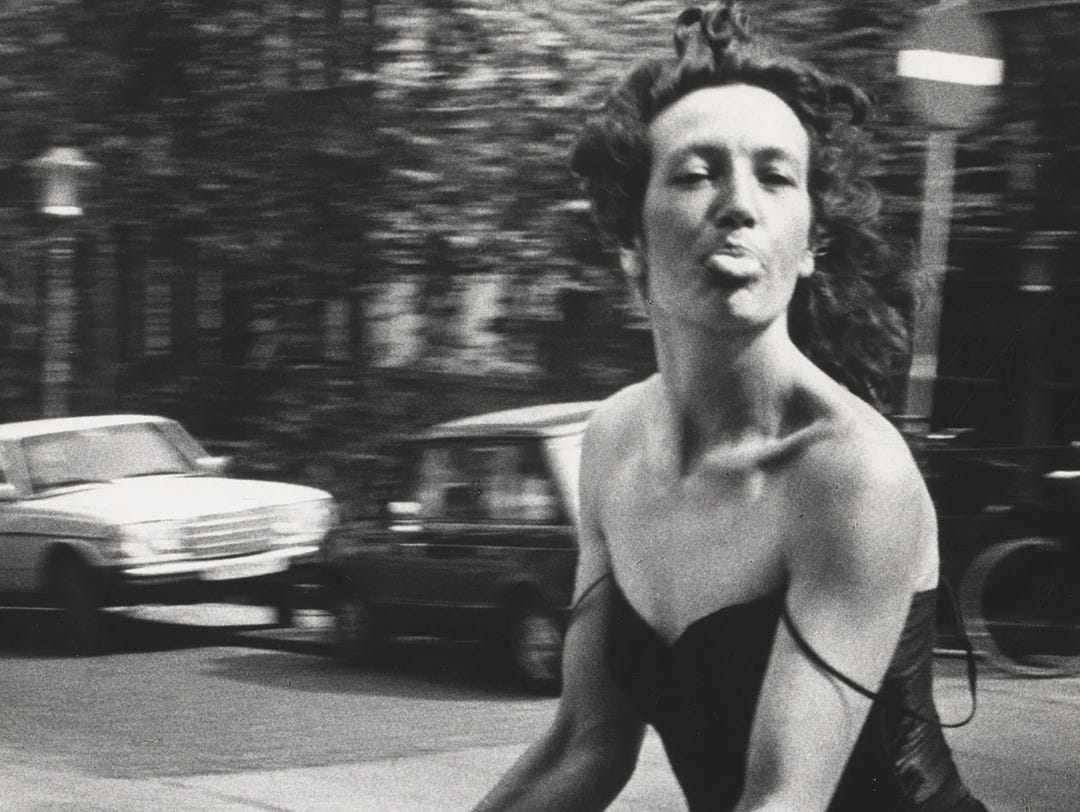
Ed van der Elsken: Up Close
Rijksmuseum, Amsterdam
June 19 – September 13, 2026
The Rijksmuseum gives its big summer photography slot to Ed van der Elsken, the restless, romantic street photographer and filmmaker who remains the most influential Dutch image-maker of the twentieth century. Drawn from his complete archive — the museum acquired the lot — the show moves from his noir-tinged 1950s Paris of Love on the Left Bankthrough Tokyo, Hong Kong, and his own unsparing late self-portraiture, the work of a man who pointed the camera at everyone, himself included, and rarely blinked.
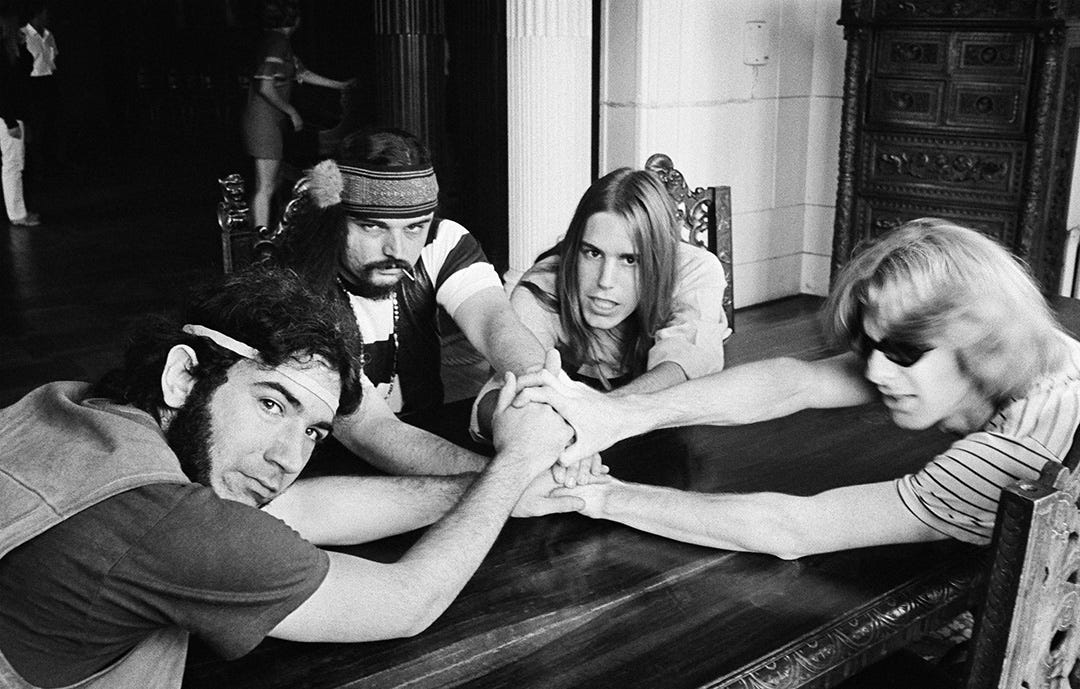
An American Beauty: Grateful Dead, 1965–1995
David Kordansky Gallery, New York
June 23 – August 7, 2026
Curated by Ricki and Jay Blakesberg, this is a thirty-year photographic history of the Grateful Dead — the band, the crew, and above all the crowd — that doubles as a portrait of a particular American subculture and the documentary impulse it inspired. The New York iteration of a show first seen in Los Angeles, it lands as a reminder that some of the most sustained visual archives of postwar America were built not in newsrooms but in the parking lots and pit photographers’ wells of touring rock.
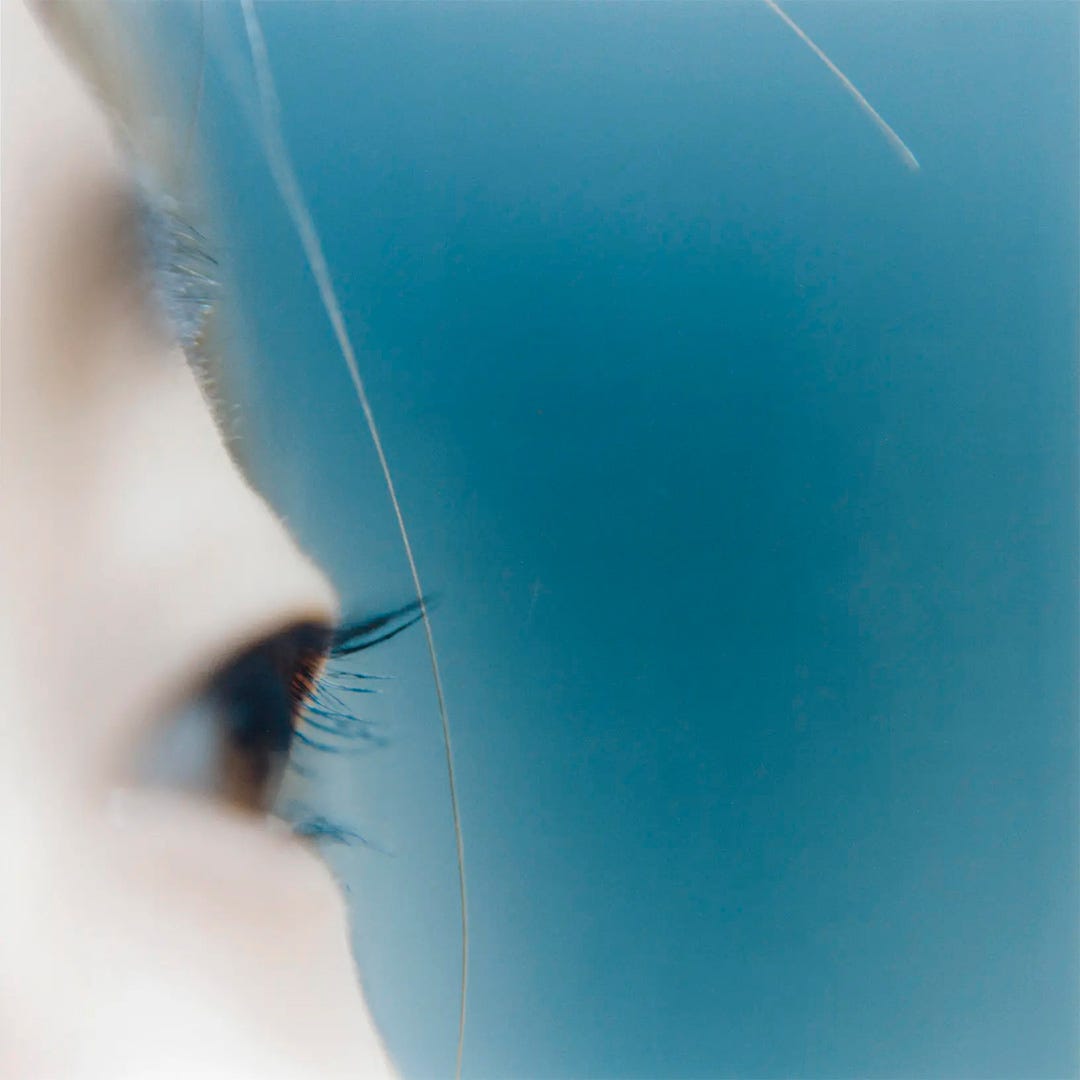
Japanese Women Photographers: From the 1950s to Now
The Photographers’ Gallery, London
June 24 – September 27, 2026
A genuinely overdue survey, this gathers generations of Japanese women whose work has too often been read only through the male-dominated postwar canon. Spanning the experimental 1950s to the present, it traces a parallel history of the medium in Japan — domestic, political, and formally adventurous by turns — and arrives in a London summer unusually attentive to East Asian photographic history.
Alfredo Jaar: Inferno & Paradiso
Photo Elysée, Lausanne
June 26 – November 1, 2026
For this immersive slide-projection installation, Alfredo Jaar — one of the most socially committed artists working with the photographic image — asked twenty reportage photographers each to choose two pictures from their archives: the most painful they had ever made, and the most hopeful. Visitors sit in a darkened room as the images cycle in twenty-minute waves of heaven and hell, a structure borrowed openly from Dante, and Jaar’s wager is unfashionable and bracing: that photography has not lost its power to move us, only our willingness to look. First shown at Cortona On The Move in 2025, it cross-rhymes neatly with Jaar’s billing as an announced artist at this summer’s Rencontres d’Arles.
Hannah Darabi: Why Don’t You Dance?
Photo Elysée, Lausanne
Opens June 26, 2026
Opening the same evening at Photo Elysée, the Iranian artist Hannah Darabi continues her excavation of how images, books, and pop culture carry political memory — here turning to the contested place of dance and the body in recent Iranian history. Darabi works as much with the photobook and the archive as with the single frame, and the result is documentary in the expanded sense: less a record of events than an inquiry into how a society pictures, and polices, itself.
OPENING THIS WEEK
Tuesday, June 23
An American Beauty: Grateful Dead, 1965–1995 opens — David Kordansky Gallery, New York
Wednesday, June 24
Japanese Women Photographers: From the 1950s to Now opens — The Photographers’ Gallery, London
Thursday, June 25
Matt Saunders: On an Overgrown Path opens — Marian Goodman, New York
Alfredo Jaar & Hannah Darabi — public vernissage from 6pm, Photo Elysée, Lausanne (opening reception)
Friday, June 26
.tiff 2026: Emerging Belgian Photography — FOMU, Antwerp · Opens Jun 26
Frank Paulin: Unseen Color, 1956–2008 opens — Bruce Silverstein, New York
Quickscan 3: Photography Now opens — Nederlands Fotomuseum, Rotterdam
Saturday, June 27
Sonia Boyce: Demonstrate opens, with an afternoon celebration — Queens Museum, New York
Martine Gutierrez: Wunderkind opens — Huis Marseille, Amsterdam
Andri Pol: Poliversum opens — Fotostiftung Schweiz, Winterthur
ON VIEW
Opening Soon
New York
Matt Saunders: On an Overgrown Path — Marian Goodman · Opens Jun 25
Frank Paulin: Unseen Color, 1956–2008 — Bruce Silverstein · Opens Jun 26
Sonia Boyce: Demonstrate — Queens Museum · Opens Jun 27
Rotterdam
Quickscan 3: Photography Now — Nederlands Fotomuseum · Opens Jun 26
Winterthur
Andri Pol: Poliversum — Fotostiftung Schweiz · Opens Jun 27
Closing Soon
Winterthur
Paul Mpagi Sepuya: Focus. Desire — Fotomuseum Winterthur · Closes Jun 26
Fort Worth
Black Photojournalism — Amon Carter Museum · Through Jul 5 (photojournalism)
Ongoing
A rotating selection of shows worth the trip, beyond the openings and closings above.
Madrid
In the American West — Richard Avedon — Fundación MAPFRE · Through Aug 30
Paris
Lee Miller — Musée d’Art Moderne de Paris · Through Aug 2
Camille Vivier — Maison Européenne de la Photographie · Through Sep 13
Winnie Mo Rielly — MEP Studio · Through Jul 12
République — Bérangère Fromont — Delpire & Co · Through Aug 28
Amsterdam
World Press Photo 2026 — De Nieuwe Kerk · Through Sep 27
Hamburg
Alliance, Infinity, Love — In the Face of the Other — Haus der Photographie / Deichtorhallen, Hamburg · Through Sep 22
Vienna
Katherine Hubbard: The Great Room — Wiener Secession, Vienna · Through Aug 30
Italy
Aurelio Amendola: Capolavori fotografati — Palazzo Reale, Milan · Through Sep 6 (the master photographer of artworks — Burri, Vedova, Nitsch, Bernini, Canova)
New York
Hujar:Contact — The Morgan Library & Museum · Through Oct 25 (historical)
Photobooks USA 2000–25 — International Center of Photography, New York · Through Sep 28
Lillian Bassman: Elegance in Light — Sotheby’s, New York · Through Jul 31 (selling exhibition)
Bob Mizer: Athletic Model Guild Catalog Boards, 1945–55 — Daniel Cooney Fine Art, New York · Through Jul 25
Yves Saint Laurent and Photography — International Center of Photography · Through Sep 28
Alex Prager: Matinee — Lehmann Maupin · Through Aug 14
Virginia
Ilse Bing: Between Paris and New York — Chrysler Museum of Art, Norfolk VA · Through Oct 18
San Francisco
Feel the Beat: Dance in Photographs — SFMOMA · Through Jan 31, 2027
Los Angeles
Marilyn Monroe: A Silent Life — Peter Fetterman Gallery · Through summer 2026
Daido Moriyama: The Hunter — Peter Fetterman Gallery · Through summer 2026
A Simple Game — Marshall Gallery, Santa Monica · Through Jul 18 (World Cup group show)
Double Take: Photographs in Pairs — Fahey/Klein Gallery, Los Angeles · Through Jul 18
Catherine Opie: Holding Blue — Regen Projects · Through summer 2026
Japan
Unprecedented: Women Photographers from the GDR — Museum of Modern Art, Hayama (Japan) · Through Aug 30
FAIR & FESTIVAL WATCH
Les Rencontres d’Arles 2026 — Arles · opening week July 6–12, runs through October 4
Cortona On The Move 2026 — Cortona, Italy · July 16 – November 1
Fotofestiwal Łódź — Łódź · Through June 28 (25th edition)
Athens Photo Festival 2026 — Athens · ongoing
PHotoESPAÑA 2026 — Madrid · Through September 13
OPEN CALLS
International Photography Awards (IPA) 2026 — international photography competition · Final deadline June 30
Stanley Greene Foundation Emerging Photographer Grant 2026 — a US$10,000 grant for emerging visual storytellers, named for the late conflict photographer · Deadline July 2
OFF THE PRESS


Sex, Clubs, Dissent: Visualising Queer Nightlife edited by Amelia Abraham
MACK
May 2026 · 284 pages, paperback with die-cut cover
Edited by the writer Amelia Abraham, Sex, Clubs, Dissent is an expansive visual history of queer nightlife told through photographers, filmmakers, and artists — and an argument about what all that documenting has been for. Rather than a tidy chronology, it assembles an archive of possibility: the dancefloor, the sauna, the strip club, and the after-hours rendered by turns erotic, tender, violent, and euphoric. With essays and conversations from Brontez Purnell, McKenzie Wark, Legacy Russell and Tourmaline, and others, it lands as a Pride-season counterweight to the idea that nightlife only matters once it is gone.
An Abridged Dictionary of Sculpture by John Gossage
Steidl
June 2026 · 120 pages, clothbound hardcover with a tipped-in photograph
The American photographer John Gossage — best known for The Pond — turns his camera on the least promising objects imaginable: a pile of archive folders, a dirty beaker, a heap of baseball caps, a plank of wood, a tuft of grass. Each is shot against the same field of white paper and treated as a sculpture, its shadow often carrying as much presence as its form, and the book stakes a deceptively simple claim about the medium itself — that to photograph a thing is to ask it to become another kind of thing entirely. It is a dictionary, Gossage explains, because it describes its sculptures rather than being them, “as every photograph does with everything.” Co-published with The Agency in the Hudson Valley, it is a quietly philosophical late entry in a career spent probing what a picture can and cannot hold.
Órale — Love and Death in Mexico City by Michel Hurst
Hunters Point Press
May 2026 · 100 pages, hardcover
The debut and only monograph by the late photographer and collector Michel Hurst (1948–2023), Órale gathers roughly six years of pictures made in and around his adopted Mexico City — ritual and street life, beauty and degradation, danger and tenderness held in the same frame. Hurst shot with the flinty eye of a street photographer and the soft touch of an aesthete, and the book arrives freighted with affection: an introduction by Nan Goldin, an essay by the New Yorker‘s Chris Wiley, and an afterword by Hurst’s husband of forty years, Robert Swope.
DID YOU KNOW?
The man who made the most famous photograph of manual labor in the twentieth century came to the camera late, and by way of economics. Before Workers, before the Serra Pelada gold mine, Sebastião Salgado trained and worked as a development economist — including a spell with the International Coffee Organization — and did not commit to photography seriously until his late twenties. It is tempting, looking again at that pit of fifty thousand men, to see the discipline he left behind still at work in the one he chose: an unblinking study of where value comes from, and who pays for it with their body.

THE INTERNATIONAL REVIEW OF PHOTOGRAPHY
To advertise an exhibition, book, fair, or open call to photography collectors, curators, and gallerists worldwide, email internationalphotographynews@gmail.com