

THE PHOTOGRAPHER
At Fourteen He Saw a Pair of White Legs Standing Over Five Black Men in a Trench. He Has Been Photographing That Unease Ever Since.
The picture was in a South African newspaper, and Nadav Kander was about fourteen when he saw it. The camera looked down into a trench where five Black men were digging. At the top of the frame, cropped at the knees, stood a white pair of legs. “I grew up with this injustice all around me, Apartheid was in everyones bones,” he writes in the biography on his own website. The photographs he took then, and into his early twenties, were “unaccomplished,” he says, but they “have the same sense of quiet and unease that is a part of my practice today.”
Quiet and unease covers most of what he has done since. Kander was born in Tel Aviv on December 1, 1961, and his family moved to Johannesburg when he turned three. His earliest memory is being sick on the flight. He bought a Pentax at thirteen with his Bar Mitzvah money. National service put him in the air force, printing aerial photographs in a darkroom for two years, and for the first time he was good at something he was being taught. “The air force was the first time ever in my life that I excelled in a learning environment,” he told ArtThrob in June 2002. He had no other training. He assisted the photographer Harry De Zitter, then left South Africa for England, alone, at 21.
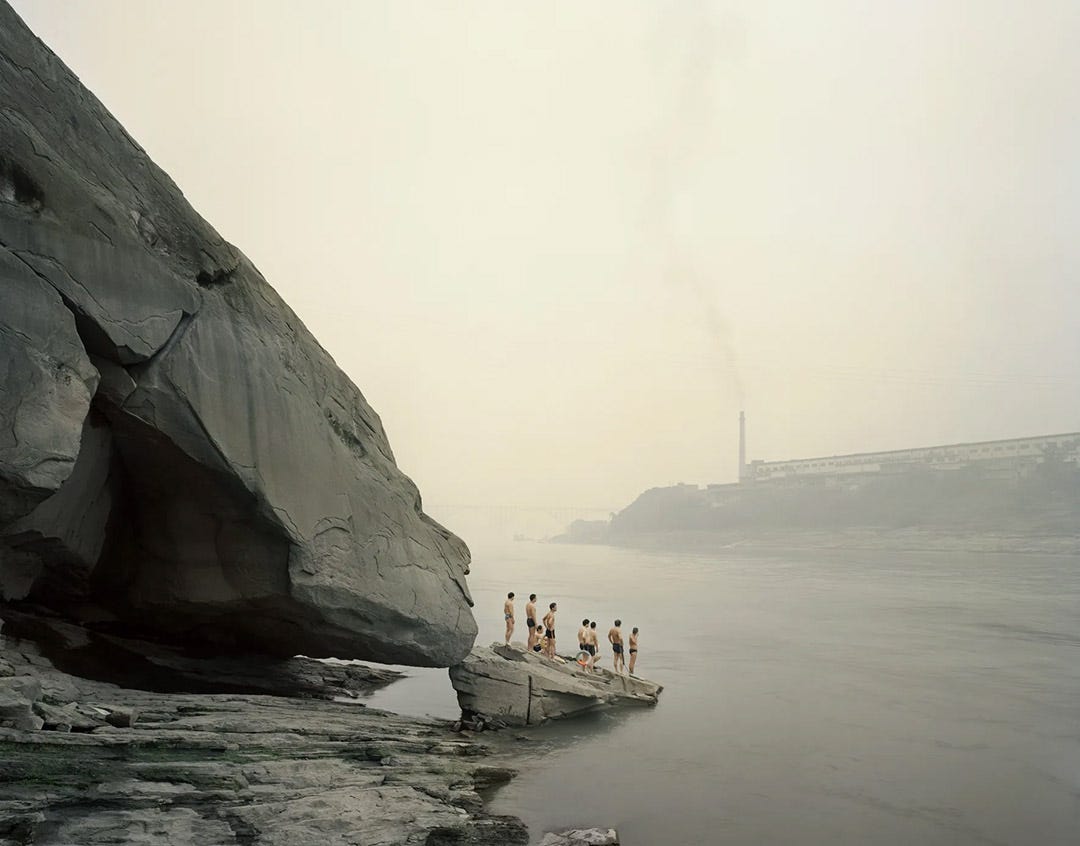
Being the new arrival became his method. On the Yangtze he worked his way from the river’s mouth toward its source with a large-format film camera while China rebuilt itself along the banks. “My own feelings of rootlessness as an Israeli-born South African living in England evoked a strong response as I witnessed the vast scale of change under way in China,” he wrote in the statement for the series. “I felt like a complete outsider and explained this pictorially by ‘stepping back’ – by showing humans as small in their surroundings.” The picture at the top of this page is one of those: bathers standing on a rock at Yibin, in Sichuan, with a bridge, a factory and a smoking stack going soft in the fog behind them. Yangtze – The Long River won the Prix Pictet in 2009.
The same year, shortly after the inauguration, The New York Times Magazine commissioned him to photograph the new Obama administration. He made fifty-two portraits, which Foam describes as the largest number by a single photographer ever published in one issue of the magazine. The plan, worked out with the magazine’s Kathy Ryan, was “to work in a similar way to how the Bechers work, where if you photograph multiple things in a very similar way you will very accurately see the differences,” he told the critic Jörg Colberg in a conversation from 2011. Every sitter got the same treatment, so the small differences between them stand out. “It certainly didn’t glorify people,” he said.
The places he picks have the same edge. For the series Dust he photographed the radioactive ruins of secret Cold War cities on the border between Kazakhstan and Russia, including the Polygon nuclear test site. “I suppose I always look for places on the edge of uneasiness, I’ve called them troubled lands in the past,” he told Colberg. The pictures are often lovely to look at, and he means them to be, up to a point. “I seem to reside in this area of making quite beautiful pictures but which have a discomfort to them that asks questions,” he told Slate in August 2014.
The newest troubled land is close to home. Dark Line – The Thames Estuary, published by GOST in September, collects pictures he made between 2015 and 2024 on the estuary where London’s river widens into the sea, a place “out of sight of the capital,” as he puts it. He works slowly there, often for hours until dusk, making long exposures, and back in the studio he reprints each image again and again, sometimes for years, until it reaches what he calls “feeling like water.” In some frames the river and sky are so close in tone that the horizon is barely a pencil line. GOST calls it his most personal work. “These are pictures that don’t divulge much and this is true of all my work,” he says in the book.
You can see the whole arc in Amsterdam now. Foam is showing The edge of things, a survey curated by David Campany, the creative director of the International Center of Photography, with the Foundation for the Exhibition of Photography. It runs from the Yangtze to the Thames, takes in Chernobyl and the portraits, and is on view through January 31, 2027. Foam
WHY IT MATTERS
Kander’s subject since that newspaper picture has been the trouble that sits inside an ordinary-looking scene: bathers under a smokestack, a cabinet photographed one by one in the same light, an estuary going dark. He gets at it the way he learned as an outsider, by stepping back until people are small and the setting fills the frame. Stand back far enough and the trouble shows. Forty years in, from the trench he saw at fourteen to the mudflats east of London, the method has not changed, and the Foam survey and the GOST book let you watch it work across a whole career and in its newest chapter.
EXHIBITION HIGHLIGHTS
Gregory Crewdson: Eveningside
Fondazione Palazzo Magnani, Chiostri di San Pietro | Reggio Emilia
October 10, 2026 – January 17, 2027
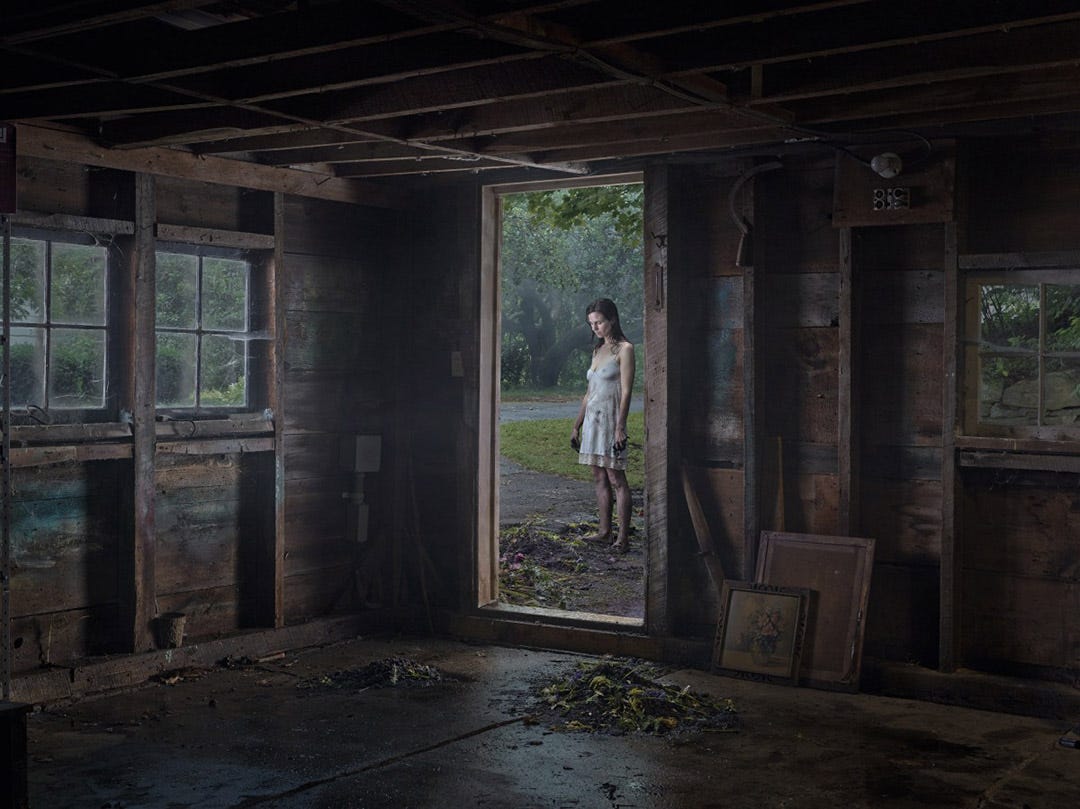
A shop window at night, a bar, an ATM canopy, a hardware store. The last part of Crewdson’s small-town trilogy is set among storefronts, and he made it, for the first time, entirely in black and white. Reggio Emilia hangs it with the two earlier chapters, Cathedral of the Pines (2012–2014) and An Eclipse of Moths (2018–2019), and screens the film Making Eveningside. Gallerie d’Italia – Intesa Sanpaolo commissioned the series and first showed it in Turin in 2022; Jean-Charles Vergne curates.
Photography as a Way of Life: Minor White, Aaron Siskind, and Harry Callahan
High Museum of Art | Atlanta
October 9, 2026 – February 7, 2027
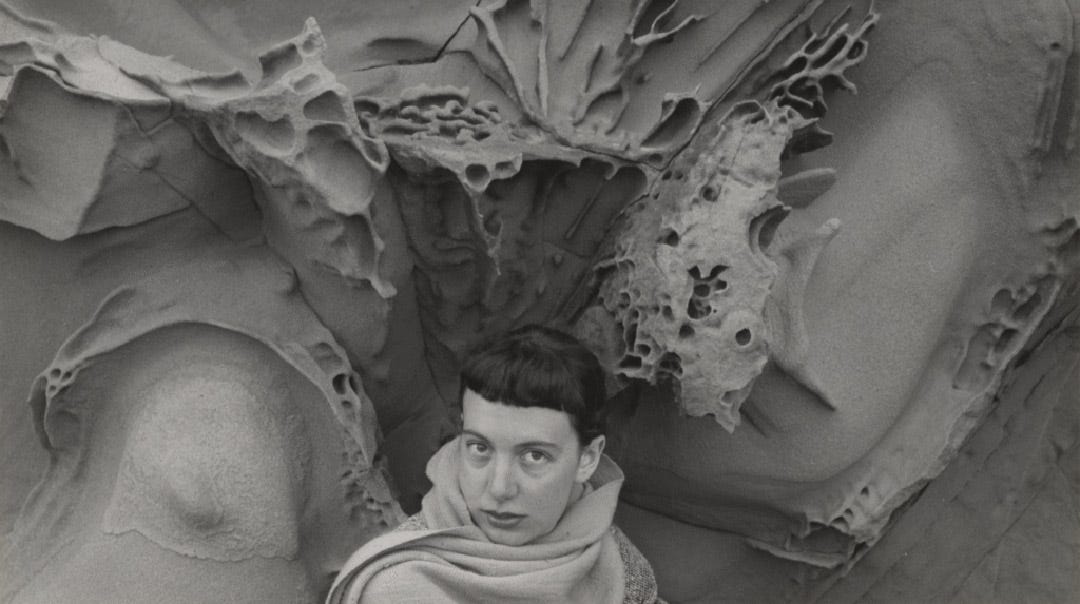
Three photographers who taught as much as they photographed, shown with the people who learned from them or worked beside them, among them Emmet Gowin, Roy DeCarava, Linda Connor, Arthur Siegel and Ming Smith. The show comes from the Princeton University Art Museum, home of the Minor White Archive, and includes unpublished color and black-and-white prints and rare slides. The High is the only venue in the Southeast. Brendan Fay curates.
Richard Yee: Between Two Shores
Robert Klein Gallery | Boston
October 10 – December 12, 2026
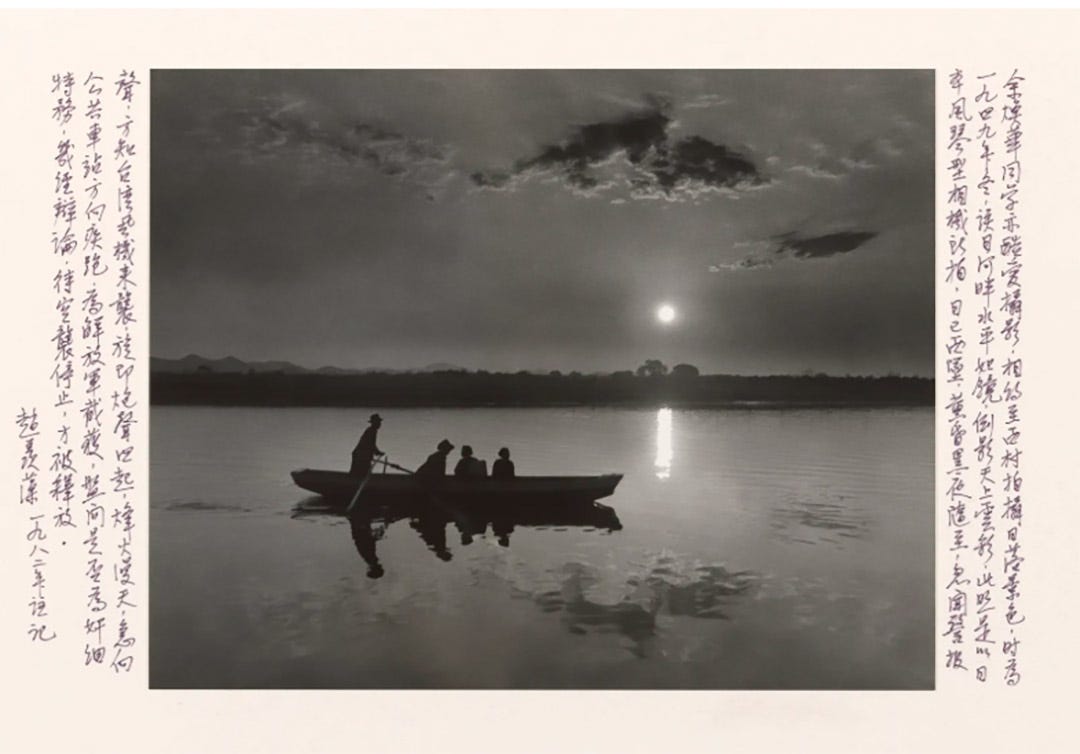
In 1949 Richard Yee, then thirteen, photographed Guangzhou from above on the eve of liberation. Three years later he left Guangdong for the United States, and he kept photographing. He won first prize in the Boston Globe photo contest three years running, and in 1959 he took the grand award in the All U.S. Army Photo Contest. The show covers four decades across China, Hong Kong and the US, in gelatin silver prints Yee made himself, many of them vintage prints from the 1960s. The Chinese title, 此岸彼岸, means “this shore, that shore,” a Buddhist phrase.
Russell James: It’s About Time
CAMERA WORK | Berlin
October 10 – November 14, 2026
More than thirty nudes, portraits and landscapes, many of them from 2025 and 2026 and shown here for the first time. The gallery places James in the line of Herb Ritts and Patrick Demarchelier. A new monograph with the same title comes out alongside the show, and James signs copies at the gallery on October 10 at 2 p.m.
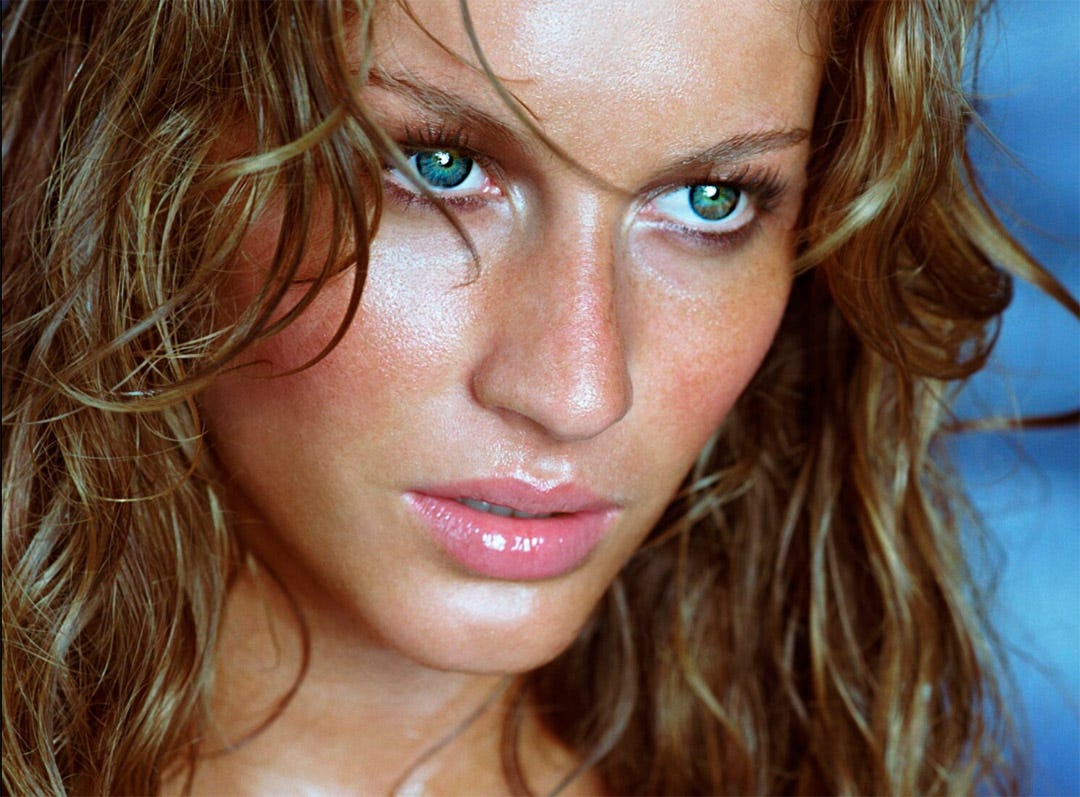
Šejla Kamerić: EX YOU
Fotografiska Tallinn | Tallinn
October 9, 2026 – March 7, 2027
The title points two ways: to ex-Yugoslavia, the country that came apart around the Bosnian artist, and to being “exed,” pushed out of someone’s life. Kamerić works across photography, sculpture, installation and sound, and Marina Paulenka has curated the show. “Identities are not simple and they are not fixed positions, identity is a process of becoming,” Kamerić says in the museum’s text. The opening and a tour are on October 8 at 18:00.

WHAT’S ON AROUND THE WORLD
Opening This Week
Aalborg
Frida Orupabo: Get close enough and you can’t see — Kunsten Museum of Modern Art · Oct 8 – May 9, 2027
Barcelona
Emancipations: Foto Colectania Collection — Fundació Foto Colectania · Oct 8 – Feb 7, 2027 (curated by Florian Ebner; opening Oct 7, 8 p.m.)
Gothenburg
Hasselblad Award 2026: Zanele Muholi — Hasselblad Center · Oct 10 – Apr 4, 2027 (the award exhibition for the 2026 laureate)
London
Charan Singh: Your Tongue in My Mouth — Autograph · Oct 8 – Feb 13, 2027
Melbourne
LOOK! Prize 2026 — Museum of Australian Photography (MAPh) · Oct 7 – Dec 7 (launch Oct 13)
Online
Paris
Remember Me — Bourse de Commerce – Pinault Collection · Oct 7 – Jan 18, 2027 (curated by Matthieu Humery; about 700 works, Gustave Le Gray to Cindy Sherman)
Françoise Huguier: L’œil voyageur — Galerie Art Absolument · Oct 8 – Nov 28
Guillaume Herbaut: Ukraine, le mal qui reste — Académie des beaux-arts · Oct 8 – Nov 29 (work from his 2024 Marc Ladreit de Lacharrière photography prize)
São Paulo
Círio de Nazaré: do sagrado ao profano, uma extensão do Brasil — Museu da Imagem e do Som (MIS) · Oct 6 – Nov 15 (Fabricio Augusto, Nova Fotografia 2026)
Closing Soon
Amsterdam
Diana Blok: Time Tells — Jewish Museum, Jewish Cultural Quarter · Closes Oct 18
Boston
Lorna Simpson — Krakow Witkin Gallery · Closes Oct 10
London
Carrie Mae Weems: The Long Goodbye — V&A East Museum · Closes Oct 18 (a new film commission)
Rene Matić: HEARD — V&A East Museum · Closes Oct 18 (sculpture built from photographs taken across east London)
New Orleans
George Dureau: Selected Photographs — New Orleans Museum of Art · Closes Oct 11
Palafrugell
Sergio Larrain. El vagabundo de Valparaíso. Retrospectiva — Museu del Suro de Catalunya, with Foto Colectania · Closes Oct 18
Shanghai
Thomas Sauvin: Beijing Silvermine: Archive Anthology — Fotografiska Shanghai · Closes Oct 18
Shkodër
Gjon Mili: Retrospective — Marubi National Museum of Photography · Closes Oct 18
Valencia
Cristina de Middel: Apoteosis Now — IVAM · Closes Oct 12
Ongoing
A rotating selection of shows worth the trip, beyond the openings and closings above.
Cincinnati
Nancy Rexroth: Secrets of My Power — Cincinnati Art Museum · Through Jan 3, 2027 (her first career retrospective)
Widline Cadet: Seremoni Disparisyon (Ritual [Dis]Appearance) — Contemporary Arts Center · Through February 2027
Jacksonville
Cara Romero: Panûpünüwügai (Living Light) — MOCA Jacksonville · Through Mar 21, 2027
New York
Allan Sekula: Fish Story — Wallach Art Gallery, Columbia University · Through Dec 20 (all nine chapters)
Hannah Altman: Not a Circle but a Spiral — The Jewish Museum · Through Feb 7, 2027
Arthur Jafa: I Am Tony — New Museum · Through Jan 3, 2027
Paris
PENN & FASHION — Maison Européenne de la Photographie · Through Jan 17, 2027
FESTIVAL WATCH
Oslo Negativ — Oslo, Norway · Oct 10–25 (three weekends in the old National Gallery building; this year’s theme is Passion; festival pass NOK 600)
T3 Photo Festival Tokyo 2026 — Tokyo, Japan · Oct 3–26 (24 days across Yaesu, Nihonbashi, Kyobashi and Ginza, built around the Japanese word と, “and”)
OFF THE PRESS


I Want To See A Lighthouse by Gary Briechle
Charcoal Press
Most days Briechle drives around Rockland, Maine, in an SUV loaded with chemicals, photographing the same neighbors, children and backyards on wet collodion glass plates, one plate at a time. He makes a single gelatin silver print from each plate and then puts the plate away in the attic, under a bed or in a closet; he has no interest in exhibiting or selling. I Want To See A Lighthouse gathers thirty years of that routine. Briechle, a Guggenheim fellow in 2015, has two earlier monographs. Linen hardcover with a tipped-in image, 224 pages, from $85; Charcoal Press says it ships in October 2026.
Chris Killip: North
Thames & Hudson
“I wanted to record people’s lives because I valued them. I wanted them to be remembered,” Killip said of his work in the north of England. Chris Killip: North covers 1975 to 1986, from Huddersfield to the fishing communities of the North Yorkshire coast to the miners’ strike, with pictures from Ireland and the Isle of Man. Mark Holborn edited it with exclusive access to the archive, and nearly half of the 224 illustrations, something like a hundred pictures, are published here for the first time. 304 pages, $95, out October 6.
Tina Barney: Fashion
Aperture
Barney’s mother was an in-demand model in the 1940s who made the cover of Harper’s Bazaar and sat for Horst P. Horst and George Hoyningen-Huene. Tina Barney: Fashion starts with that family history and its photo albums, then follows clothes and what they signal through Barney’s career, including a large body of editorial work for Muse, Nest, Arena Homme +, Vogue, Gucci and Bottega Veneta. Short texts by Barney tell the stories behind the pictures, and Vince Aletti and Alistair O’Neill contribute. 256 pages, 150 images, $65, published October 6.
OPEN CALLS
Fine Art Photography Awards — Oct 11 (early deadline; final deadline Feb 14, 2027) · $19–$29 per entry at early rates · $5,000 in cash prizes across professional and amateur sections
LensCulture Black & White Photography Awards — Oct 14 · one single image free, five singles for $35 · $10,000 in cash grants; winners shown at Photo London 2027
1839 Awards: Photographer of the Year — Oct 17, 11:59 p.m. ET · $20–$35 per single image and $30–$50 per series, by entry level · cash prizes; winners announced Nov 18
Wellcome Photography Prize 2027 — Oct 21 · free · three categories, £10,000 to each category winner and £1,000 to 22 further entries
Chromatic Photography Awards — Oct 25 · fee not shown on the awards site · grand prizes of $2,000 (professional) and $1,000 (amateur)
Pride Photo Award 2027 — Oct 31, 23:59 CET · free · €500 for each work selected for the Pride Photo Exhibition 2027
Environmental Photography Award 2027 — Nov 1, 23:59 CET · free · five categories via Photocrowd; €5,000 grand prize, €1,000 to each category winner
VMFA Visual Arts Fellowships — Nov 6, 5 p.m. · free · Virginia residents only (US citizens or permanent residents living in Virginia for 24 months, 12 for students); $8,000 professional, $6,000 graduate, $4,000 undergraduate
The City Series: London (Shutter Hub) — Nov 12, 5 p.m. UK · pay what you can, £15 minimum · up to ten images; 100 chosen for a photobook with Battersea Power Supplies
Monochrome Photography Awards — Nov 15 · $22 amateur, $27 professional per single entry · $3,000 in prizes
ON THIS DAY
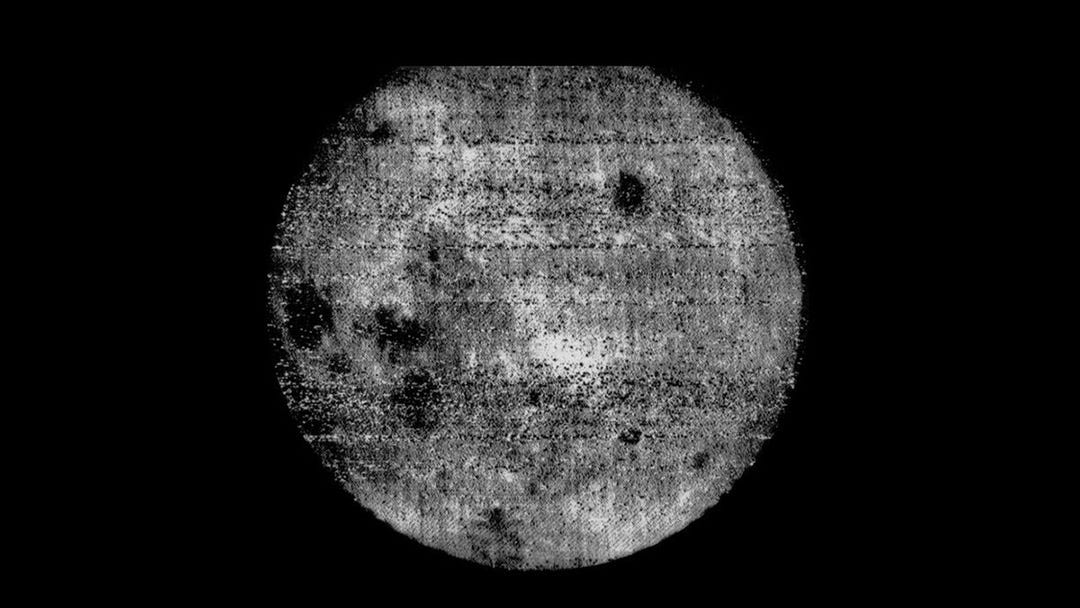
October 7, 1959 — Luna 3 sends back the first pictures of the far side of the Moon.
At 03:30 UT a Soviet probe that had just swung past the Moon turned its cameras back toward the sunlit far side, which no one had ever seen. Over forty minutes, less time than a lunch break, it took 29 photographs covering about 70 percent of that hemisphere. Then it processed its own 35mm film on board, developing, fixing and drying it, scanned each frame with a moving spot of light and radioed the signal home. Seventeen noisy but readable pictures reached Earth by October 18. They showed a mountainous face quite unlike the side we know, with only two large dark patches, one of which was named the Sea of Moscow.

THE INTERNATIONAL REVIEW OF PHOTOGRAPHY
To advertise an exhibition, book, fair, or open call to photography collectors, curators, and gallerists worldwide, email internationalphotographynews@gmail.com