

THE FRAME
Photo London Opens Next Week. Here’s Everything Worth Knowing.
The 11th edition of Photo London opens for its VIP preview on Wednesday, May 13, followed by four public days through Sunday, May 17 — the first edition at the fair’s new home at Olympia, Kensington. The expanded footprint makes room for something the fair has never had before: a dedicated Screening Room, presenting a full programme of artist films daily throughout the week.
The Screening Room brings together moving image work spanning documentary, portraiture, performance, archive, ritual, landscape, and experimental film. Highlights include:
Vera by Alys Tomlinson — a poetic portrait of Sister Vera and the Orthodox community that has been her home for 20 years
Katabasis by Justus de Rode — myth, memory, and ambiguous loss
There Is Something About Lillian by Sarah Moon — a homage to pioneering fashion photographer Lillian Bassman
Four films by Luka Yuanyuan Yang, including The Lady from Shanghai and Tales of Chinatown
The Talks Programme (curated by Thames & Hudson) includes:
When Seeing Might Not Be Believing — CatchLight and the Ian Parry Photojournalism Grant on truth, trust, and the future of visual journalism
Alejandro Cegarra and Alfredo Jaar in conversation (Prix Pictet / Leica Oskar Barnack Award) — on the ethical and political force of the image
Cut Out: A Feminist History of the Photo Collage — Justine Kurland and Fiona Rogers
Jill Furmanovsky on photographing Oasis; Jess T. Dugan and Charlotte Cotton on Love Pictures
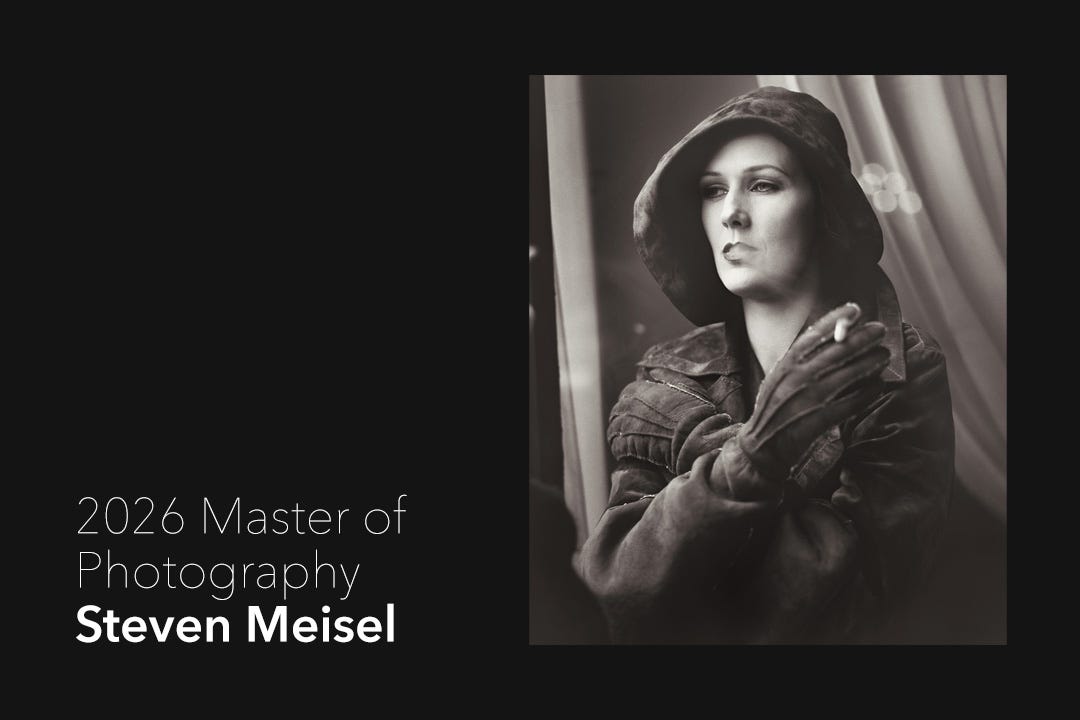
One of the centerpieces of this year’s edition is Steven Meisel as Master of Photography — the American fashion photographer who has produced over 300 Vogue Italia covers and collaborated with Madonna on Sex, and who rarely exhibits publicly. For Photo London he presents images from his first professional assignment in London: portraits of Stella Tennant, Plum Sykes, Bella Freud, Honor Fraser, and Lady Louise Campbell, shot with stylist Isabella Blow.
The Source Section (curated by Tristan Lund) presents solo artist presentations including Rosalind Fox Solomon’s Portraits in the Time of AIDS (first shown in New York in 1988); Tom Wood’s previously unseen photographs from the summer of 1975; Alfredo Jaar’s Searching for Africa in LIFE, 1966/2022; and Deutsche Börse Prize nominees Weronika Gęsicka and Jane Evelyn Atwood. Autograph presents We Are The Ones We Have Been Waiting For featuring Zanele Muholi, Carrie Mae Weems, Poulomi Basu, and Ingrid Pollard, among others.
WHY IT MATTERS
Alongside Paris Photo in November and AIPAD’s Photography Show in April, Photo London has established itself as one of the leading photography fairs in the world — and its first year at Olympia represents a significant step forward. The Screening Room is new. The Olympia venue is new. Steven Meisel exhibiting publicly is new. And the Talks Programme, which now includes the photojournalism ethics conversation that is impossible to avoid in the age of AI, reflects exactly what the medium is arguing about right now. Worth the trip. Full programme
THE PHOTOGRAPH
Dovima with Elephants — Richard Avedon, 1955
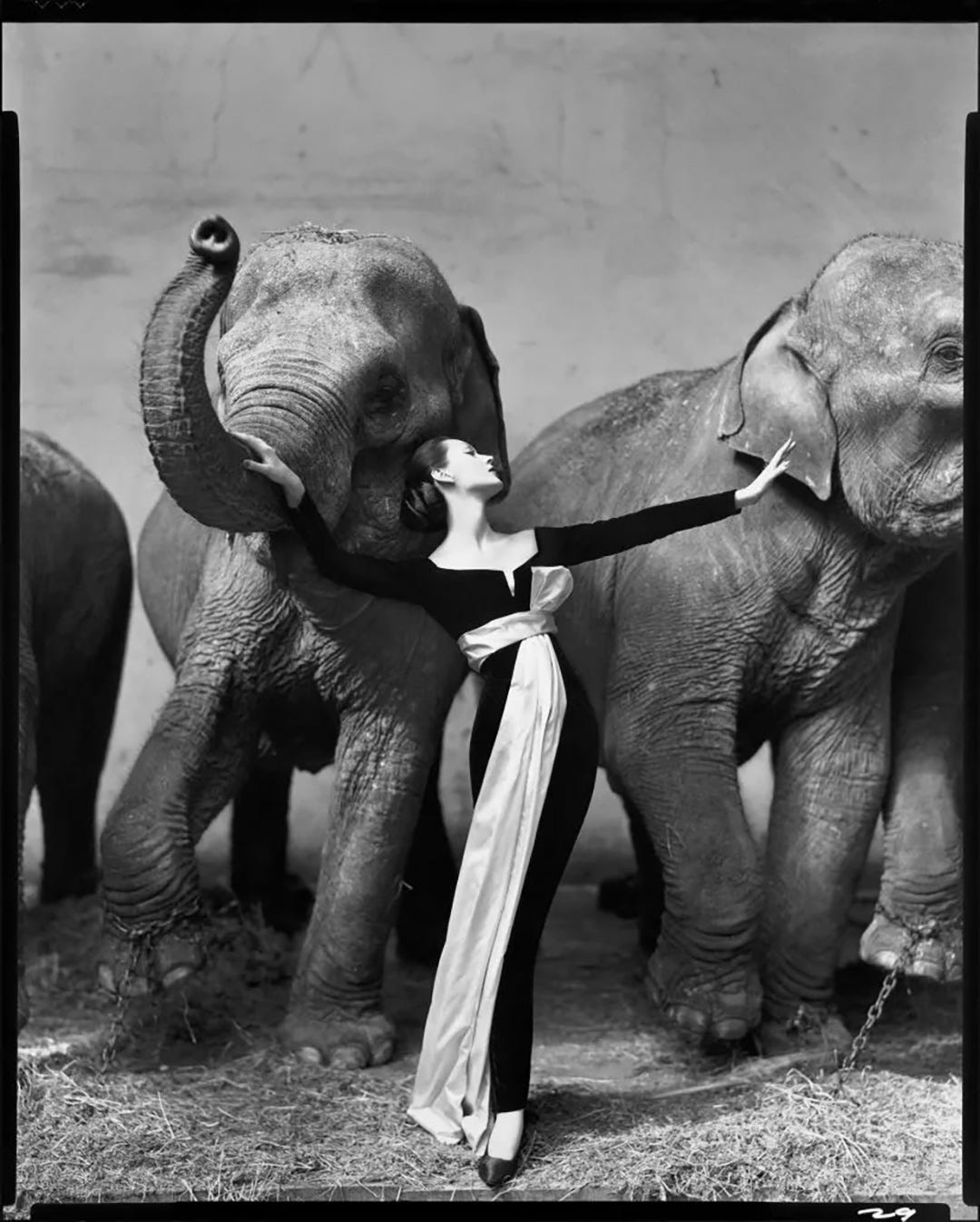
In August 1955, Richard Avedon took the model Dovima to the Cirque d’Hiver in Paris. The circus was in town. The elephants — named Trilby and Suzie — were chained. Avedon put Dovima between them in an evening gown by the young Yves Saint Laurent, then working at Dior. She extended her arms, one toward each animal. He took the picture.
The photograph ran in Harper’s Bazaar in September 1955 and became, immediately, the most analyzed fashion image ever made. The smooth silk against wrinkled skin. The model’s serenity against the elephants’ struggle. The evening gown in a circus tent. Luxury and captivity in a single frame. It was unlike anything that had appeared in fashion photography before: a photograph that placed fashion inside a context charged with tension, history, and meaning, rather than removing it from the world entirely.
Lillian Bassman, who as art director of Harper’s Bazaar had championed Avedon’s career since the late 1940s, gave him the creative freedom that made this image possible. This week, Photo London’s Screening Room presents Sarah Moon’s film There Is Something About Lillian — a homage to Bassman and a reminder that behind the most celebrated images in fashion photography, there was almost always an editor who let a photographer run. The image is in the permanent collections of MoMA, the Smithsonian, the Art Institute of Chicago, and dozens of other major institutions worldwide.
WHY IT MATTERS
Dovima with Elephants is the photograph that proved fashion photography could be art — not despite being commercial, but through it. Avedon did not abandon beauty or elegance; he placed them in a context that demanded interpretation. That tension — between the glamorous and the political, the decorative and the meaningful — is the argument that fashion photography has been making ever since. The fact that this week in London, Steven Meisel, Deborah Turbeville’s photocollages, and a Sarah Moon film about Lillian Bassman are all on the same program suggests the conversation is still going.
OFF THE PRESS
New & Noteworthy
FASHION by Mark Power
GOST
Fashion [fash-uhn] v., transitive: to make or construct out of constituent parts; to form, mould, or shape. Not a book about clothing. Mark Power spent 27 years photographing construction sites, factories, quarries, shipyards, foundries, and recycling facilities across 23 countries — places where things are made, or fashioned. The images are sequenced by visual links of color, form, and light, not by location or chronology. Captions and dates are deliberately absent. Weighs nearly 3kg. Influenced by Sultan and Mandel’s Evidence (1977).
Remembering the Future by Mark Klett and William L. Fox
Radius Books
It is estimated that nuclear testing in the 1950s and 1960s put four tons of plutonium into the stratosphere. Everyone born after the BRAVO test has been exposed. Mark Klett — a former geologist, Guggenheim Fellow, and professor emeritus at Arizona State — uses his camera to explore landscape, history, and the passage of time across the American West, photographing nuclear testing sites as a form of stratigraphic record. Text by William L. Fox, founding director of the Center for Art + Environment at the Nevada Museum of Art. Signed edition available.
New York and the American Flag by David Hurn
RRB Photobooks
Magnum photographer David Hurn first visited New York in 1962, on the advice of Bruce Davidson. Decades later, browsing his contact sheets, he noticed how many images featured the American flag — and returned twice more (2007 and 2017) to finish the thought. The result spans black-and-white to color, documenting a symbol that has accumulated layers of meaning across civil war, civil rights, protest, mourning, and polarized politics: the flag revered, worn, commercialized, and ambiguous. A special edition includes two signed 7×5” prints.


ON VIEW
New This Week
Callahan, Gowin and Sommer
Etherton Gallery | Tucson, Arizona
Through July 11, 2026
Fifty-three iconic, rare, and vintage photographs tracing a lineage: Emmet Gowin studied with Harry Callahan at the Rhode Island School of Design and later formed a lasting friendship with Frederick Sommer. Together they represent the backbone of American photographic modernism — Callahan’s formal rigor and intimate seriality, Sommer’s Surrealist-inflected desert experiments, and Gowin’s sustained attention to family, landscape, and the tension between beauty and violence. Callahan: “I think photography is an exploration. You start from scratch and learn things as you go along.” A rare opportunity to see these three bodies of work in serious dialogue.
A Light Exists in Spring
Center for Photographic Art | Carmel, California
May 7 – June 23, 2026
Opening reception Thursday, May 7, at the Marjorie Evans Gallery, Sunset Center. Curated by Ann Jastrab, this group exhibition takes its title from the Emily Dickinson poem — a light peculiar to spring that makes things visible that were there all along.
Mixedness Is My Mythology — Farren van Wyk
Fotomuseum Den Haag
Through August 23, 2026
South African-Dutch photographer Farren van Wyk examines the historical ties between South Africa and the Netherlands — the legacies of colonialism, migration, and apartheid. Born in the final year of apartheid and raised in the Netherlands, van Wyk uses black-and-white photography to navigate her “coloured” classification and mixed identity, redefining the term “person of color” and reclaiming her family’s heritage.
Above the River and Under the Sky — Maciej Markowicz
Inn Situ | Innsbruck
Through July 18, 2026
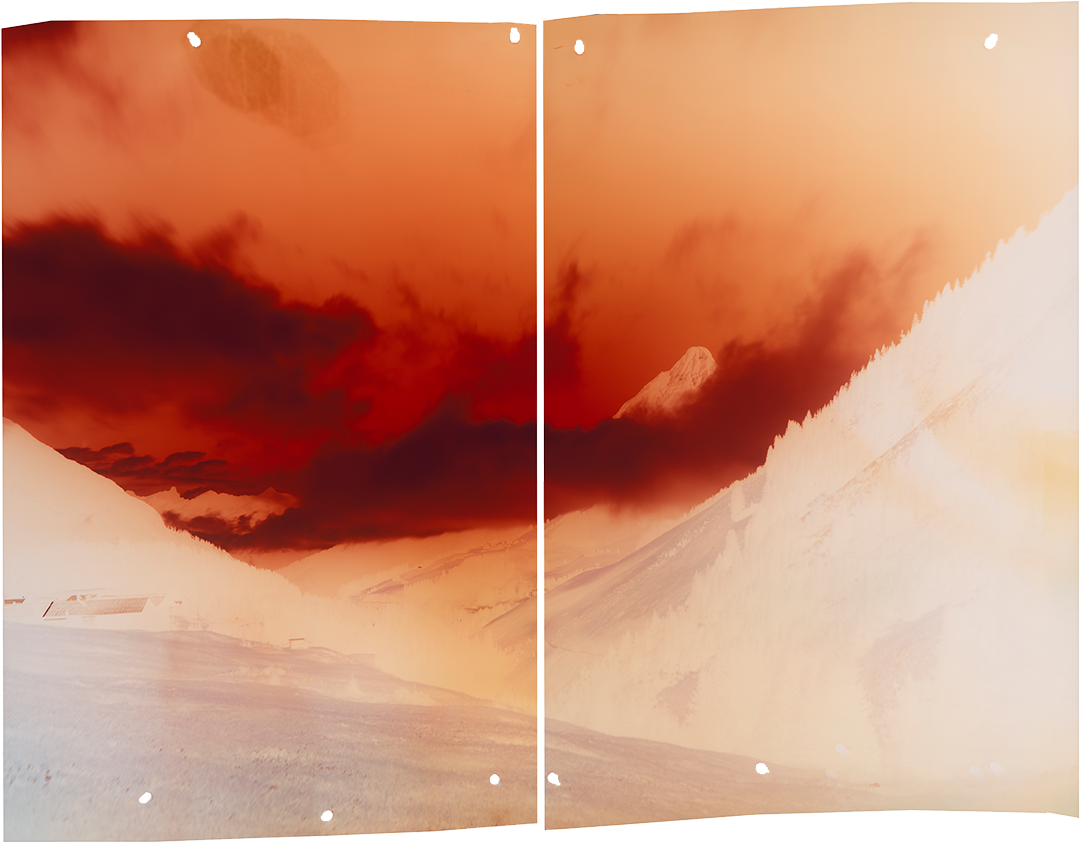
Marking the bicentennial of photography, Markowicz transforms a boat and a van into functional camera obscura darkrooms to capture large-format, directly exposed color negatives on chromogenic paper across the Alpine rivers of Tyrol and Vorarlberg. Each work is unique and unreproducible. Photography, painting, and performance in a single exposure.
FAIR & FESTIVAL WATCH
Opening This Week and Next
Bieler Fototage
Biel/Bienne, Switzerland
May 9 – June 7, 2026
Opens Saturday
Theme: Forever Happy — the multi-faceted nature of happiness from fleeting personal moments to societal pressure and cultural marketing. Open-air gallery integrated into the fabric of Biel/Bienne and surrounding Aarau. Exhibiting artists include Rafał Milach and Dominic Nahr.
Les Boutographies
Montpellier, France
May 9 – 31, 2026
Opens Saturday
Three weeks of exhibitions showcasing emerging European talent at the Pavillon Populaire in Montpellier, with walking and cycling exhibition routes through the city.
Photo London 2026
May 13–17, 2026
Olympia, Kensington
VIP Preview May 13
See THE FRAME above.👆🏻
Full programme at photolondon.org
DATES & EXHIBITIONS
Openings, closings, and what’s on now
OPENING SOON
May 7: A Light Exists in Spring opens, Center for Photographic Art, Carmel (reception 4–6pm).
May 9: Bieler Fototage opens, Biel/Bienne (through Jun 7).
May 9: Les Boutographies opens, Montpellier (through May 31).
May 13–17: Photo London 2026, Olympia, Kensington. VIP Preview May 13.
CLOSING SOON
May 10: FotoFest Biennial 2026 — Sawyer Yards, Houston. Final chance.
May 16: Outside Help (Christopher Richmond) — Moskowitz Bayse, Los Angeles.
May 17: KYOTOGRAPHIE — Kyoto.
May 24: Sophie Calle: Overshare — OCMA, Costa Mesa.
May 24: Johny Pitts: Black Bricolage — MEP, Paris.
May 31: Catherine Opie: To Be Seen — National Portrait Gallery, London.
May 31: Les Boutographies — Montpellier.
ONGOING
Deborah Turbeville: Photocollage — Moderna Museet, Malmö (through Sep 27).
World Press Photo Exhibition — De Nieuwe Kerk, Amsterdam (through Sep 27).
Francesca Woodman — Gagosian, Rome (through Jul 31).
Fotografia Europea — Reggio Emilia (through Jun 14).
ONE QUESTION
Richard Avedon photographed Dovima with Elephants in 1955 for Harper’s Bazaar — arguably the most famous fashion photograph ever made. Today, thousands of photographers produce billions of fashion images annually. Has the explosion of fashion photography made it more or less significant as an art form?
Tell us what you think in the comments. We’ll highlight the best responses next issue.
DID YOU KNOW?
Richard Avedon dropped out of high school to enlist in the US Merchant Marine in 1942. His first job as a photographer was taking ID photographs of sailors — hundreds of faces, one after another, without context or narrative or creative direction. He later said it taught him more about portraiture than anything else in his career. He was 19 years old. By the time he joined Harper’s Bazaar three years later, he already knew how to make a person’s face the entire photograph.
ON THIS DAY
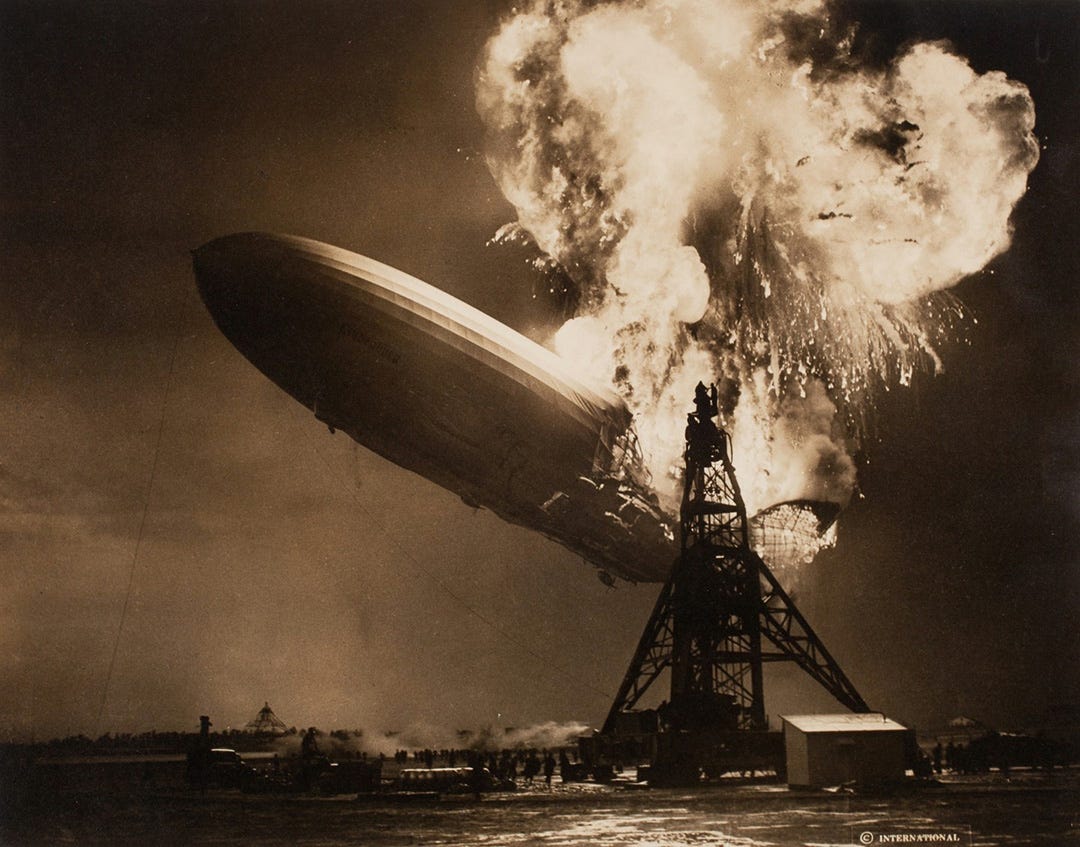
May 6, 1937: The LZ 129 Hindenburg caught fire while attempting to dock at Lakehurst Naval Air Station in New Jersey. Thirty-six people died. Photojournalist Sam Shere of International News Photos had been reluctant to take the assignment — a routine airship landing. When the Hindenburg erupted in flames at 7:25pm, he had no time to raise his Speed Graphic to his eye. “I had two shots in my big Speed Graphic, but I didn’t even have time to get it up to my eye,” he said later. “I literally ‘shot’ from the hip — it was over so fast there was nothing else to do.” His photograph won the Editor and Publisher Award for Best News Picture of 1937. In 1969, Jimmy Page used it as the basis for the artwork on Led Zeppelin’s debut album.

THE INTERNATIONAL REVIEW OF PHOTOGRAPHY
To advertise an exhibition, book, fair, or open call, email internationalphotographynews@gmail.com