

THE PHOTOGRAPHER
A Sports Writer Won the Prize With a Car in a Tree. Alec Soth Spent Four Years on 46 Pictures.
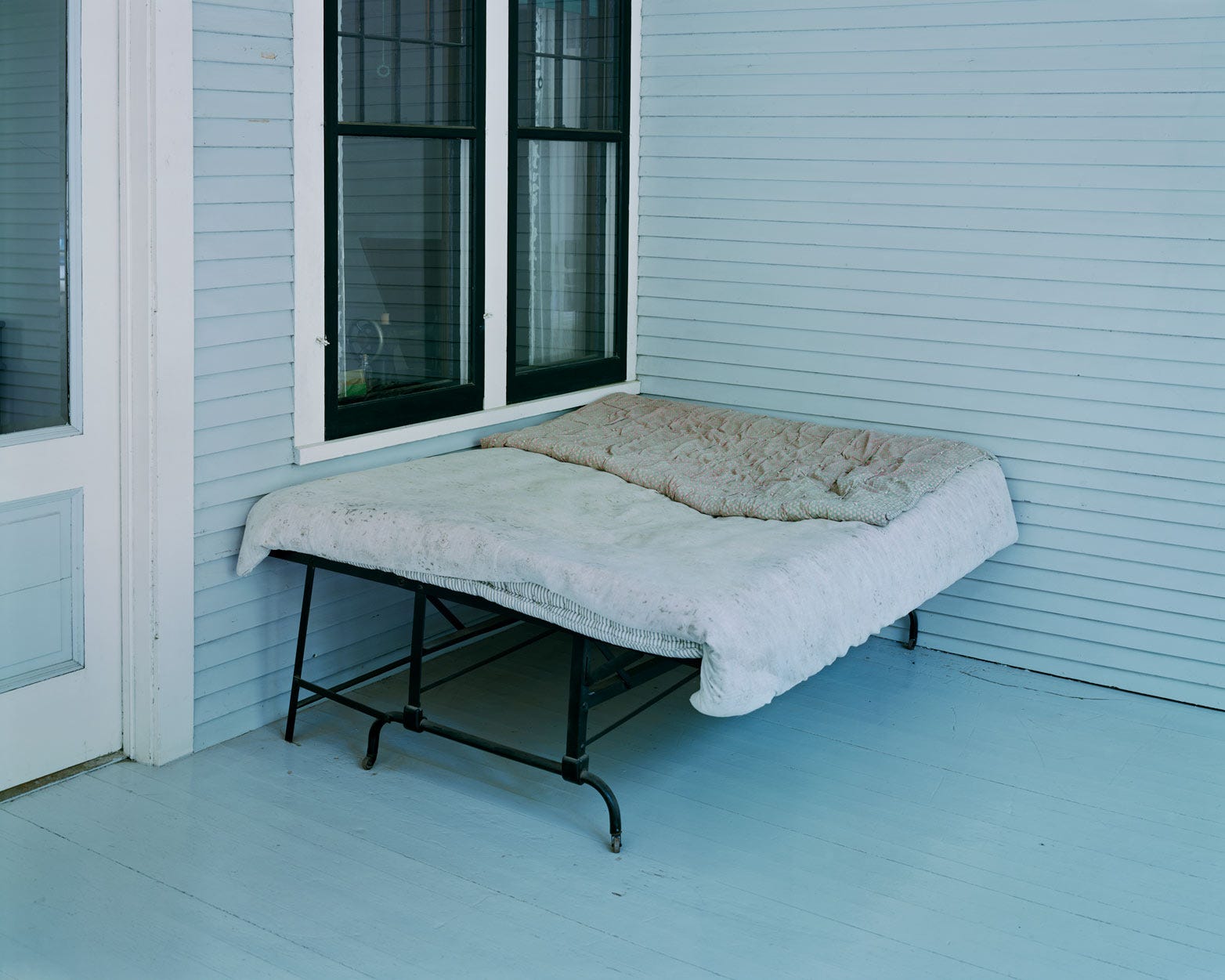
Before Sleeping by the Mississippi, Alec Soth spent years in photo labs, a newspaper darkroom and a museum job, while a sports writer with a disposable camera beat him to the prize. Here’s how the book got made, and what he says it takes.
Sometime in the 1990s, a sports writer at a chain of suburban Minnesota newspapers came across a car in a tree. He had a disposable camera. He took the picture. It won the big award in the small-paper photo contest.
One of the chain’s photographers had worked hard to win that contest and never did. His name was Alec Soth. At Lillie Suburban Newspapers he shot the pictures, processed the film and made the prints. The assignments, he told the Brooklyn Rail, were “ribbon cuttings and parades, city council meetings.” He later called the winner the paper’s “crusty old sports writer.” Keep that car in mind.
Soth was born in Minneapolis in 1969. He’s called himself a “very introverted child.” At five or six he’d pack a suitcase with books and run away from home. “I’d only get a few blocks but it was the whole Huck Finn process, where the north is home and the south symbolises the exotic,” he told the British Journal of Photography.
In 10th grade, an art teacher named Bill Hardy, a working painter, opened art up to him. “I owe my life to my high school art teacher,” he told LensCulture. He went to Sarah Lawrence College to become a painter. “I did well in advanced painting classes, but I felt like a fraud. I didn’t love painting.” He made sculptures outdoors and photographed them, and the photographs took over. At a lecture, Joel Sternfeld showed a slide of the van he’d used to cross America. “Something clicked,” Soth said.
After graduating, around 1992, he went home and worked in photo labs, then at the newspapers. In 1996 he became a digital image specialist at the Minneapolis Institute of Arts. “The notion of making a living as an artist seemed very unrealistic, particularly living in Minnesota. At a certain point, I thought, it’s just not going to happen,” he has said.
Back to the car in the tree. Soth once told the writer Aaron Schuman, “Anyone can take a great picture. But very few people can put together a great collection of pictures.” The sports writer proves the first half. A car in a tree makes a great picture for whoever is standing there with a camera, even a cheap one. Luck can hand you one frame like that. It’s much worse at handing you 46 frames that belong together. That takes years, and Soth was about to spend them.
In 1999 he won a McKnight Photography Fellowship, and he has said the grant went to the river project. It felt, he told the Rail, “like I was given this moment with that money.” At first the work was called From Here to There, with each picture leading to the next. “If in one picture I photographed a chicken, I might then go on to photograph a short-order cook frying eggs.” A partial trip down the Mississippi showed him the river could stand for that kind of wandering. He got tired of the gimmick and let the river be the link.
He also chose a camera that slowed everything down. “Years ago, I made a list of my favorite photographers. An extraordinary number of them used the 8x10. I figured I might as well give it a try.” He worked under a dark cloth and usually walked up to people without the camera in his hands. “Because it takes so long, you have a conversation with them and the result shows.”
Driving through Vasa, Minnesota, he saw an odd house and knocked. A woman told him her husband Charles had built it and had moved the stairwell three times. Charles showed him a small top-floor room ringed with windows that he called his cockpit, where he and his daughter built model airplanes. “The room was too small to photograph, so I took Charles out on the roof.” In Little Falls, Soth found Charles Lindbergh’s boyhood bed on the porch of a house above the river. Lindbergh wrote about lying in bed listening to planes overhead. “It seemed so poignant to me,” Soth said. “The river lures dreamers.”
Not every picture sat easily with him. Early on, in Memphis, he pulled into a motel on Elvis Presley Boulevard that was also a brothel. “I was terrified to go into it, but I was so curious that I had to go and have a look.” He photographed Sunshine, 21, in a bikini on her bed, and felt guilty. “Sometimes the unpleasant pictures, the ones that make you feel guilty, are the best—most honest.”
By 2002 he had four years of river pictures. He kept 46. “I think the weak point of the book is the lack of in-between pictures,” he told the BJP, but he wanted it tight. “I want to remember the book in my head.”
In spring 2003, still at the museum, he printed 50 copies of the book on an inkjet printer and gave them away. “People responded to them very quickly and soon publishers were interested,” he said. He took the book to Steidl. Curators for the 2004 Whitney Biennial saw a copy and put him in the show, and the picture of Charles on his roof became the Biennial poster. The New York Times later reported that at the time he called himself a “complete nobody.” Steidl published the book in June 2004, and that month he joined Magnum as a nominee.
Alec Soth has published more than 30 books. On advice, he told The Guardian in 2024, “It’s meaningless. You just have to keep going.” About his students, he told Schuman, “I tell them to pretend that they have a museum in their basement. It is locked and they are the only person with a key.” If you’re making pictures nobody’s asked for, that’s your basement, and you hold the key. Soth kept his locked for years. Then one spring he printed 50 copies and handed them out.
EXHIBITION HIGHLIGHTS
Graciela Iturbide: Between Two Worlds
San Francisco Museum of Modern Art | San Francisco
July 11 – November 29, 2026
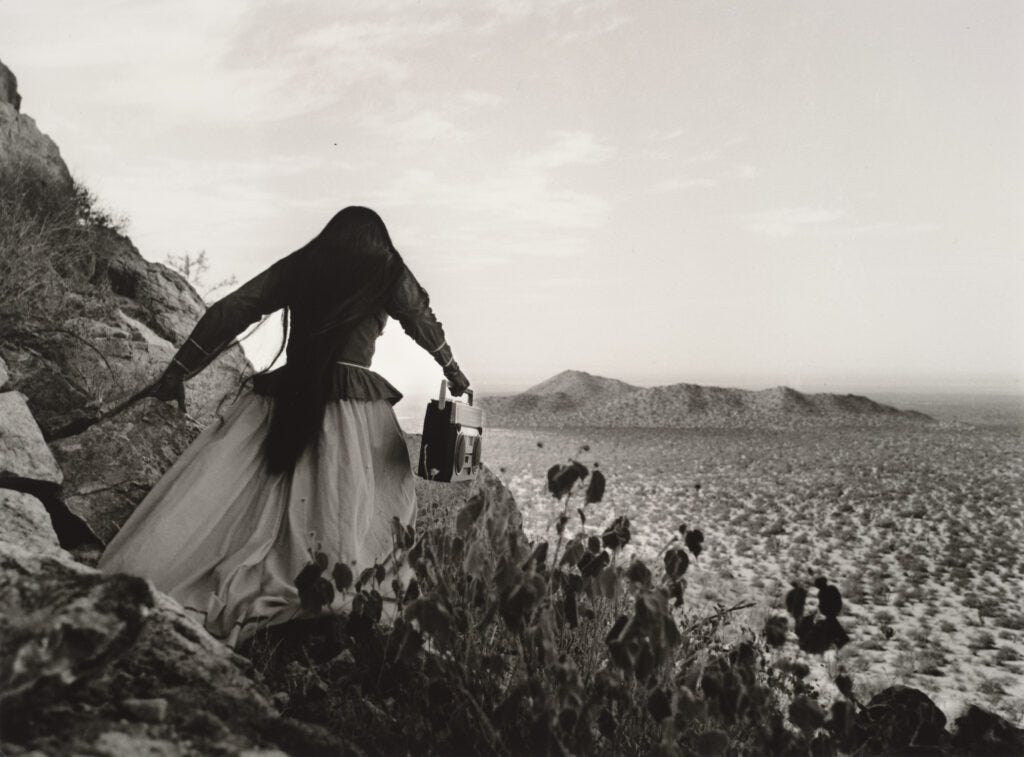
In 1979 Graciela Iturbide spent a month and a half at Punta Chueca, in Mexico’s Sonora Desert, photographing the Seri people for the National Indigenous Institute’s ethnographic archive. About 500 people lived there. On a walk to a cave with indigenous paintings, she took one picture of a woman carrying a tape recorder. The Seris got the recorders from Americans in trade for baskets and carvings, she told The Guardian, so they could listen to Mexican music. Iturbide didn’t notice the frame on her contact sheet until her editor asked about it. “I call her Mujer Ángel [Angel Woman], because she looks as if she could fly off into the desert,” she said. In 2019 she told The Observer, “If I am not surprised, I cannot take photographs, because it is missing that emotional dimension.” She studied film and took a class with Manuel Álvarez Bravo. The mostly black-and-white retrospective covers more than five decades in Mexico, India, Madagascar, Italy and the US.
Louvre Photo
Musée du Louvre | Paris
November 4, 2026 – May 3, 2027
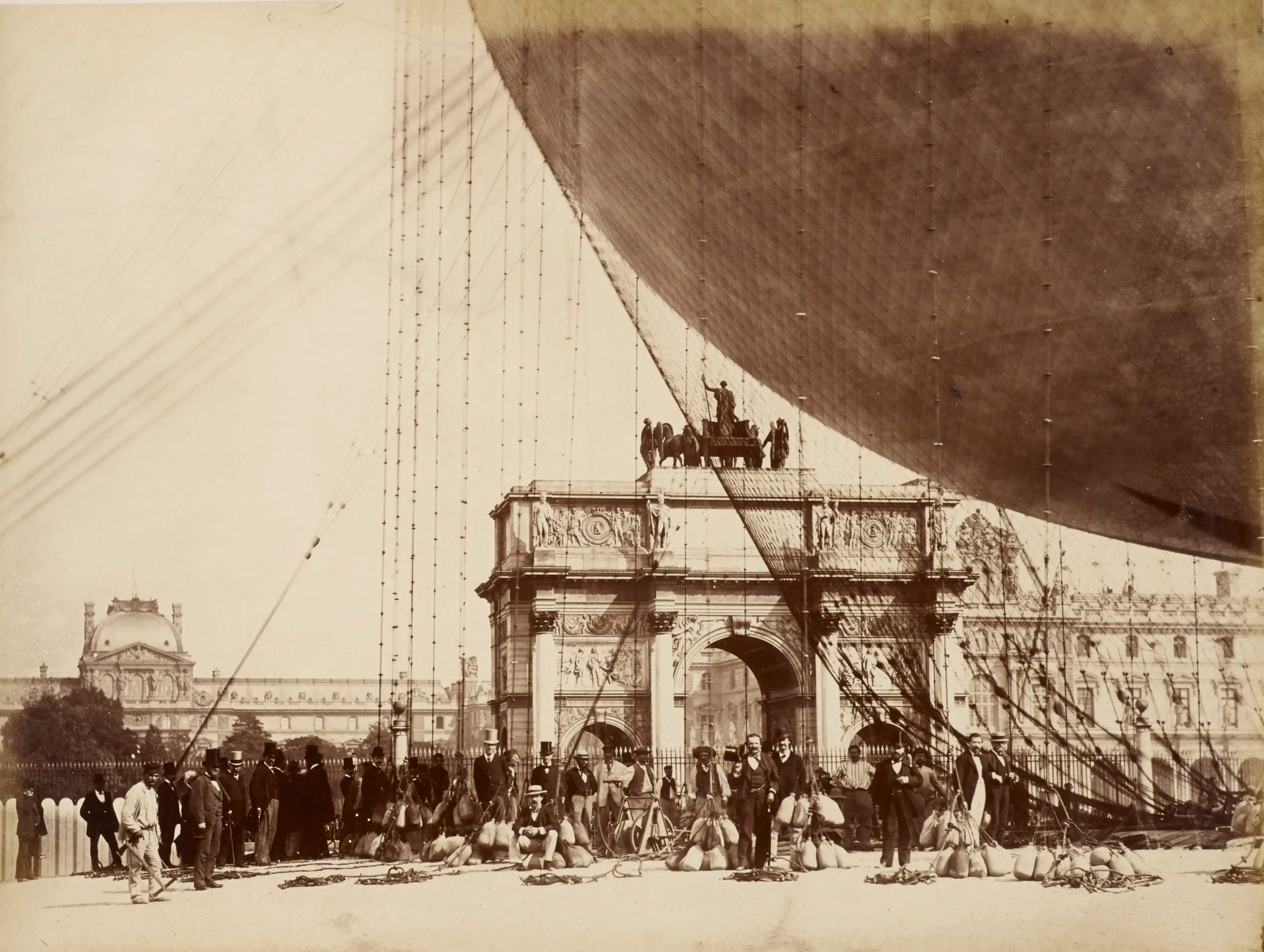
In 1839 Daguerre photographed the Pavillon de Flore and the Seine, and the Louvre says that made it the first museum ever shown in a daguerreotype. This show runs from that picture to Robert Polidori, through more than 300 photographs that never leave the palace walls or the Tuileries gates.
Every Minute Is History: Five Views of Los Angeles
Getty Center | Los Angeles
September 1, 2026 – January 3, 2027
The Getty has put five photographers in one room whose work widened how Chicano and Chicana Los Angeles was pictured in the second half of the twentieth century: Laura Aguilar, Reynaldo Rivera, George Rodriguez, Patssi Valdez and Ricardo Valverde. The museum names their sources as social documentary, staged scenes, fashion and the popular press.
Eileen Cowin: Between Panic and Paradise
Los Angeles County Museum of Art | Los Angeles
August 23, 2026 – January 3, 2027
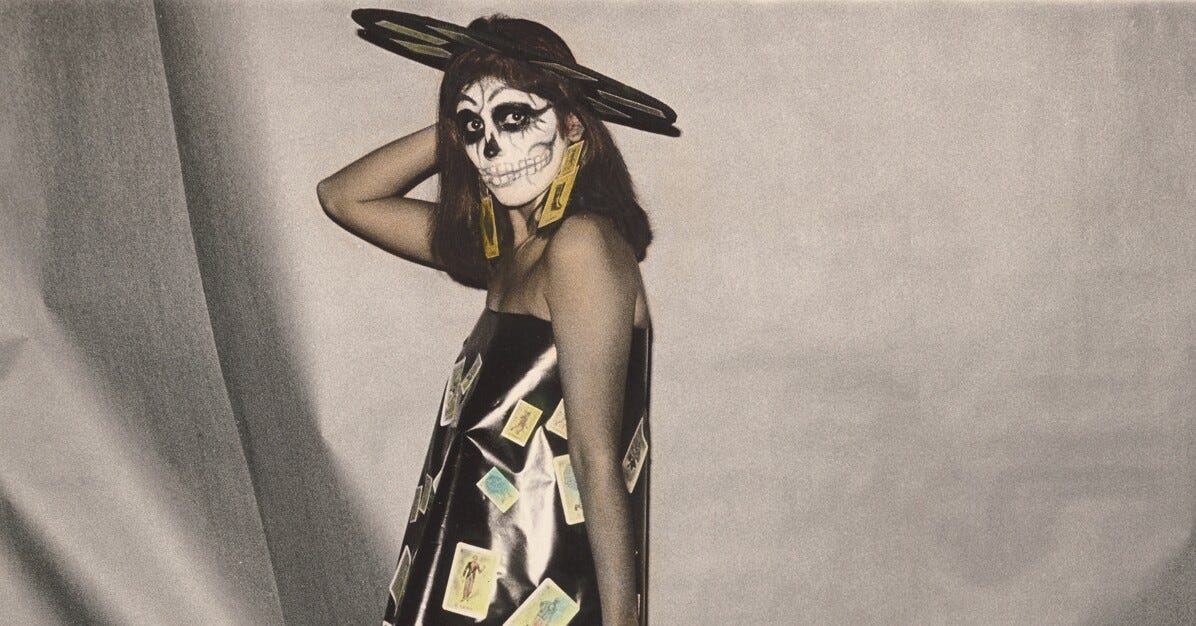
LACMA is presenting more than fifty years of photography and video by Eileen Cowin, a Los Angeles-based artist. The museum says she has explored romance and rivalry, the personal and the political, and the monotony and mystery of daily life, and that she often blurs the distinction between nonfiction and fiction. She draws on cinema, literature, poetry and painting to shape her photographic narratives. The survey highlights her work with experimental photographic processes, Polaroids, inkjet prints and videos.
WHAT’S ON AROUND THE WORLD
Opening This Week
Paris
Susa Templin: The Skies Over Berlin — Berlin Time Lines — Galerie Electron Libre · Nov 9–15 (photographs of Berlin made with an analog medium-format camera; the gallery lists the run as 9–15 November and the hours as 11 a.m. to 7 p.m.)
Objectif FEMMES: Photographes sélectionnées 2026 — Mairie du 9e, Salons Aguado · Nov 10–22 (eleventh edition of the Paris festival dedicated to women photographers)
SOLA — Galerie Joseph · Nov 10–17 (a group exhibition of fine-art prints; opening Tuesday, 10 November, 6–9:30 p.m.)
Closing Soon
Albury, New South Wales
National Photography Prize 2026 — Murray Art Museum Albury · Aug 8 – Nov 22 (twelve finalists)
Berlin
Russell James: It’s About Time — CAMERA WORK · Oct 10 – Nov 14
Cottbus
Ungebremste Selbstbewegungen: Kunst mit Fotografie in der DDR — BLMK Dieselkraftwerk · Aug 29 – Nov 15
Graz
Valérie Jouve: The Outside Inside — Camera Austria · Sep 26 – Nov 22
Hannover
Nikita Teryoshin: Nothing Personal — Galerie für Fotografie in der Eisfabrik · Oct 15 – Nov 22 (Nothing Personal: The Back Office of War)
Houston
Across the Americas: FotoFest, Latin America, and Latino Cultures in the United States — FotoFest · Oct 1 – Nov 14
London
Roots — The Photographers’ Gallery, Print Sales · Sep 18 – Nov 15
New Plymouth
Economies of Deferral — Govett-Brewster Art Gallery · Aug 8 – Nov 15
Paris
Walid Raad: Festival of (in)gratitude — Centquatre · Oct 23 – Nov 22
Rotterdam
Quickscan 3 — Nederlands Fotomuseum · June 26 – Nov 22 (twenty photographers and artists working in the Netherlands)
San Francisco
Raymond Meeks: Assemblage — Casemore Gallery · Sep 19 – Nov 14
São Paulo
Círio de Nazaré. Do sagrado ao profano: uma extensão do Brasil — Museu da Imagem e do Som · Oct 6 – Nov 15 (Nova Fotografia 2026)
Venice
Lorna Simpson: Third Person — Punta della Dogana · March 29 – Nov 22
Ongoing
A rotating selection of shows worth the trip, beyond the openings and closings above.
Amsterdam
Hailun Ma: Hometown — Foam · Through Jan 20, 2027 (her first major solo show outside China)
Antwerp
Graciela Iturbide: Eyes to Fly With — FOMU · Through Jan 17, 2027
Berlin
Miji Ih: Mouths: On Water and Whisky — Fotografiska Berlin · Nov 4 – Jan 13, 2027 (her largest solo show yet, with photographs, archive material, sound and video)
Carrie Mae Weems: The Heart of the Matter — C/O Berlin · Through Feb 3, 2027
Columbus, Ohio
Sammy Baloji: When Extraction Becomes Form It Speaks in Borrowed Tongues — Wexner Center for the Arts · Sep 20, 2026 – Feb 14, 2027 (his first solo exhibition in the United States; photographs, films and sculpture on colonial leftovers in architecture and ornament, with two new collaborations, including one with Cécile Fromont and Gloria Cabral; free)
Copenhagen
Jochen Lempert: Flora Incognita — Kunsthal Charlottenborg · Sep 26, 2026 – Feb 21, 2027 (his first solo show in Denmark; analogue black-and-white photographs of plants, animals and small natural events, shown unframed)
Landskrona
Stephen Gill: Truths Undisclosed Reveal Unspoken Words — Landskrona Foto · Nov 5 – Mar 28, 2027 (more than 30 years of work; a companion show is at Galleri Format, Malmö)
London
Light and Magic: The Birth of Art Photography — Tate Modern · Through Feb 21, 2027
New York
Masao Gozu: Windows and Bars — MoMA PS1 · Nov 5 – Mar 15, 2027 (his first US museum show)
Paris
Wilhelm von Gloeden: Photographies — Galerie Au Bonheur du Jour · Nov 4 – Jan 30, 2027 (vintage prints from two collections; appointment preferred)
Rafał Milach: Last Resort — delpire & co · Nov 5 – Jan 9, 2027 (work on protest; part of PhotoSaintGermain)
Raymond Depardon — Bourse de Commerce – Pinault Collection · Through Jan 25, 2027
Rotterdam
Plastic Sea, Perfect Storm — Kunsthal Rotterdam · Through Mar 7, 2027 (Rob Hornstra and others)
Storrs, Connecticut
Colors in the Dark: Ellen Carey — William Benton Museum of Art · Sep 1 – Dec 20, 2026 (thirty-nine years of camera-less photograms and large-format Polaroid work, much of it given to the museum by the artist)
Vevey
Richard Billingham: Ray’s a Laugh — 30 years — L’Appartement – Espace Images Vevey · Sep 5, 2026 – Feb 14, 2027 (Images Vevey’s production marking thirty years since the 1996 book about his father Ray, his mother Liz and his brother Jason in a Birmingham council flat; curated by Stefano Stoll with Tamara Jenny-Devrient)
Washington, D.C.
Remember Me: Picturing African Americans in Early Photography — National Gallery of Art, West Building, Gallery G30 · Nov 7, 2026 – Mar 14, 2027 (about seventy works, many shown for the first time, of and by Black Americans in the nineteenth and early twentieth centuries, including James Presley Ball and James Van Der Zee; admission free)
FESTIVAL WATCH
Photo Days 2026 — Paris and Île-de-France · Nov 2–30 (seventh edition; agnès b. is this year’s patron)
PhotoSaintGermain 2026 — Paris · Nov 5–28 (15th edition, 38 free exhibitions on the Left Bank)
Paris Photo 2026 — Grand Palais, Paris · Nov 12–15 (29th edition; Thursday–Saturday 1–8 p.m., Sunday 1–7 p.m.)
Approche 2026 — Le Molière, 40 rue de Richelieu, Paris · Nov 12–15 (tenth edition)
ImageNation Paris 2026 — Galerie Joseph, Rue de Turenne, Paris · Nov 13–15 (an independent festival during Paris Photo days; opening Friday, 13 November, 6 p.m.)
OFF THE PRESS


Bieke Depoorter: The Beds I Slept In
Hannibal Books
At 21, Bieke Depoorter rode the Trans-Siberian Railway carrying a note in Russian that asked strangers if she could stay at their place. “For me, it was just a strategy to avoid sleeping on the streets,” she told Huck. Between 2008 and 2016 she did it in Russia, the United States and Egypt. People made up beds for her on air mattresses, couches, carpets and the ground, in living rooms and kitchens. She photographed them and never meant to publish the pictures. A decade later she found them and wondered if she’d been collecting evidence. The book is arranged by country, with maps and bits of her travel notes, and now and then she shows up in a mirror.
Kohei Yoshiyuki: The Park
Radius Books / Yossi Milo
One summer night Kohei Yoshiyuki walked through a park in Shinjuku and came on a couple having sex while others watched. He spent about six months befriending the watchers before he shot. “To photograph the voyeurs, I needed to be considered one of them. I behaved like I had the same interest as the voyeurs, but I was equipped with a small camera.” From 1971 to 1973 he worked at night in Shinjuku and Yoyogi parks with a 35mm camera, infrared film and flash, and later in Aoyama. This newly designed edition adds pictures and documents.
Jean-Pierre Laffont: Rebels with a Cause
Damiani
In 1965 two young trans people asked Jean-Pierre Laffont to take their picture and invited him into their building on West 65th Street. He suggested a fashion shoot on the roof, and they took two more hours to dress and do their makeup. Laffont, a French photographer born in 1935, shot for Time, Life and Newsweek. “New York was broken, dirty and completely bankrupt,” he told Huck. He got into the Bronx early on by working with the sanitation department. The book has more than 150 pictures, from the 1960s to the 1980s.
OPEN CALLS
Sony World Photography Awards 2027: Series — Jan 12, 2027, 4 p.m. GMT · free · $25,000 and the Photographer of the Year title for the overall winner; 5 to 10 images across ten categories, entrants 18 and over (the Single Image competition closes Jan 5)
Wildlife Photographer of the Year, 63rd competition — Dec 3, 11:30 a.m. GMT · £35 for adults, free for ages 26 and under and for photographers in eligible countries · run by the Natural History Museum, London; up to 25 images
Fotografiska Emerging: Coming Together — Dec 3, 10 a.m. CET · no fee listed · five artists each get €300 and a feature on Fotografiska’s platforms; one image per submission, up to five, on togetherness and community
THE INTERNATIONAL REVIEW OF PHOTOGRAPHY
To advertise an exhibition, book, fair, or open call to photography collectors, curators, and gallerists worldwide, email internationalphotographynews@gmail.com
The International Review of Photography is a Fabrik Media publication | photograph.is