

THE PHOTOGRAPHER
Matt Black Set Out to Photograph America’s Margins. Everywhere He Went, He Found the Middle.
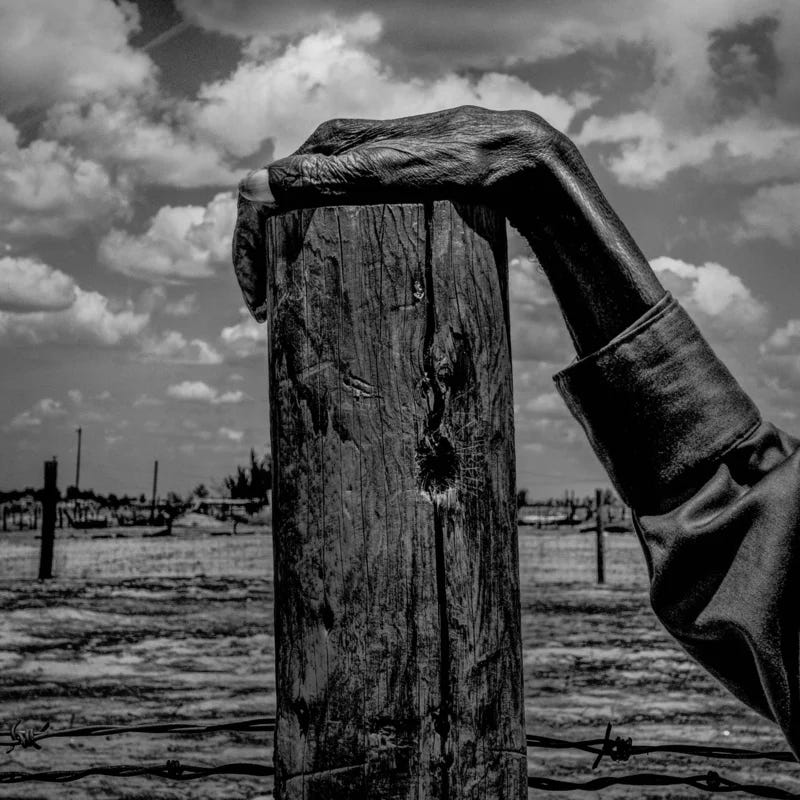
On January 5, 2016, in Fresno, Matt Black wrote down everything he was carrying: “One pair of pants, one long-sleeve shirt,” a Panasonic camera, a Hasselblad XPan, six lenses and 30 rolls of film. Then he got on a late-night bus to Calexico, on the Mexican border, 438 miles and ten hours away. From there he caught a bus to Bangor, Maine, 3,317 miles in one go. A year into the project, he wrote: “I once told myself that all I needed to understand was my corner of the world, but I’ve been crisscrossing the country for a year now, and all I want to do is see more.”
That corner was the Central Valley of California, and he had spent his career refusing to leave it. Black was born in 1970 and grew up on the farm edge of Visalia. His father was a car mechanic who became an irrigation engineer. In high school he worked in the darkroom of the local afternoon paper, the Tulare Advance-Register, and stayed printing past midnight. Photography, he assumed, would be his ticket out. Then San Francisco State gave him a photojournalism scholarship, and within about three months he had turned against the whole idea. “It just felt weird and fake to be photographing subjects I had no connection to,” he told Alta in September 2021. “I didn’t want to illustrate other people’s ideas; I wanted to illustrate my ideas.” In his mid-20s he decided the work had to happen at home, and in 1998 he and his wife, Melissa, moved back to the valley.
For the next 15 years he photographed the place that feeds the country. The Central Valley grows about a quarter of America’s food, yet its towns have some of the deepest poverty in California. He photographed raisin pickers paid 21 cents a bucket, and families living without electricity or hot water. His stories on drought and farm labor ran in The New Yorker and Time. Still, he kept running into the same reaction. “I get the feeling that people can dismiss it by saying that it’s happening in some weird place in the middle of nowhere in California, that it’s an outlier,” he told Time in 2015. “But I know very well that the Central Valley is not an outlier.”
Instagram gave him a way to prove it. In 2014 he started posting valley pictures with their locations attached, a project he called The Geography of Poverty, and watched them build up on a map. The account took off. Black then took the census definition of concentrated poverty, a place where at least one in five people lives below the line, and went looking for those places across the country. Between 2014 and 2020 he covered more than 100,000 miles, often by bus, through 46 states and Puerto Rico. He traveled, in his words, “coast to coast and back, without ever basically crossing the poverty line.” Early on he worked out that places like this are never more than about two hours’ drive apart. Asked how that felt, he gave a two-word answer: “Mind-blowing.”
The pictures are black and white, with bleached skies and very dark shadows. A family sits on a sidewalk in Farmington, New Mexico, at dusk, after their car has been repossessed. People line up on Main Street in Del Rio, Texas, on Thanksgiving Day to sell their plasma. Predawn passengers ride a bus out of Fresno to the fields. Black also kept what he found on the ground, nearly 3,000 objects in all: lottery tickets, plastic forks, a driver’s license, work gloves, bent nails, panhandling signs. Thames & Hudson published the photographs as American Geography in 2021 and the objects as American Artifacts in 2024. Somewhere along the way he dropped the word poverty from the title. He told the curator Fred Ritchin that he was making “not a portrait of marginalized America, but a portrait of America itself.”
The word “marginalized” still bothers him, because he knows who usually says it. “I know the feeling, that sense of shame, of being told from the outside that where you come from doesn’t matter,” he told Alta. The myths cut both ways, he added. “These myths we tell ourselves are accepted not just by the winners in a scenario but also by those who are not winning. If I’m poor in the richest country in the world, it must be my problem.”
The establishment has caught up with him on his own terms. He was nominated to Magnum in 2015, while on the road in Hattiesburg, Mississippi, and became a full member in 2019. In October 2025 the MacArthur Foundation gave him a fellowship, $800,000 with no conditions, and said his work shows that poverty “is not an aberration but rather a defining feature of the American landscape.” He still lives in Exeter, 15 minutes from where he grew up. According to the foundation, he is now photographing mining across the West and using thermal cameras to record the heat coming off burned ground in the Sierra Nevada. MacArthur Foundation
WHY IT MATTERS
Most photographers who document poverty travel to it. Black did it the other way around. He started at home and then went looking for every other place that looked like home, and the map filled in. American Geography treats the poorest towns in the richest country as the ordinary condition of a large share of Americans, and Black made the point with nothing more than a bus ticket and a census table.
EXHIBITION HIGHLIGHTS
Mimi Plumb: Blazing Light
Norton Museum of Art | West Palm Beach
October 31, 2026 – March 14, 2027
Plumb was born in 1953 and started photographing as a teenager around San Francisco, where California’s hard light and fast-moving development became her subject. Blazing Light, organized by the High Museum of Art in Atlanta, is her first museum exhibition. It brings together three bodies of work: The White Sky (1972–1978), Landfall and The Golden City (1984–2020), and The Reservoir (2021–2025), in which a drained lake looks like the scene after a disaster nobody names. Plumb talks about the work with Gregory J. Harris at the museum on October 30.
Atong Atem: Passage
NGV Australia, The Ian Potter Centre | Melbourne
October 30, 2026 – June 14, 2027
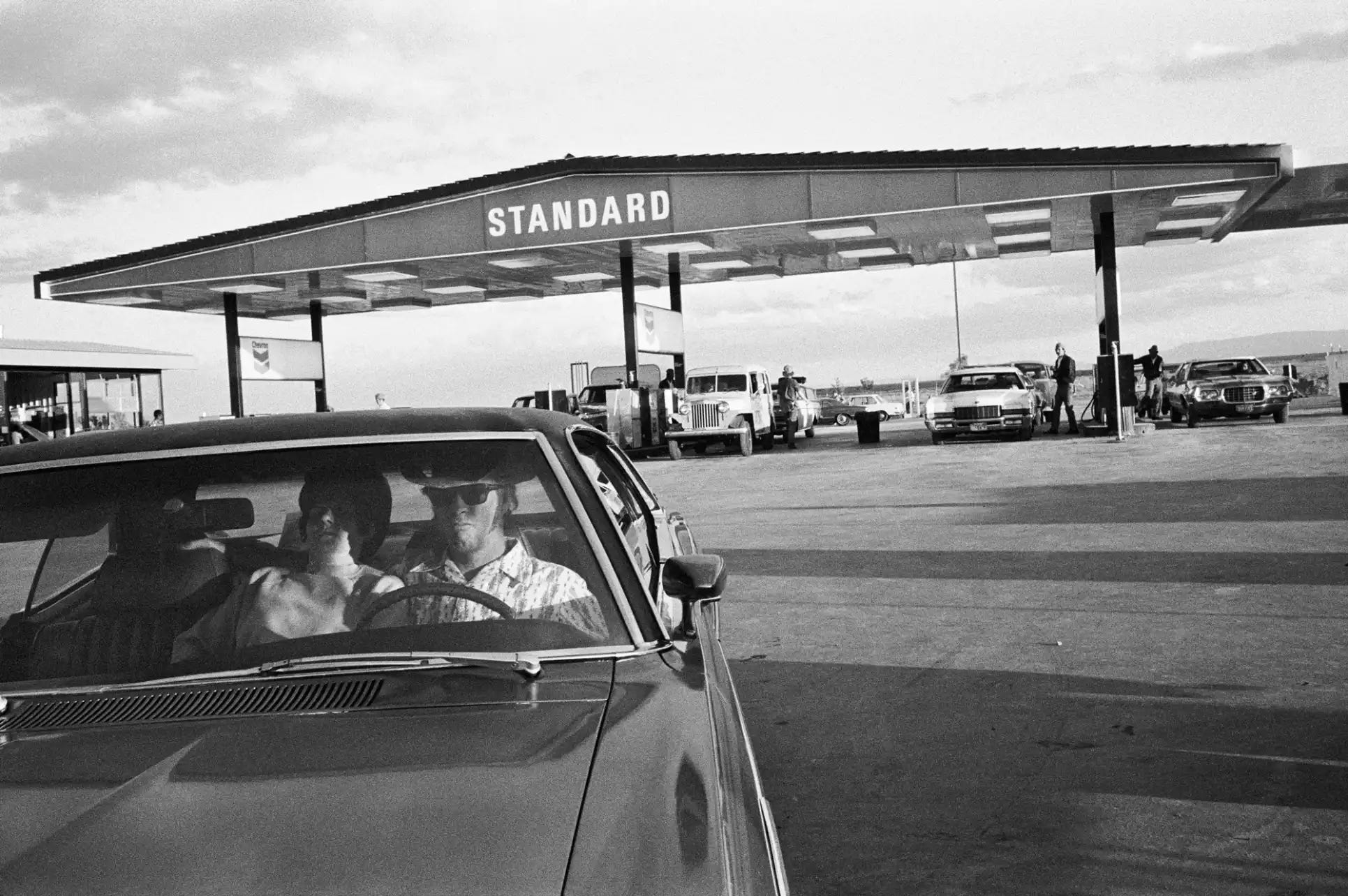
Atem was born in Ethiopia in 1991 to South Sudanese parents and lives in Melbourne. She paints her own body and dresses it in textiles and symbolic objects, drawing on African studio photography, family albums, Catholic imagery and science fiction. Passage is her first major solo exhibition in Australia, with new and earlier work. Thames & Hudson Australia publishes a monograph with the show, launched at the gallery on October 31, and entry is free.
Nan Goldin: The Ballad of Sexual Dependency
Fondazione Sandretto Re Rebaudengo | Turin
October 29, 2026 – March 28, 2027
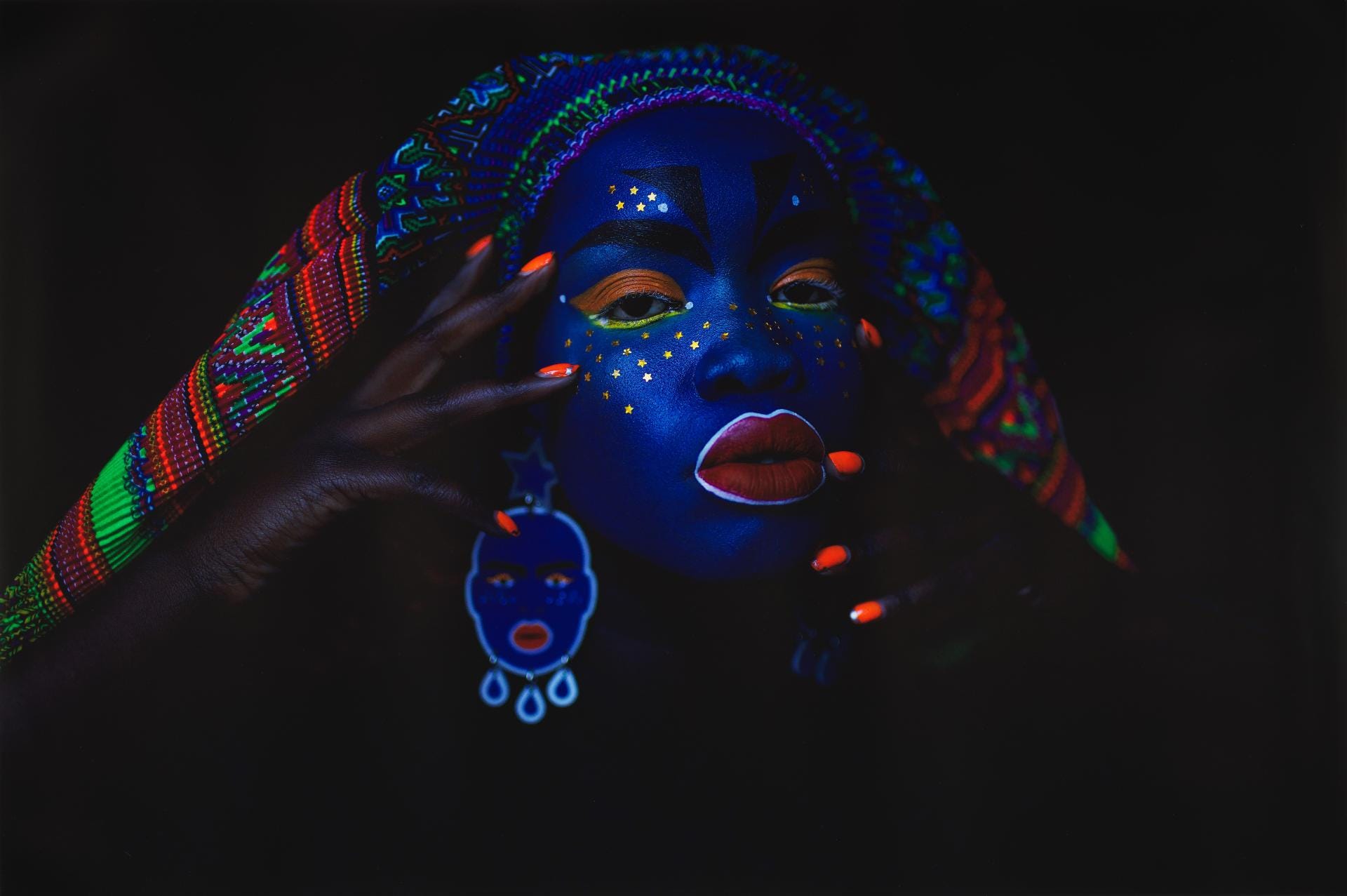
Goldin made the 126 pictures in The Ballad between 1973 and 1986, photographing her friends, lovers and herself in New York. Before it was a book, it was a slide show set to music that she ran in clubs. Aperture published the book in 1986, and it is now in its 23rd printing. The foundation owns the full set and hangs all of it to mark photography’s 200th anniversary. Goldin called it “the diary I let people read.”
Jeff Brouws: Silent Monoliths
Robert Mann Gallery | New York
October 29 – December 12, 2026
Between 1907 and 1956, American railroads built hundreds of reinforced-concrete towers to hold coal for steam engines. Diesel made them useless, and many are still standing. Over five years and more than 20,000 miles, Brouws photographed them one by one under flat, overcast skies, the way the Bechers photographed water towers. The show draws on his MIT Press book Silent Monoliths: The Coaling Tower Project and adds a grid of color pictures of empty sign frames. Brouws talks at the opening on October 29, 6–8 p.m.


Man Ray: Kiki
Museum Ludwig | Cologne
October 31, 2026 – June 13, 2027
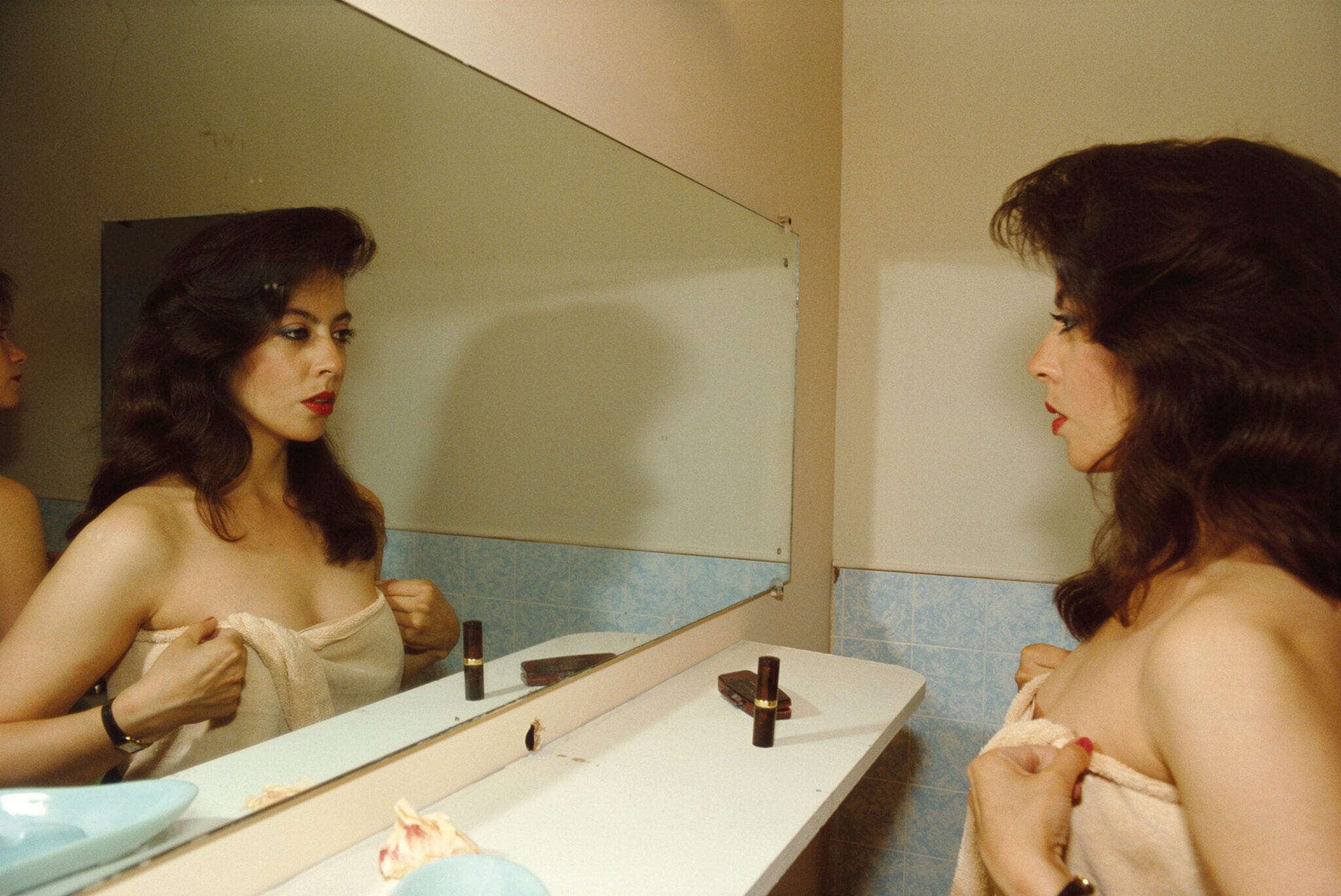
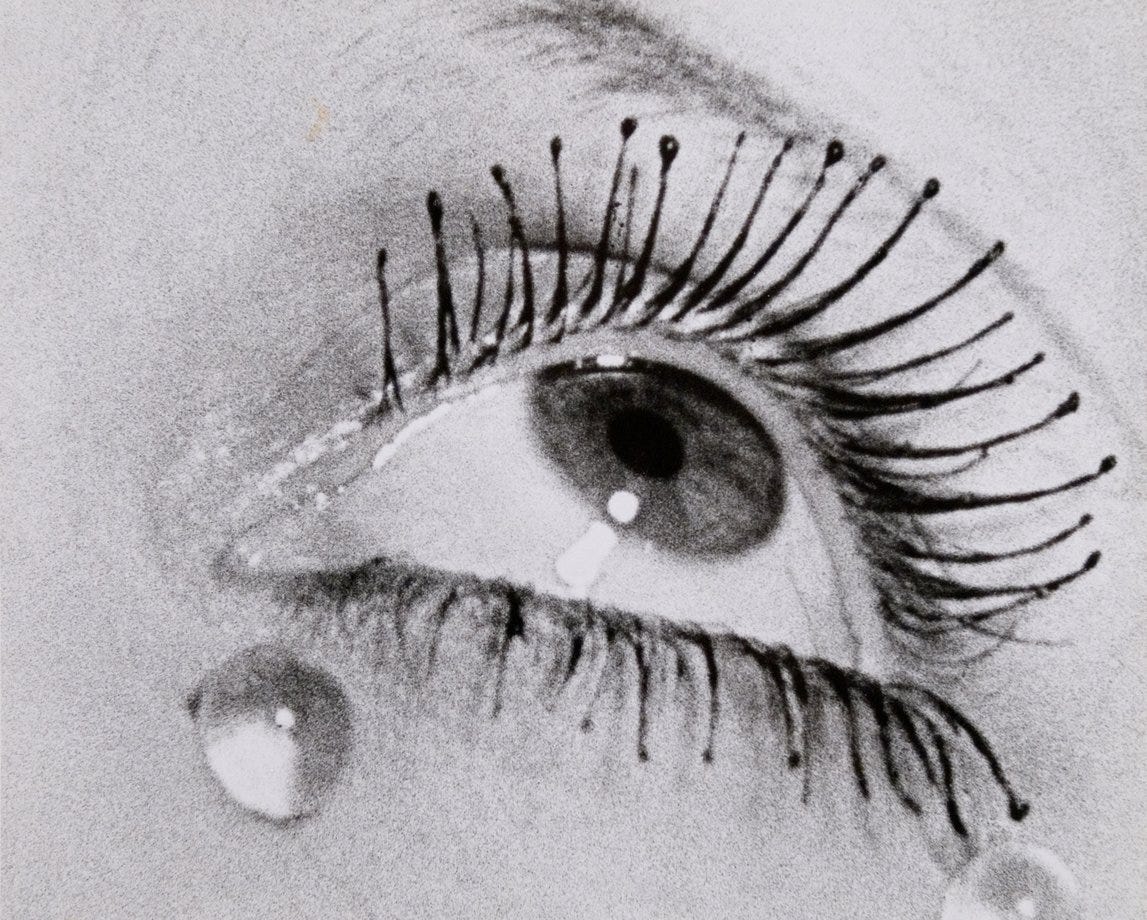
The show is built around one picture, Le Violon d’Ingres (1924), in which Man Ray turned the back of Alice Prin, known as Kiki de Montparnasse, into a violin by adding two f-holes. The Museum Ludwig owns a later print that Man Ray signed as an artist’s proof, made from the version where he used a stencil in the darkroom rather than painting on the print. Another print of that image sold in 2022 for more than any photograph had sold for at auction. The show also tells Kiki’s own story, from a poor childhood to model, singer and painter in 1920s Paris.
WHAT’S ON AROUND THE WORLD
Opening This Week
Geneva
Edmund Clark and Crofton Black: Cosmopolemos — Centre de la photographie Genève, Bibliothèque de Genève, Espace Ami-Lullin · Oct 29 – Feb 20, 2027
Hamburg
Hito Steyerl: Deine Mudda macht Show — Deichtorhallen Hamburg · Oct 30 – Mar 29, 2027 (about eight installations from 1999 to 2025)
Iserlohn
Trent Parke: Monument — Städtische Galerie Iserlohn · Oct 30 – Feb 14, 2027 (with Magnum Photos)
Madrid
Sebastião Salgado: Aqua Mater — Fundación Canal · Opens Oct 28 (about 100 prints from Aqua Mater and Glaciares*, curated by Lélia Wanick Salgado)*
Marseille
Paul Reas: Fables of Faubus — Centre Photographique Marseille · Oct 30 – Jan 30, 2027
Paris
Park Chan-wook: Quand l’horloger immobilise le temps — Galerie VU’ · Oct 30 – Nov 28 (the film director’s photographs)
Toronto
Molly Steels: I Am/Was/Always — The Image Centre · Oct 28 – Dec 5
Closing Soon
Adelaide
James Tylor: Turrangka...in the shadows — Art Gallery of South Australia · Closes Nov 1
Berlin
Katharina Sieverding: Life–Death — Galerie Thomas Schulte · Closes Nov 5
Düsseldorf
Irmel Kamp: Arrange Whatever Pieces Come Your Way — Linn Lühn · Closes Oct 31
Valérie Belin: Le songe des idoles — Van der Grinten Galerie · Closes Nov 7
Johannesburg
Mikhael Subotzky: A Johannesburg Landscape (or Thirteen Tons Settled to Brick) — Goodman Gallery · Closes Oct 31
London
Martin Parr: The Last Resort — Rocket Gallery · Closes Oct 31
Los Angeles
Roy DeCarava: the sound i saw — David Zwirner · Closes Oct 31
Thomas Demand — Matthew Marks Gallery · Closes Nov 7
Munich
Ragnar Axelsson: Greenland — Kunstfoyer · Closes Nov 1
Paris
Robert Frank and John Cohen: Mabou – Pull My Daisy — Les Douches la Galerie · Closes Oct 31
Ongoing
A rotating selection of shows worth the trip, beyond the openings and closings above.
Amsterdam
Hailun Ma: Hometown — Foam · Through Jan 20, 2027 (her first major solo show outside China)
Antwerp
Graciela Iturbide: Eyes to Fly With — FOMU · Through Jan 17, 2027
Berlin
Carrie Mae Weems: The Heart of the Matter — C/O Berlin · Through Feb 3, 2027
London
Light and Magic: The Birth of Art Photography — Tate Modern · Through Feb 21, 2027
Paris
Raymond Depardon — Bourse de Commerce – Pinault Collection · Through Jan 25, 2027
Rotterdam
Plastic Sea, Perfect Storm — Kunsthal Rotterdam · Through Mar 7, 2027 (Rob Hornstra and others)
FESTIVAL WATCH
Photo Days 2026 — Paris and Île-de-France · Nov 2–30 (seventh edition)
PhotoSaintGermain 2026 — Paris · Nov 5–28 (opening night Nov 5, 6–9 p.m.)
Paris Photo 2026 — Grand Palais, Paris · Nov 12–15
OFF THE PRESS


Richard Avedon: The Harper’s Bazaar Years
Abrams
Avedon talked his way into Harper’s Bazaar in 1944, at 21, and stayed for more than 20 years under the editor Carmel Snow. This is the first book given over to his fashion work for the magazine. It includes an oral history Avedon recorded about those years, never published before, along with an essay by Derek C. Blasberg and a foreword by the current editor, Samira Nasr. “Nobody could believe such a magazine existed,” Avedon said later. Published October 13.
Coming Soon
Stanley/Barker
In 2003 and 2004 Trent Parke drove around Australia’s coasts and found the beach towns of his childhood holidays being torn down and rebuilt. He switched to color film so he could record every price tag and billboard before they changed. The book is oversized, with gatefolds that open out to 144 cm, and its newsprint jacket is designed to age. Parke, born in 1971, was the first Australian to become a full member of Magnum. Pre-order, shipping late October, £85.
Between the Balloons: My Thanksgiving Parade
Aperture
E.A. Kahane has photographed the Macy’s Thanksgiving Day Parade from her third-floor window for more than 25 years. Her first children’s book mixes those pictures with drawings, so the balloons and marching bands turn into something a child can step into. New Yorker cartoonist Tom Toro and David Zwirner Books publisher Doro Globus worked on it with her. 48 pages, 40 images, published October 20, a month before the parade.
OPEN CALLS
Getxophoto 2027 Open Call — Nov 3, 11:59 p.m. CET · €22 per project · theme “Tide”; 12 finalists and three winners, shown at the festival in Getxo, Spain, May 27–June 20, 2027
Ronan Guillou Grant, 4th edition — Nov 15, 6 p.m. Paris time · free · €4,000 for a project on people and the sea, with two months’ residency in Sète and a show at the Musée de l’Étang de Thau in September 2027; professional photographers from Europe and the southern Mediterranean
Sony World Photography Awards 2027: Student Competition — Nov 27, 4 p.m. GMT · free · for photography students aged 18 to 30; five to ten images on a set brief
ON THIS DAY
October 31, 1920 — Helmut Newton is born Helmut Neustädter in Berlin.
In 1936, still a teenager, he began an apprenticeship with Yva, a Berlin photographer of portraits, nudes and fashion, and stayed in her studio for two years. In 1938, as a Jewish teenager, he fled Germany by train from Zoo station with two cameras. He landed a job at The Straits Times in Singapore, served five years in the Australian army, and later made his name at French Vogue in the 1960s and 1970s. Yva was murdered in the Holocaust. Newton came back to Berlin in the end. In 2003 he signed the agreement that set up the Helmut Newton Foundation there, which opened in 2004, a few months after his death in Los Angeles.

THE INTERNATIONAL REVIEW OF PHOTOGRAPHY
To advertise an exhibition, book, fair, or open call to photography collectors, curators, and gallerists worldwide, email internationalphotographynews@gmail.com