

THE PHOTOGRAPH
"Untitled Film Still #21" — Cindy Sherman, 1978
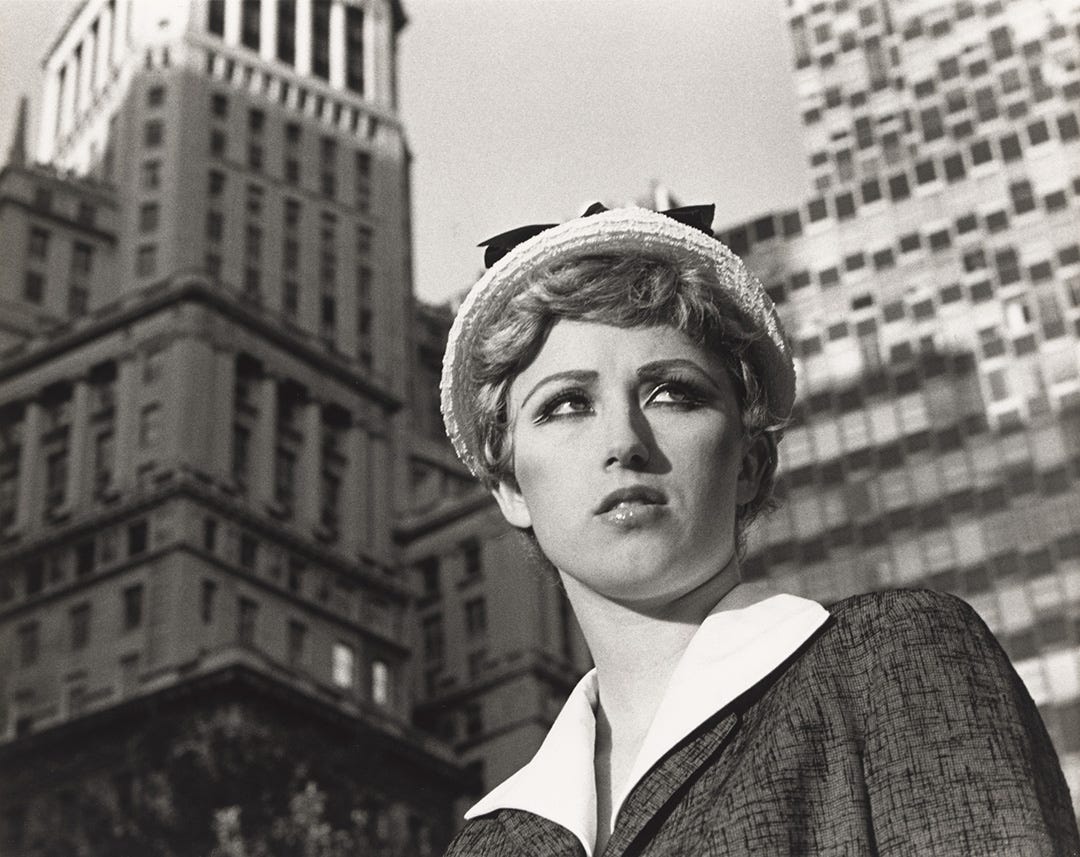
A young woman in a tailored suit and hat looks up and off to the side, the city rising behind her, her expression caught between aspiration and unease. It looks like a frame lifted from a late-1950s film — a career girl arriving in the big city. There is no film. There is no career girl. There is only Cindy Sherman, who in 1978 set up a camera in her own studio, put on the wig and the suit, and played the part herself.
Untitled Film Still #21 belongs to the Untitled Film Stills (1977–80), the seventy black-and-white photographs in which Sherman impersonated the stock heroines of postwar cinema — the ingénue, the seductress, the housewife, the runaway — none of them drawn from any actual movie. She was the director, the stylist, the makeup artist, the model, and the photographer at once. The Museum of Modern Art acquired the complete set in 1995. The series is now among the most studied bodies of work in postwar art, precisely because it refuses to let you locate the “real” person inside the picture.
We feature it this week not for an anniversary but for a resonance. We are living through the first moment in history when anyone can manufacture a convincing human being from nothing — a face, a voice, a biography, a feed. Sherman got there first, by hand, with a shutter cable and a thrift-store wardrobe, decades before the algorithm. She understood that identity, once photographed, is a performance the camera is happy to certify as true.
WHY IT MATTERS
Sherman's whole project is an argument that the photograph does not record a self so much as construct one — and that the construction is the meaning, not a flaw to see past. In 2026, when the distance between a real face and a fabricated one has collapsed to nothing, the Untitled Film Stills read less like art history and more like instructions. She has been telling us for almost fifty years that the person in the picture is a decision someone made.
ON VIEW
New This Week
HIGHLIGHT
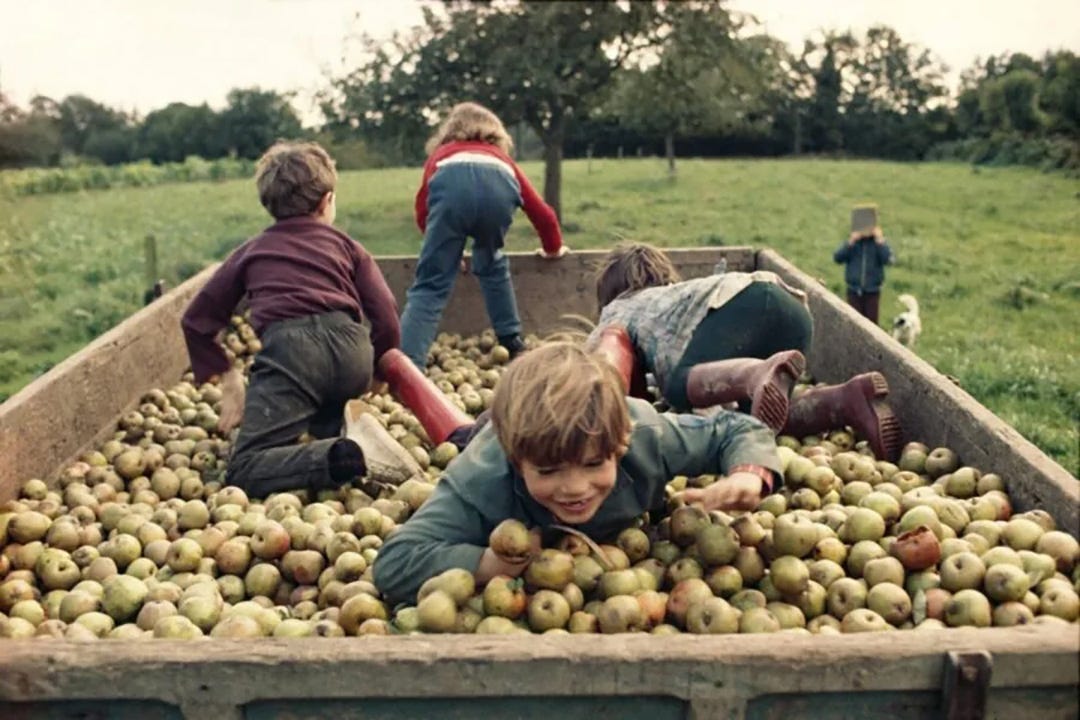
Madeleine de Sinéty: A Life
Jeu de Paume, Paris
Opens June 12, 2026
The first major retrospective of the French documentary photographer who spent decades inside a single Breton village, building one of the most patient and humane bodies of rural documentary work in postwar France.
HIGHLIGHT
Fragile Beauty: Photographs from the Sir Elton John and David Furnish Collection
Jeu de Paume, Paris
June 12 – September 27, 2026
One of the most significant private photography collections in the world arrives in Paris. Built over more than thirty years by Sir Elton John and David Furnish, Fragile Beauty gathers landmark images across fashion, portraiture, reportage, and the body — from mid-century masters to contemporary names — under a theme of beauty as something precarious and passing. After its run at the V&A in London, the Jeu de Paume presentation is the collection’s major continental showing.
MORE ON VIEW
Openings, closings, deadlines, and one-day events — June 8 through June 14.
Wednesday, June 10
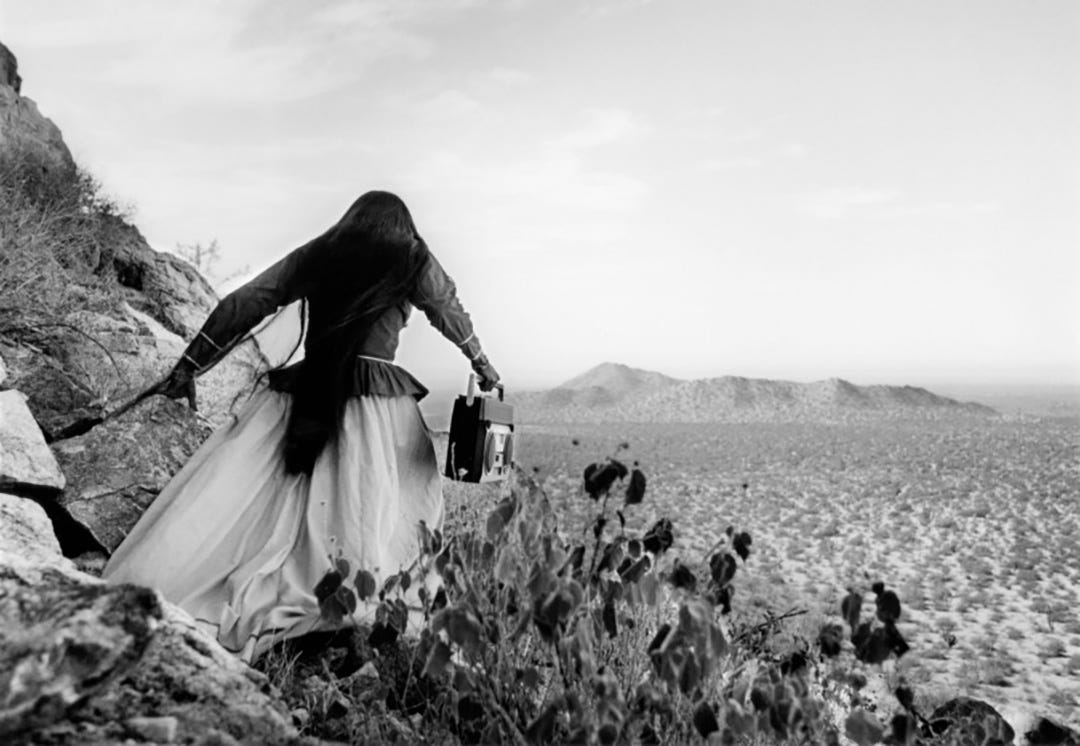
Graciela Iturbide: Eyes to Fly With — final day at C/O Berlin
Thursday, June 11
Copenhagen Photo Festival 2026 opens — through June 21
Friday, June 12
Fragile Beauty and Madeleine de Sinéty: A Life open at Jeu de Paume, Paris
Saturday, June 13
Miles Davis: A Century of Cool — final day at Musichead Gallery, Los Angeles
Sunday, June 14
Photography and the Black Arts Movement, 1955–1985 — final day at the Getty Center
URBAN Photo Awards 2026 — submissions close
FAIR & FESTIVAL WATCH
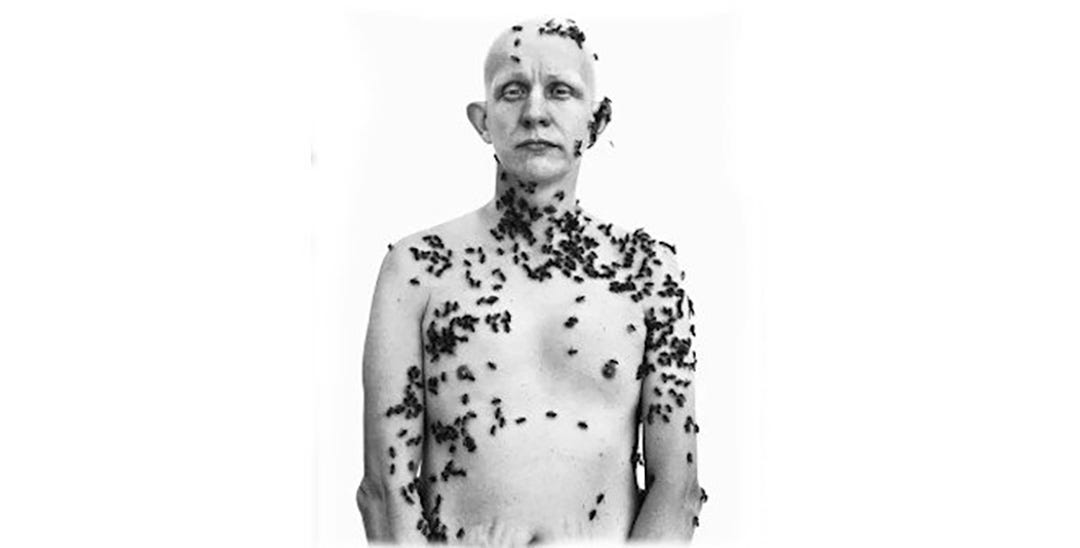
Copenhagen Photo Festival 2026 — June 11–21
photo basel — June 16–21, during Art Basel week
Fotofestiwal Łódź — 25th edition, June 18–28
GU.PHO 2026 — Guiglia, Italy · June 18–26
ZeroNegativo 2026 — Santeramo in Colle · June 18–21
Athens Photo Festival 2026 — opened June 10
PHotoESPAÑA 2026 — Madrid, through September 13
OFF THE PRESS
New & Noteworthy
Currents by Dionne Lee
Aperture • 160 pages, softcover • US$70
The first monograph from Dionne Lee (b. 1988), the 2025 Guggenheim Fellow whose photography, video, and collage examine land, power, survival, and Black identity in the American landscape. Working with darkroom interventions — rephotographing wilderness-survival manuals, inscribing graphite onto her landscapes — Lee threads dispossession and resilience through a decade of work, with essays by poet Camille T. Dungy and curator Eric Booker. A reckoning with the great outdoors as a site of both refuge and loss.
Silent Springs by Michele Borzoni & Rocco Rorandelli
Loose Joints • 208 pages, softcover • US$70
A radical portrait of youth climate activism across Europe. The Italian documentary duo behind the collective TerraProject follow non-violent direct action — Extinction Rebellion, Ende Gelände, Last Generation, Soulèvements de la Terre — through planning, encampment, and police confrontation, paired with a glossary of the movement’s tactics and ethics. Borrowing its title, pluralized, from Rachel Carson’s Silent Spring, it reads as a contemporary manifesto for a generation defending a shared horizon.
Passports by Keisha Scarville
MACK • 280 pages, hardcover • US$70
A new book from the Brooklyn-based photographer whose work mines identity, transformation, and the Guyanese diaspora through which she came to the medium. Passports turns the most bureaucratic of identity documents into a meditation on migration, belonging, and the self that travels between places and states.


IN THE WEEKS AHEAD
Opening, Closing and Ongoing Exhibitions from Around the World
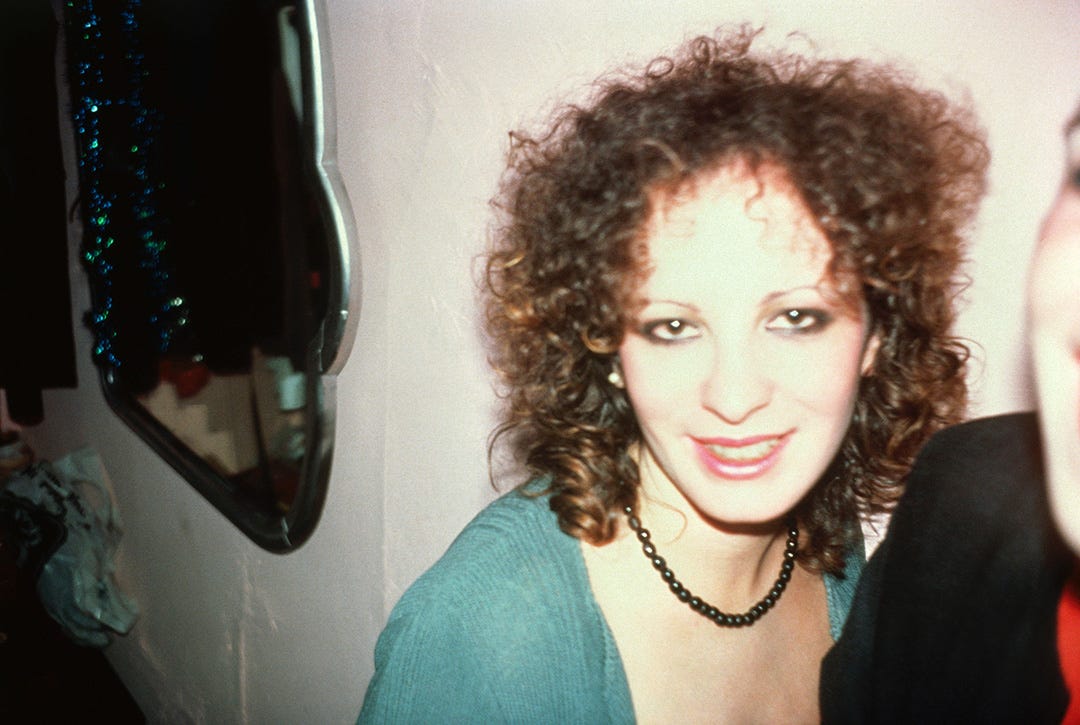
OPENING SOON
Lausanne
Hannah Darabi: Why Don’t You Dance? — Photo Elysée · Opens Jun 26 (documentary)
Paris
Fragile Beauty — Jeu de Paume · Opens Jun 12
Madeleine de Sinéty: A Life — Jeu de Paume · Opens Jun 12 (documentary)
CLOSING SOON
Berlin
Graciela Iturbide: Eyes to Fly With — C/O Berlin · Closes Jun 10 (retrospective)
Los Angeles
Miles Davis: A Century of Cool — Musichead Gallery · Closes Jun 13 (music photography)
Photography and the Black Arts Movement, 1955–1985 — Getty Center · Closes Jun 14 (historical)
ONGOING
Paris
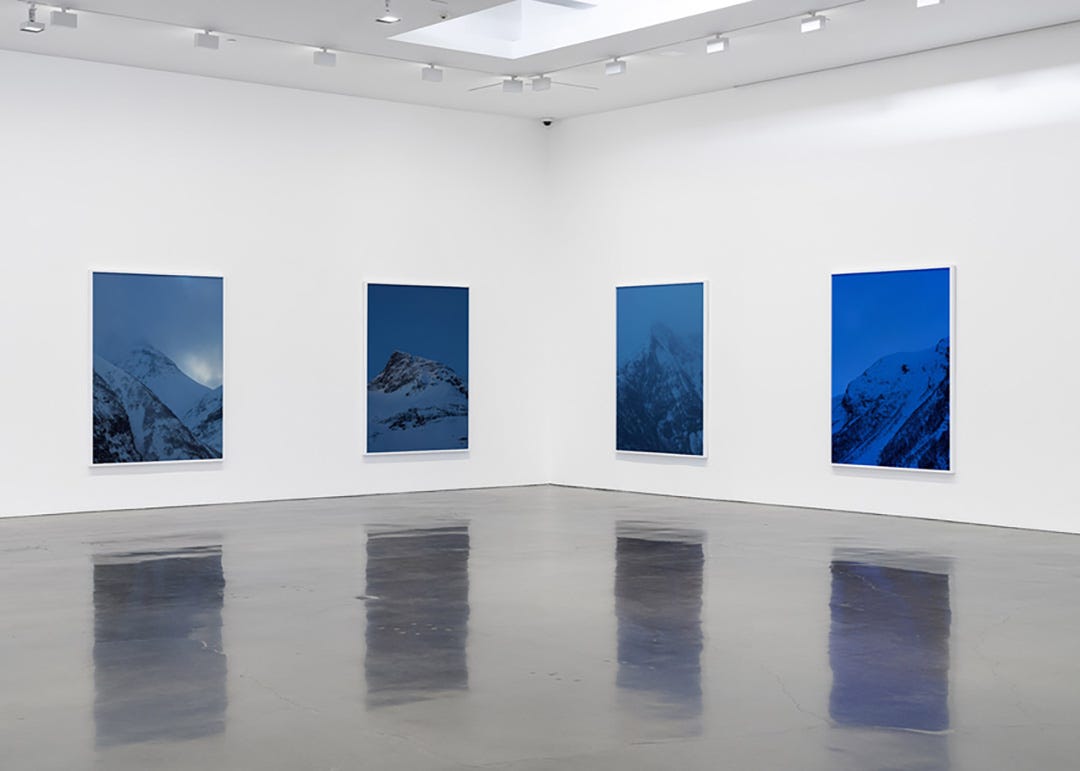
Nan Goldin: This Will Not End Well — Grand Palais · Through Jun 21 (retrospective)
Lee Miller — Musée d'Art Moderne de Paris · Through Aug 2
Amsterdam
World Press Photo 2026 — De Nieuwe Kerk · Through Sep 27 (photojournalism)
Winterthur
Paul Mpagi Sepuya: Focus. Desire — Fotomuseum Winterthur · Through Jun 26 (portraiture)
Le Locle (Switzerland)
Pour tout faire, il faut une fleur — MBAL · Through Sep 6 (group)
Stockholm / Malmö
Deborah Turbeville: Photocollage — Moderna Museet Malmö · Through Sep 27 (fashion / fine art)
New York
Hujar:Contact — Morgan Library · Through Oct 25 (historical)
Victoria Sambunaris: Fall Line — Yancey Richardson · Through Jul 2 (landscape)
Mary Ellen Bartley: Color Anthology — Yancey Richardson (Project Gallery) · Through Jul 2 (still life)
Brooklyn / NYC
Photoville 2026 — Brooklyn Bridge Park · Through June (festival)
Fort Worth
Black Photojournalism — Amon Carter Museum · Through Jul 5 (photojournalism)
Los Angeles / Santa Monica
Catherine Opie: Holding Blue — Regen Projects · Through summer 2026 (fine art)
Marilyn Monroe: A Silent Life — Peter Fetterman Gallery · Through summer 2026
Daido Moriyama: The Hunter — Peter Fetterman Gallery · Through summer 2026
San Francisco
Slice of the Pie — Fraenkel Gallery · Through Aug 15 (group)
Feel the Beat: Dance in Photographs — SFMOMA · Through Jan 31, 2027
OPEN CALLS
URBAN Photo Awards 2026 — international photography competition · Deadline June 14
LensCulture Street Photography Awards 2026 — street photography competition · Deadline June 17
Abbey Road Music Photography Awards 2026 — free global music photography awards · Deadline June 30
Lucie Photo Book Prize 2026 — Lucie Foundation photobook prize · Deadline September 15
Lucie Foundation Scholarship Program 2026 — scholarships for emerging photographers · Deadline September 30
DID YOU KNOW?
Cindy Sherman made every one of the seventy Untitled Film Stills herself — not just as the model but as the director, stylist, hair-and-makeup, and photographer, mostly alone in her apartment with a shutter release cable in her hand. None of the “stills” comes from an actual film; she invented the movies they appear to be from. When MoMA bought the complete set in 1995, it paid a reported $1 million — for a body of work she had begun making, on cheap black-and-white film, for almost nothing.
ON THIS DAY
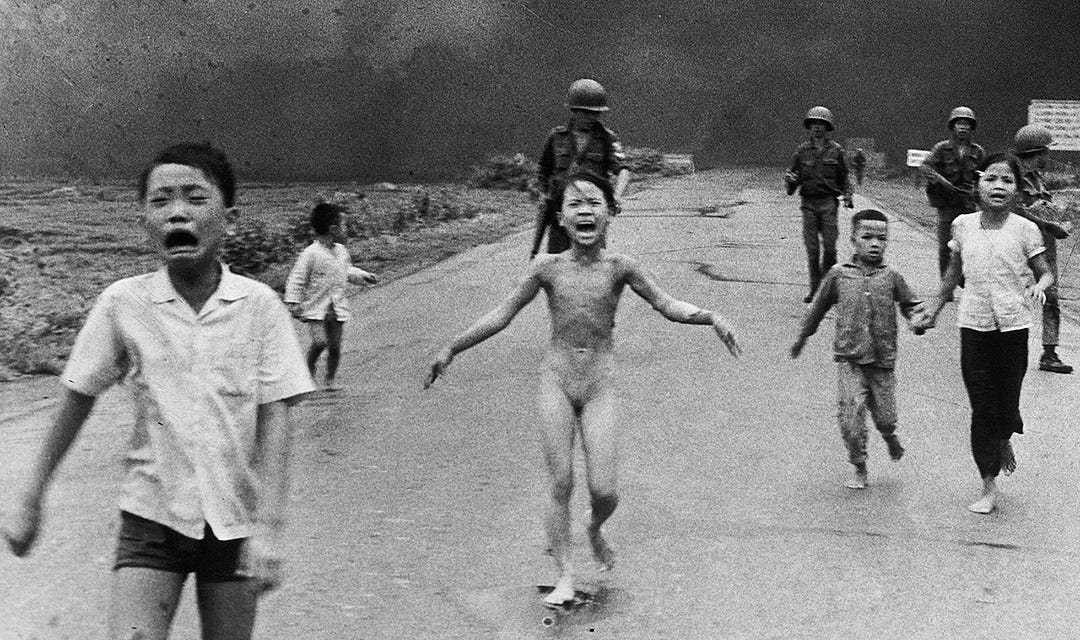
June 8, 1972 — On Route 1 outside Trảng Bàng, South Vietnam, a South Vietnamese plane dropped napalm on its own civilians, and a 21-year-old Associated Press photographer photographed a naked nine-year-old girl, Phan Thị Kim Phúc, running toward the camera with her arms outstretched, her skin burning. The Terror of War — known everywhere as "Napalm Girl" — won the Pulitzer Prize, became one of the most reproduced images of the twentieth century, and is often credited with hardening American opinion against the war. The credit went to Huỳnh Công "Nick" Út. In 2025, the documentary The Stringer publicly disputed that authorship, arguing the picture may have been made by a Vietnamese freelancer, and the AP opened an investigation that — after months — found no definitive evidence to strip Út of the credit while acknowledging the questions could not be fully resolved. Fifty-four years on, the most famous photograph of the war has become a case study in the very thing this week's lead is about: who, exactly, makes an image.

THE INTERNATIONAL REVIEW OF PHOTOGRAPHY
To advertise an exhibition, book, fair, or open call to photography collectors, curators, and gallerists worldwide, email internationalphotographynews@gmail.com
The allusion is, of course, to a subsequent plethora of AI images. Like so what? Right? I think of AI (in context) as simply a twenty-first-century photo accessory.