

THE PHOTOGRAPH
“Afghan Girl” — Steve McCurry, 1984
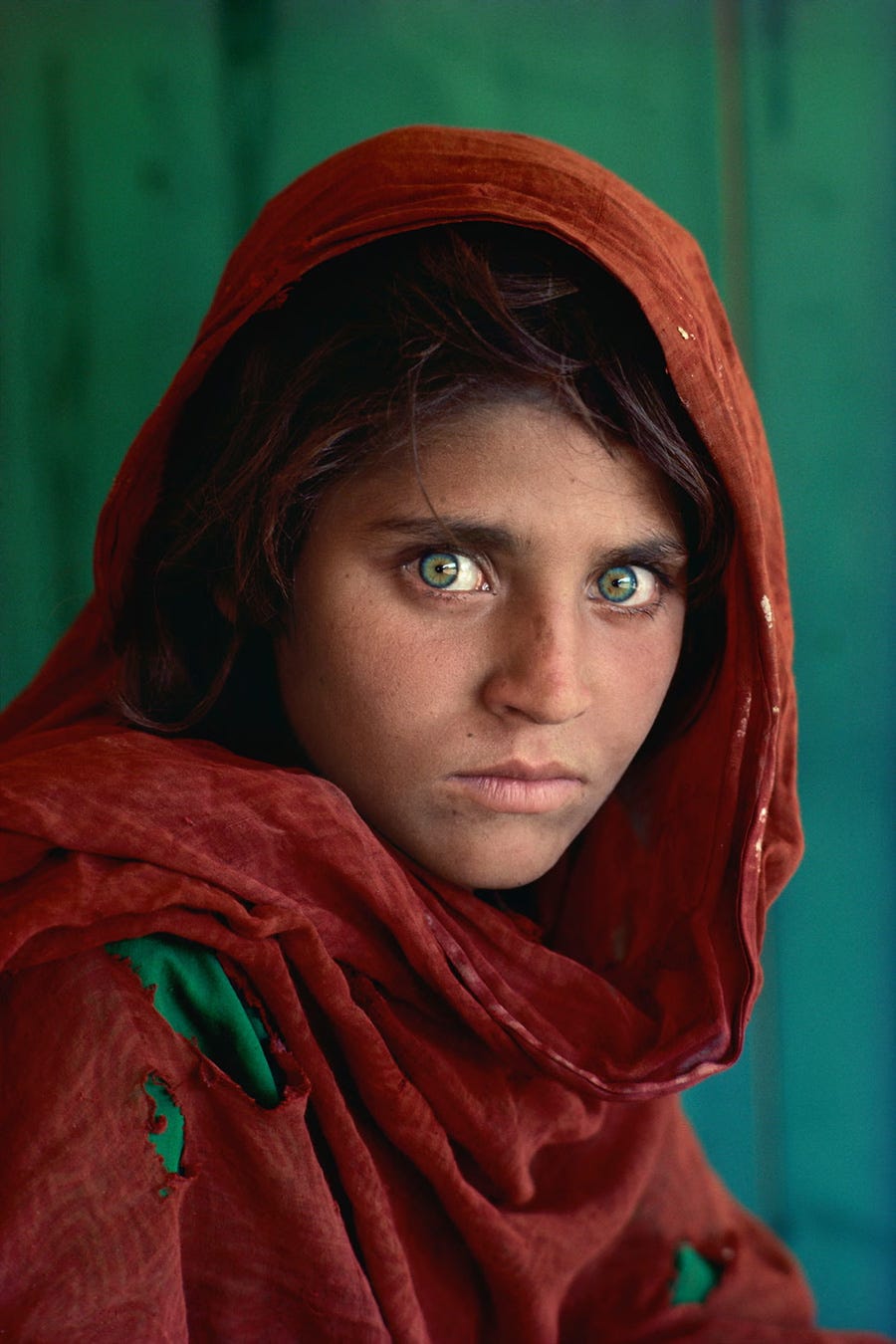
She was about 12 years old, and no one thought to ask her name. Steve McCurry made the frame in December 1984, in a tented school at the Nasir Bagh refugee camp near Peshawar, where hundreds of thousands of Afghans had fled the war with the Soviet Union. He noticed a girl with sea-green eyes and a torn red shawl, asked her teacher if he could photograph her, and released the shutter. It took perhaps a minute. When National Geographic put the picture on the cover of its June 1985 issue, it became — almost immediately, and then permanently — one of the most reproduced photographs on earth, a face the West came to treat as the single image of Afghan suffering.
For 17 years the woman in the picture had no name attached to it. The photograph was everywhere; the person was nowhere. That gap — between the fame of an image and the anonymity of its subject — is the reason it belongs in a week given over to ethics. She had not sought to be photographed, could not have understood what a magazine cover was, and was never paid or consulted as her face sold posters, prints, and a certain idea of the region. When McCurry and a National Geographic team finally went looking for her in 2002, they found her in a remote Afghan village and confirmed her identity through iris-recognition analysis. Her name was Sharbat Gula. She had, by most accounts, never seen the photograph.
What came after complicated the picture further. Gula’s fame did little to shield her: in 2016 she was arrested in Pakistan over fraudulent identity papers and deported; after the fall of Kabul in 2021 she was evacuated to Italy. Writers and photographers — among them Pakistani and Afghan critics who have revisited “the other Afghan girl” — have used her story to ask hard questions about who gets to make an unforgettable image of someone else’s crisis, and on whose terms. As National Geographic itself acknowledged in its account of tracking her down, the photograph gave the world a face while leaving the woman behind it to live, for decades, without a say in what it meant.
None of that lessens the picture’s power; it is part of it. The green eyes still stop you. But the more you know, the harder it is to look at them innocently — which may be the most honest thing a famous photograph can do. National Geographic
WHY IT MATTERS
The romance of documentary photography is that a single frame can make the world care. “Afghan Girl” did exactly that, and then spent 40 years showing the cost of it. A refugee child became a global icon without her knowledge, her name lost for a generation, her image working for everyone but her. In a week when Europe’s photography summer opens at Arles under the banner of documentary witness, the picture is a reminder that consent and authorship are not footnotes to a great photograph — they are the whole ethical argument, and it does not resolve.
EXHIBITION HIGHLIGHTS
Cecil Beaton’s Fashionable World
The San Diego Museum of Art, California
July 11, 2026 – January 10, 2027
A touring survey of Cecil Beaton’s portraiture reaches the American West Coast, opening in San Diego on July 11. Beaton (1904–1980) was a one-man image factory of the twentieth century — photographer, fashion illustrator, Oscar-winning costume designer, diarist, and relentless self-mythologizer — and the show gathers the portraits that fixed the faces of an era, from Hollywood stars and royalty to the models who built mid-century glamour. Drawn substantially from the National Portrait Gallery’s Beaton archive, it is a reminder that the “fashionable world” he documented was also, to a large degree, a world he invented with a camera: elegance as a thing produced, lit, and retouched into permanence.

Jamel Shabazz: New York Moves and Black Communities
Museum für Photographie Braunschweig, Germany
July 11 – September 13, 2026 (opening July 10)
The Museum für Photographie Braunschweig gives Jamel Shabazz his first survey in a German museum, opening with a summer festival on the evening of July 10. Shabazz (b. 1960) began photographing on the streets of Brooklyn in the late 1970s, and the pictures that made his name — young New Yorkers in the full confidence of early-eighties style, posing for a photographer they trusted — are now among the definitive records of a Black urban culture at a specific, electric moment. His method is the opposite of the stolen candid: he asks, he collaborates, he lets his subjects present themselves, which is precisely what gives the work its warmth and its dignity. Against a week thinking about consent in photography, Shabazz is the counter-argument in the room — proof of how much a street photographer can do when the picture is made with someone rather than taken from them.

Bertien van Manen: Les échos de l’ordinaire
Centre de la photographie de Mougins, France
July 4 – October 4, 2026
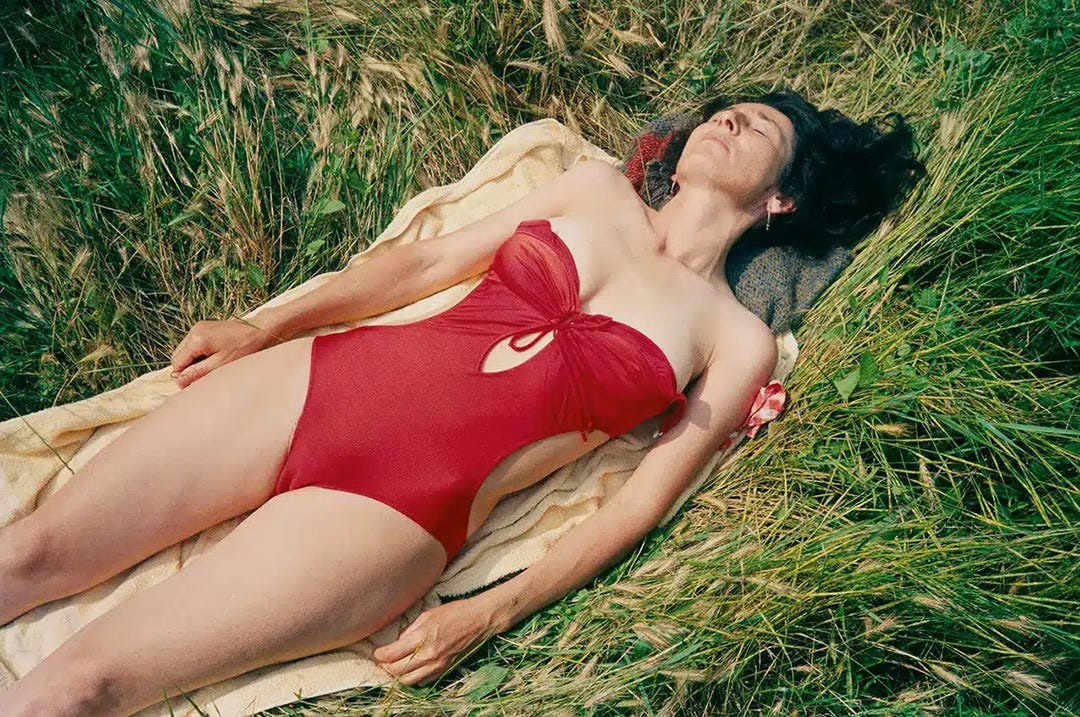
The first summer show at the Centre de la photographie de Mougins is given over to the late Dutch photographer Bertien van Manen, who died in 2024, and its title — “Echoes of the Ordinary” — is exactly right for her. Van Manen spent decades living among the people she photographed, from post-Soviet Russia to rural China to the coalfields of Appalachia, working in a loose, warm, snapshot-style color that treated intimacy as the whole point of the exercise. This posthumous survey is a welcome chance to see a body of work that quietly argued the everyday and the tender were subjects as serious as any war or monument.
Sayuri Ichida: Playing the Piano Upstairs
The Photographers’ Gallery, London
July 3 – September 13, 2026
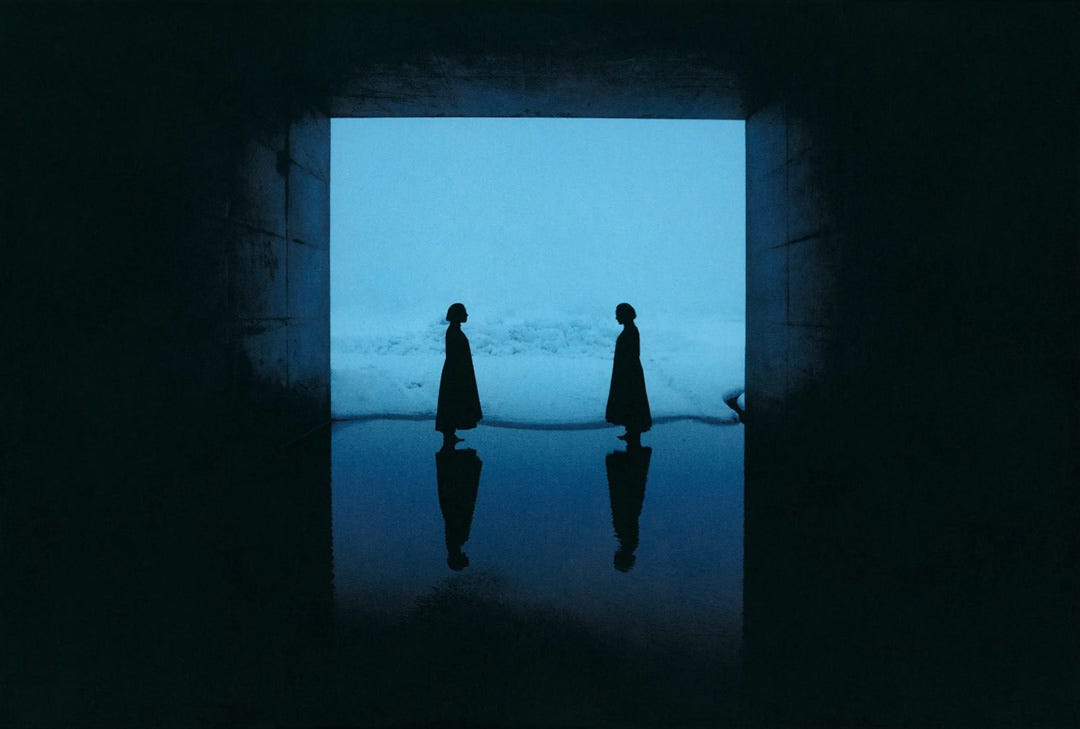
The Photographers’ Gallery hands its Print Sales space to the Japanese photographer Sayuri Ichida, whose spare, exacting black-and-white pictures have built a quiet following over the past decade. Ichida works close to abstraction — bodies, objects, and shadows composed with an almost choreographic precision — and the result reads less like documentary than like a held breath. It is a small, concentrated show, and a good corrective to a week weighing photography’s louder ethical arguments: proof the medium can still be a matter of pure, disciplined looking.
Evan Roth: A Hundred Thousand Years of Light
Dorothée Nilsson Gallery, Berlin
July 3 – August 22, 2026
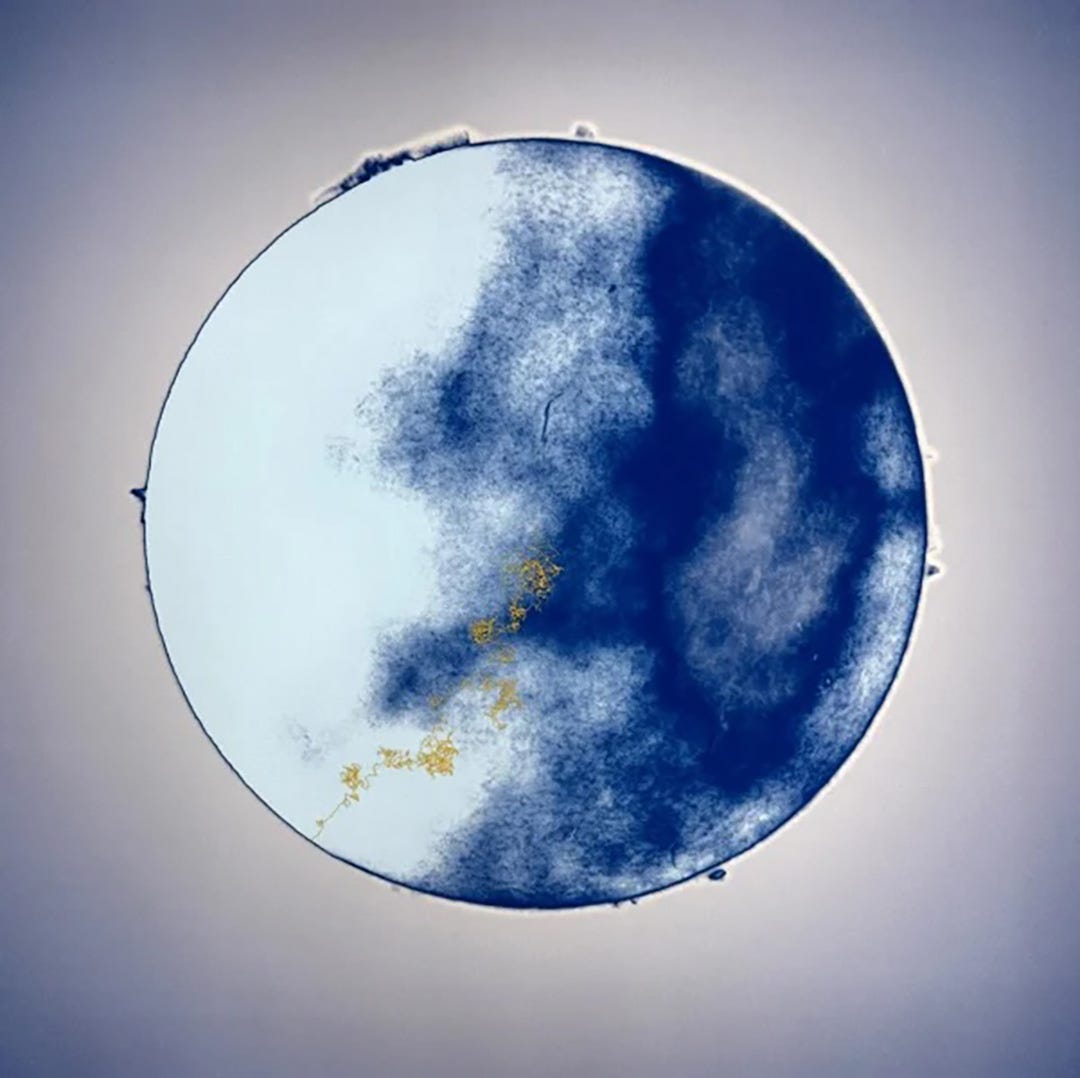
The American artist Evan Roth has spent his career at the seam where the internet meets the image, and A Hundred Thousand Years of Light turns that attention onto photography’s own material texture. Working with digital prints that foreground grain, signal, and the physical residue of how a picture is actually made and transmitted, Roth treats the photograph less as a window than as a surface — data given a body. It is the most medium-questioning show on view this week, and a reminder that “photography” now includes everything that happens to an image between the sensor and the screen.
WHAT’S ON AROUND THE WORLD
Openings, closings, one-day events, and the shows worth a trip.
Opening This Week
Monday, July 6
Les Rencontres d’Arles 2026 opening week begins — Arles, France (festival)
Wednesday, July 8
Cruising for a Bruising — Kyle Archie Knight opens — Museum of Australian Photography (MAPh), Melbourne (opening)
Friday, July 10
Greg Girard: Photographs 1972–2026 opens — The Polygon, Vancouver (opening)
Jamel Shabazz: New York Moves and Black Communities opening reception & summer festival — Museum für Photographie Braunschweig (opening)
Saturday, July 11
Cecil Beaton’s Fashionable World opens — The San Diego Museum of Art (opening)
Sunday, July 12
Photography 4 Humanity / Fotografiska Global Prize — submission deadline (open call)
Closing Soon
Antwerp
Vivian Maier — Gallery Fifty One · Closes Jul 11 (street)
Barcelona
Joaquim Gomis: Transatlantic — Fundació Joan Miró · Closes Jul 12 (historical)
London
Joel Meyerowitz: Select Works, 1962–2019 — Huxley-Parlour · Closes Jul 11 (street / color)
Atlanta
Gordon Parks: The South in Color — Jackson Fine Art · Closes Jul 11 (historical)
Ongoing
A rotating selection of shows worth the trip, beyond the openings and closings above.
Berlin
Evan Roth: A Hundred Thousand Years of Light — Dorothée Nilsson Gallery · (medium / digital)
Amsterdam
Ed van der Elsken: Up Close — Rijksmuseum · Through Sep 13
Paris
Lee Miller — Musée d’Art Moderne de Paris · Through Aug 2
Mougins
Bertien van Manen: Les échos de l’ordinaire — Centre de la photographie de Mougins · Opened Jul 4 (documentary)
Madrid
In the American West — Richard Avedon — Fundación MAPFRE · Through Aug 30
London
James Barnor: Poetic Threads (Spotlight) — October Gallery · (historical / portraiture)
Sayuri Ichida: Playing the Piano Upstairs — The Photographers’ Gallery · (fine art)
New York
Hujar:Contact — The Morgan Library & Museum · Through Oct 25 (historical)
Yves Saint Laurent and Photography — International Center of Photography · Through Sep 28
Norfolk, VA
Ilse Bing: Between Paris and New York — Chrysler Museum of Art · Through Oct 18
Los Angeles
Toshio Shibata: Concrete Poetry — Gallery Luisotti · Through Aug 1
FESTIVAL WATCH
Les Rencontres d’Arles 2026 — “Worlds in View” — Arles, France · Opening week July 6–12 (runs through Oct 4) (the anchor of the European photography summer; announced names include William Klein, Felicia Abban, Sammy Baloji, and Alfredo Jaar)
Cortona On The Move 2026 — Cortona, Italy · July 16 – November 1, 2026 (Italy’s major documentary-photography festival; opening days mid-July)
OFF THE PRESS


Christopher Anderson: Index
Stanley/Barker
Christopher Anderson’s career has run from conflict zones and presidential campaigns to near-death experiences and quiet domestic rooms, and Index tries to hold all of it at once. The Magnum photographer’s retrospective is built as eleven separate volumes gathered in a single slipcase — designed by Brian Roettinger — so that the eleven bodies of work read less as a chronological arc than as an argument that a life in pictures does not resolve into a straight line. It is an unusually ambitious object for a mid-career survey, and a generous one: a photographer emptying the drawer rather than curating a tidy legacy.
Walter Pfeiffer: In Good Company
Mousse Publishing
Published to accompany his show at the Pinacoteca Agnelli in Turin, In Good Company offers an essential reading of the Swiss image-maker Walter Pfeiffer, whose exuberant, sensual, deliberately amateur-looking pictures made him a quiet influence on decades of fashion and portrait photography. Working largely outside the institutional mainstream since the 1970s, Pfeiffer built a body of work devoted to pleasure, youth, and the offhand beauty of everyday scenes; this volume is among the more considered attempts to take the full measure of it.
Mimi Mollica: Moon City
Dewi Lewis Publishing
Moon City is a hallucinatory nocturne on London, built around the silent tension between two forces — the ancient pull of the moon and the restless ambition of the city’s financial skyline. The Sicilian-born, London-based photographer Mimi Mollica threads climate anxiety, political unrest, and a general sense of civic dread through the pictures, so that a book ostensibly about a place becomes a meditation on the mood of the present. Designed by Ramon Pez and now shipping in a signed edition, it is a moody, urgent piece of bookmaking.
OPEN CALLS
Photography 4 Humanity / Fotografiska Global Prize 2026 — Deadline July 12, 2026. Presented with UN Human Rights; up to five images made in the past three years. Winner and finalists are exhibited at the United Nations.
InCadaqués Open Call 2026 — Deadline July 17, 2026. €20,000 in combined prizes and a festival exhibition on the Costa Brava; no theme restrictions.
Textile Exchange: Fashion Regenerated 2026 — Deadline July 20, 2026. A $10,000 commission plus two $2,000 prizes, for photography on ecological and community restoration.
Charta Award 2026 — Deadline July 25, 2026. Publication, thirty copies, and royalties for an unpublished long-term project.
Kometa Fellowship Programme — Deadline July 31, 2026. €10,000 to support investigative projects on conflict, censorship, and social change.
MUUS Collection Research Fellowship — Deadline July 31, 2026. $20,000 plus travel and mentorship, for curators and academics with five or more years’ experience.
PhMuseum Days 2026 — Festival Open Call — Deadline September 1, 2026. Solo exhibitions at the PhMuseum Days festival (Bologna, October 1–4), plus screenings and prizes.
ON THIS DAY
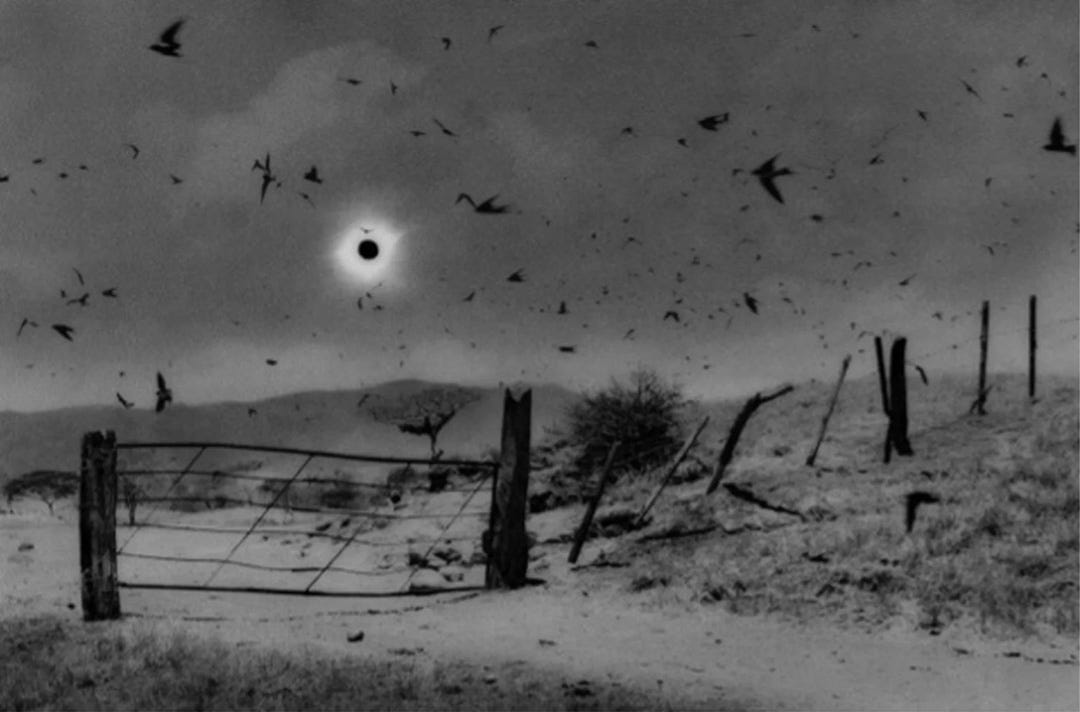
July 11, 1991 — The sky went dark over Mexico, and a documentary photographer was watching. On this day the total solar eclipse remembered as the Gran Eclipse swept a shadow more than 13,000 kilometers long across Hawaii, Mexico, and Central and South America, delivering nearly seven minutes of totality in places — among the longest of the twentieth century, and unmatched until 2132. From Chiapas, the Mexican photographer Antonio Turok — better known for his unflinching documentation of conflict and daily life across Mexico and Central America — turned his camera up and made a haunting record of the moment the sun disappeared, the corona flaring around a black disc. It is a reminder that photography’s oldest subject is still light itself, and that the medium began, and occasionally still returns, as an attempt to hold onto something that lasts only seconds.

THE INTERNATIONAL REVIEW OF PHOTOGRAPHY
To advertise an exhibition, book, fair, or open call to photography collectors, curators, and gallerists worldwide, email internationalphotographynews@gmail.com
thank you for sharing all these amazing photography exhibitions I hope to attend a few of them 😍
Aarrrgggh. I am so tired of seeing this photograph.