

THE PHOTOGRAPHER
She Promised John Lennon the Cover. That Night He Was Killed, and She Kept Her Word.
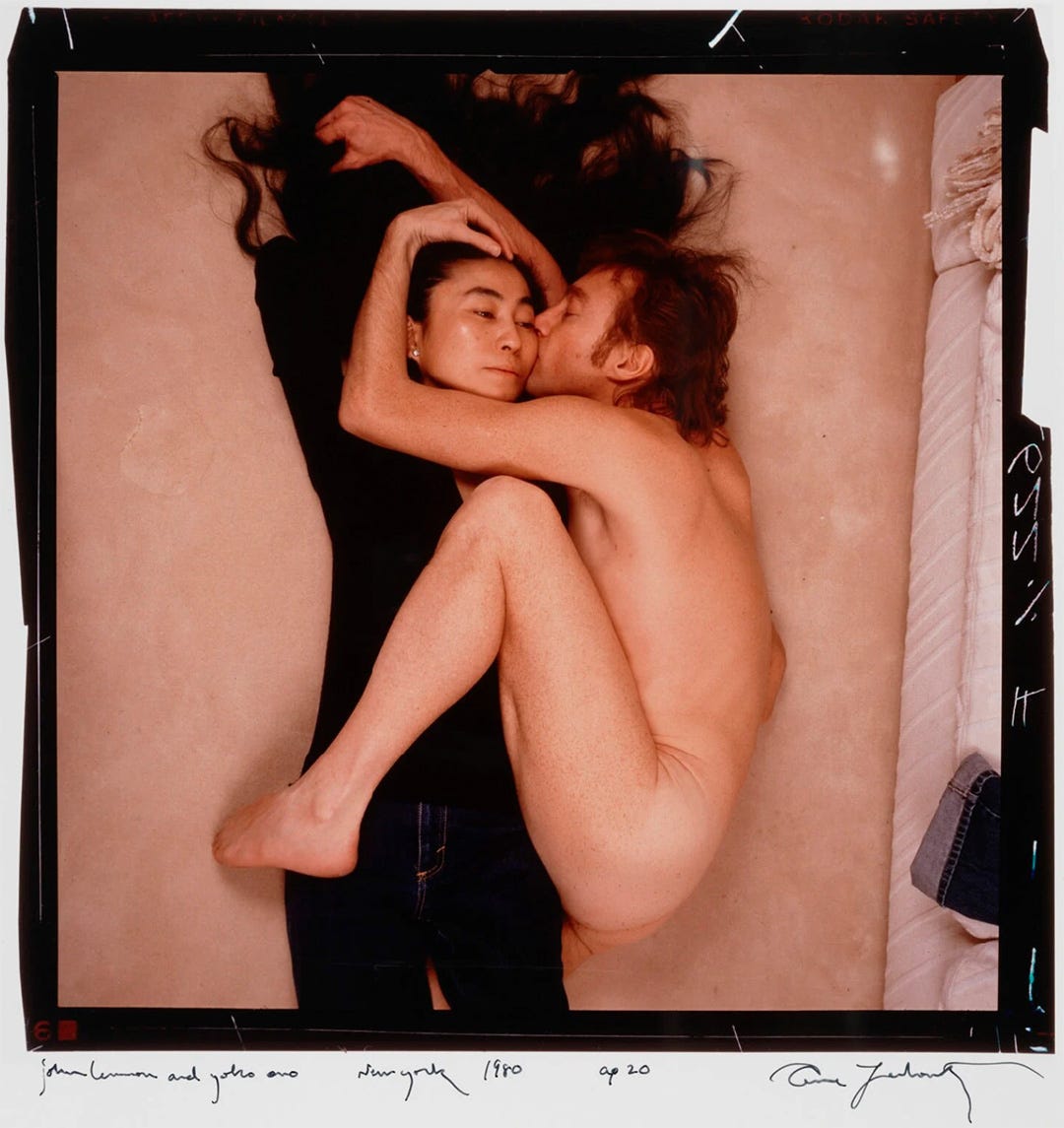
On December 8, 1980, Annie Leibovitz went to the Dakota, the New York apartment building where John Lennon and Yoko Ono lived, to make a cover for Rolling Stone. She asked them both to undress, a nod to the 1968 Two Virgins picture of the couple naked that had been their first Rolling Stone cover. Lennon agreed. Ono would not take off her pants, so Leibovitz told her to leave everything on. Lennon, naked, lay down on the floor near their bed and curled up against her. “I remember peeling the Polaroid and him looking at it and saying, ‘This is it. This is our relationship,’” Leibovitz told Rolling Stone in 2017. A few hours later Lennon was shot dead outside the building.
The next morning the magazine’s staff started on a tribute issue and began mocking up covers with Lennon on his own. “I said, ‘Jann, I promised John the cover would be him and Yoko.’ And Jann backed me up. I said it was the last promise,” she recalled in the same piece. The picture ran on the cover dated January 22, 1981. In 2005 the American Society of Magazine Editors named it the best magazine cover of the previous 40 years. It was an assignment and a promise between people who knew each other, and Leibovitz has never really separated the two.
Her first assignment for the magazine had been Lennon too. Born in 1949 in Waterbury, Connecticut, she went to the San Francisco Art Institute to study painting. A summer trip to Japan with her mother got her taking pictures, and back in San Francisco she signed up for photography classes at night. In 1970 she showed her portfolio to Jann Wenner, who had recently started Rolling Stone in the city. He sent her to photograph Lennon, and her black-and-white portrait ran on the cover of January 21, 1971. Two years later she was the magazine’s chief photographer. She was the official photographer on the Rolling Stones’ 1975 tour, and the shirtless, gritty portraits of Mick Jagger and Keith Richards come from those months on the road with the band.
In 1983 she joined Vanity Fair as its first contributing photographer, and the pictures changed. They became lit, staged and planned: Whoopi Goldberg in a bathtub of milk, Demi Moore naked and pregnant on the cover. In 1991 the National Portrait Gallery in Washington gave Leibovitz her first museum show, Photographs: Annie Leibovitz 1970–1990, which toured for six years. She was the only woman, and only the second living portraitist, the gallery had shown.
The biggest influence on her was Susan Sontag, whom she met while photographing the writer for AIDS and Its Metaphors. “I remember going out to dinner with her and just sweating through my clothes because I thought I couldn’t talk to her,” Leibovitz told The New York Times in late 2006. Sontag told her, “You’re good, but you could be better.” The two stayed together until Sontag’s death in late 2004. Leibovitz went to Sarajevo during the war in 1993, a trip she has said she would not have made without Sontag, and came back with a black-and-white picture of a teenage boy’s bicycle lying on bloody pavement after a sniper killed him. Sontag also had the idea for Women (1999) and wrote its introduction: “A book of photographs of women must, whether it intends to or not, raise the question of women.”
Sontag died, and Leibovitz’s father died a few weeks later. Her answer was A Photographer’s Life 1990–2005, published in 2006. It puts the famous portraits next to pictures of her parents, her brothers and sisters, her children and Sontag, and one of Leibovitz herself, naked and eight months pregnant in 2001. She made the family pictures the way she had started out, with a 35mm camera and black-and-white Tri-X film. “I don’t have two lives,” she wrote in the introduction. “This is one life, and the personal pictures and the assignment work are all part of it.”
She is 77 now and still working that way. Last fall Phaidon published a new two-volume edition of Women, with essays by Gloria Steinem and Chimamanda Ngozi Adichie and new portraits that Leibovitz says came from thinking “about issues that are important today.” In Toluca, west of Mexico City, Centro Tolzú is showing Futbol 1986–2026 through January 7, 2027. It hangs the 13 pictures she made for Televisa at the 1986 World Cup next to 25 new ones made for this year’s tournament, forty years apart in one show.
WHY IT MATTERS
Leibovitz’s most important pictures come from her refusal to keep her life and her assignments apart. The Lennon cover exists because she made a promise in the couple’s apartment and kept it at the magazine the next morning. A Photographer’s Life exists because she put Sontag and her own children in the same book as her commissions. It is one life. Fifty-five years after her first cover, the new Women and the World Cup pictures in Toluca show the same habit: she photographs people she has taken the trouble to know.
EXHIBITION HIGHLIGHTS
Cindy Sherman
Hauser & Wirth | London
October 13 – December 23, 2026
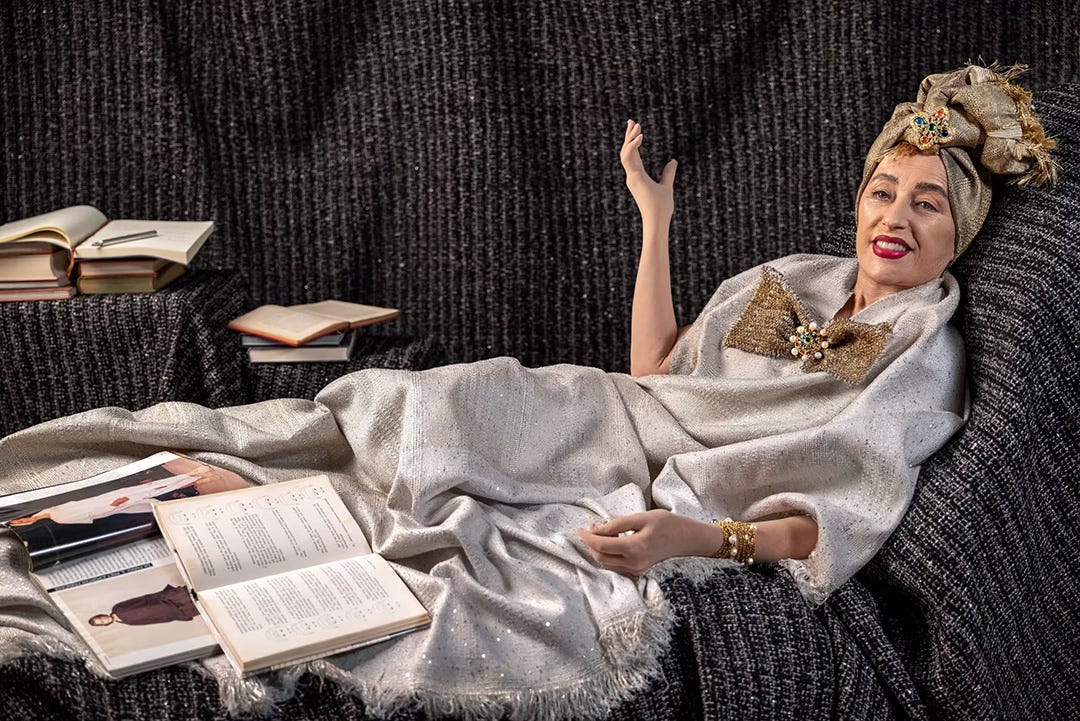
The first showing of Fabric Matrons, a new series in which Sherman’s characters are draped in fabrics, many of them from Chanel’s archives. Her conversation with Chanel goes back to Ominous Landscapes (2010–2012). Among the works are Untitled #706 and Untitled #710, both 2026. The opening reception is shared with Lorna Simpson’s new show at the same gallery.
William Eggleston: All that goes unnoticed
The Photographers’ Gallery | London
October 14, 2026 – February 21, 2027
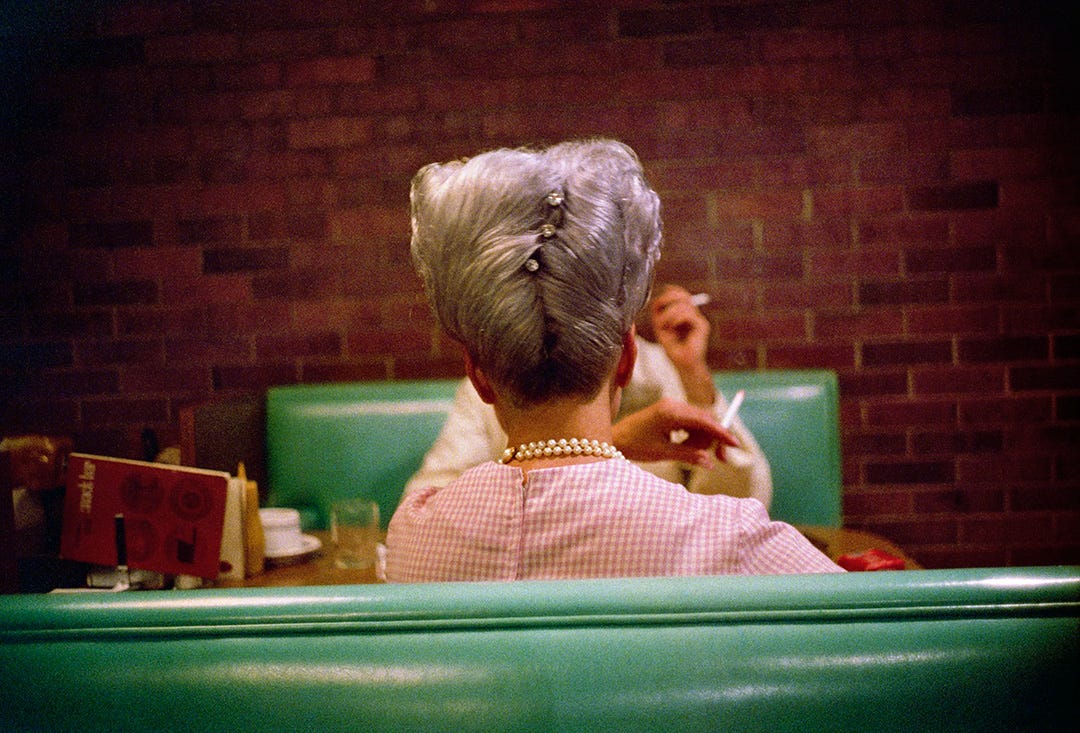
In 1976 the Museum of Modern Art showed William Eggleston’s Guide, chosen by John Szarkowski, a show of color pictures of ordinary Southern life. Fifty years on, The Photographers’ Gallery marks the anniversary with Eggleston’s vintage dye-transfer prints alongside the early black-and-white pictures and Brownie snapshots he made in the 1960s and 1970s. Eggleston has called himself “at war with the obvious,” and the gallery hangs his best-known pictures next to lesser-known ones. The show is organized with the Wilson Centre for Photography. Tickets are £12.
Sophie Calle: Matrimoni, Rotture e Funerali inclusi
MAXXI | Rome
October 16, 2026 – February 7, 2027
The title translates as “Weddings, Breakups and Funerals Included.” It is the first overview of Calle’s work in Rome, covering more than forty years, and it is organized around the “with” and the “without”: having a person, a love, sight or an image, and then losing it. Simona Antonacci curates the show in MAXXI’s galleria 2. There is a guided tour on October 25.
Letizia Battaglia: Works 1970–2020
CAMERA – Centro Italiano per la Fotografia | Turin
October 17, 2026 – February 7, 2027
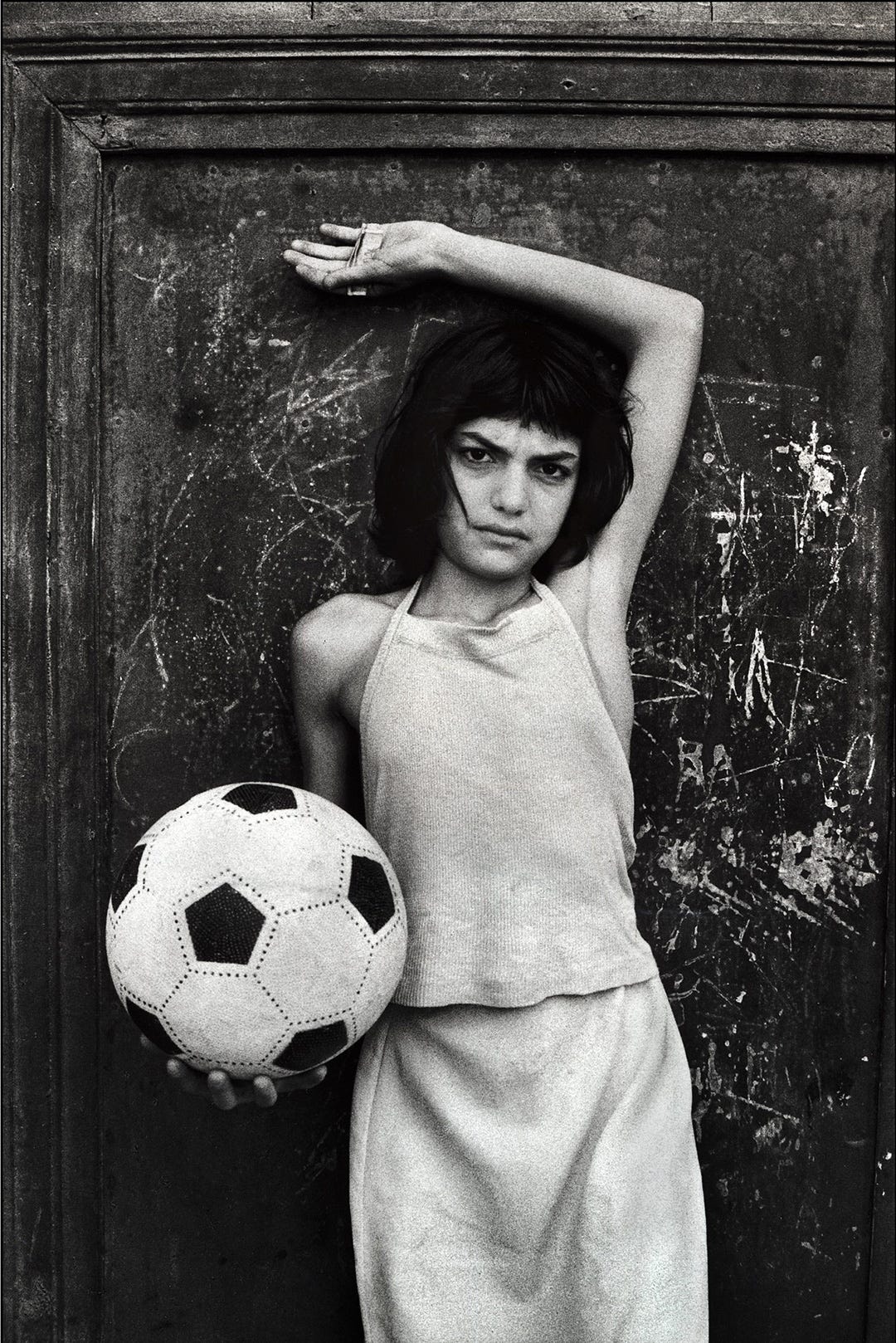
A girl with a ball in the Cala quarter of Palermo, 1980, is the picture on CAMERA’s page, and it is a good way in. Battaglia photographed Palermo and Sicily for half a century: her famous pictures from what the curators call the “Mafia years,” but also religious festivals, young faces, everyday hardship and the inside of a psychiatric hospital. More than 200 images are here, with the 22 magazines she worked for (some of which she founded and edited) and a documentary film about her life. Walter Guadagnini curates; CAMERA and Jeu de Paume co-produced the show with the Letizia Battaglia Archive after stops at the Château de Tours, the Rencontres d’Arles and the Museo Civico San Domenico in Forlì. The catalogue is from Dario Cimorelli Editore.
Carlotta Corpron: Light Is a Plastic Medium:
The Photography of Carlotta Corpron
Hirshhorn Museum and Sculpture Garden | Washington
October 16, 2026 – March 14, 2027
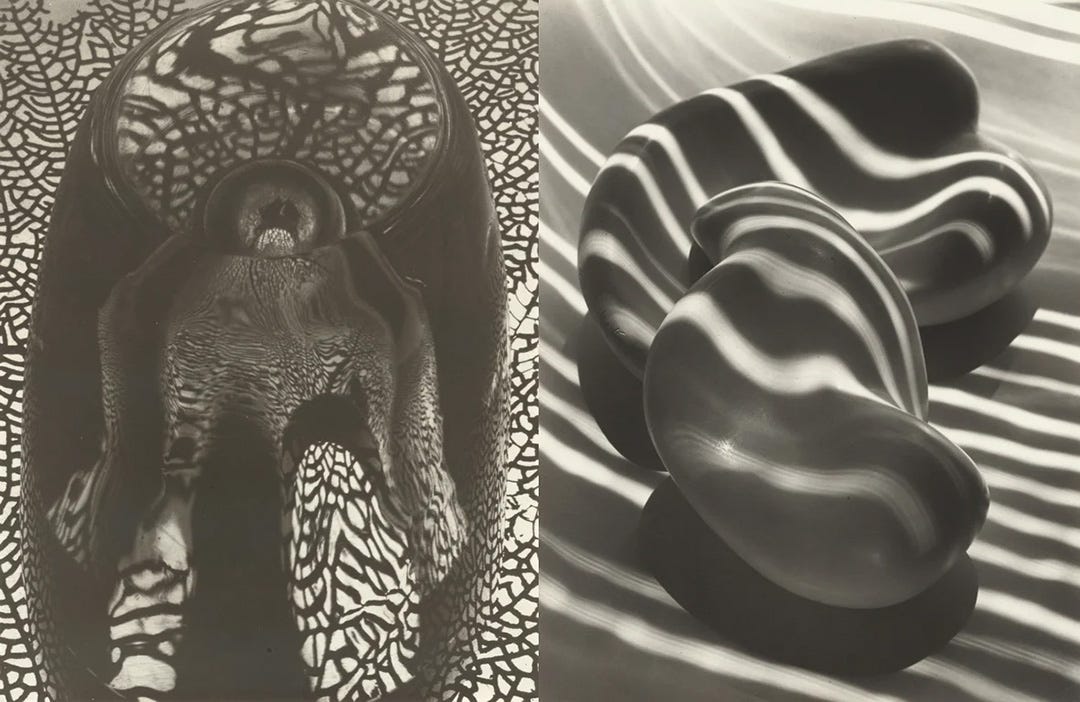
Corpron moved to Denton, Texas, in 1935 to teach at Texas State College for Women. She had picked up a camera two years earlier, and for about two decades she used it to study light itself, until health problems ended her darkroom work in 1955. The show follows six bodies of work, from Nature Studies and Light Drawings to Space Compositions and Fluid Light Designs, and places her alongside Alfred Stieglitz, László Moholy-Nagy and György Kepes. The show draws on 48 recent gifts to the museum from Herbert Lust. Betsy Johnson curates.
WHAT’S ON AROUND THE WORLD
Opening This Week
Amsterdam
Myriam Boulos — Foam · Oct 23 – Jan 20, 2027 (opens the following week; opening Oct 22, 5:30 p.m.)
Columbus
Queer Constellations: Photographs from the Aronowitz Family Collection — Columbus Museum of Art · Oct 16 – Mar 21, 2027 (curated by Vince Aletti and Kaitlin Booher; part of FotoFocus)
Hannover
Nikita Teryoshin: Nothing Personal: The Back Office of War — Galerie für Fotografie in der Eisfabrik (GAF) · Oct 15 – Nov 22 (opening Oct 14, 7 p.m.)
London
Light and Magic: The Birth of Art Photography — Tate Modern · Oct 14 – Feb 21, 2027 (pictorialism as a worldwide movement; more than 200 prints by over 80 artists)
New York
Laia Abril: On Rape and Institutional Failure — International Center of Photography · Oct 15 – Jan 11, 2027
I’m So Happy You Are Here: Japanese Women Photographers from the 1950s to Now — International Center of Photography · Oct 15 – Jan 11, 2027 (New York stop of the touring show)
Seoul
Roger Ballen: The Works: Drawing meets Photography — Museum Hanmi Samcheong · Oct 16 – Feb 21, 2027
Toulouse
Les vies de la photographie — Le Château d’Eau · Oct 16 – Feb 21, 2027 (collections of the Château d’Eau, musée Georges-Labit and musée Paul-Dupuy; opening Oct 15, 6:30 p.m.)
Closing Soon
Avilés
Joan Fontcuberta: Corales. Lo que Darwin pasó por alto — Centro Niemeyer · Closes Oct 13
Denver
What We’ve Been Up To: People — Denver Art Museum · Closes Oct 25 (recent photography acquisitions)
Edinburgh
Wendy McMurdo: The Digital Mirror — Scottish National Portrait Gallery · Closes Oct 25
Heidelberg
Elliott Erwitt: People, Places, Moments — Leica Galerie Heidelberg · Closes Oct 17 (prints from the Leica Archive, 1946 to 2003)
Lisbon
Eikoh Hosoe: Kamaitachi — Ochre Space · Closes Oct 24 (Wednesday to Saturday, 3 to 6:30 p.m.)
London
Kyotographie: Kawada Kikuji x Iwane Ai — Japan House London · Closes Oct 18
Lower Hutt
Ans Westra: Jeetje — The Dowse Art Museum · Closes Oct 18 (free)
Lucerne
Shirana Shahbazi: All at Once. An Interplay with Li Tavor — Kunstmuseum Luzern · Closes Oct 18
Munich
Ilit Azoulay: No Single View — Museum Villa Stuck · Closes Oct 18
New York
Andy Warhol Family Album — Whitney Museum of American Art · Closes Oct 19 (Polaroids from 1972 to 1973)
Tokyo
Lucas Foglia: Constant Bloom — T3 Photo Festival Tokyo · Closes Oct 26 (following the Painted Lady butterfly’s migration from Africa into Europe)
Ongoing
Amsterdam
Kadir van Lohuizen: Document Netherlands: New Energy — Rijksmuseum · Through Jan 17, 2027 (the museum’s annual photography commission)
Henry Chalfant: ART IS NOT A CRIME — STRAAT Museum · Through Mar 13, 2027 (New York graffiti, 1977 to 1987)
Stephan Vanfleteren: Transcripts of a Sea — Het Scheepvaartmuseum · Through Apr 4, 2027
Austin
Shadows on Stone: Portraits of Colonial Mexican Architecture — Blanton Museum of Art · Through Jan 31, 2027 (from John McAndrew’s photographs of colonial Mexican monasteries)
Belfast
Rosy Martin: Acts of Becoming — Belfast Exposed · Through Dec 19
Houston
Across the Americas: FotoFest, Latin America, and Latino Cultures in the United States — FotoFest · Through Nov 14
Rochester
GAG — George Eastman Museum · Through Apr 11, 2027 (humor and the absurd in 21st-century photography and video)
Santa Barbara
Stage Craft: Pictorialist Photography and Performance — Santa Barbara Museum of Art · Through Jan 31, 2027
FESTIVAL WATCH
Bristol Photo Festival: TIME MACHINE — Bristol, UK · Festival week Oct 14–18 (part of the autumn program)
SCAN Tarragona 2026 — Tarragona, Spain · Oct 16 – Nov 29 (central exhibition in Tinglado 2, Port de Tarragona)
Planches Contact #17: Générations — Deauville, France · Oct 17 – Jan 3, 2027 (about twenty artists at Les Franciscaines, Point de Vue, on the beach and around town; pass €13)
Festival della Fotografia Etica — Lodi, Italy · Through Oct 25 (final two weekends)
FotoFocus Biennial 2026: The Long View — Cincinnati and region, US · Through October (74 exhibitions at 65 venues)
OFF THE PRESS


Faces and Phases: 2006–2026 by Zanele Muholi
MACK
Since 2006 Muholi has been photographing Black lesbian and bisexual women and queer, trans, non-binary and gender-fluid people in South Africa and beyond, one black-and-white portrait at a time. “This is not art; this is life. Each and every photograph is someone’s biography,” Muholi says. The twentieth-anniversary volume holds more than 300 portraits, most of them unpublished and some made in São Paulo, London and Los Angeles, in a debossed leather hardcover with a tipped-in image.
Walking Blues by Alex Webb
Aperture
Webb was born in San Francisco in 1952 and became a full member of Magnum in 1979. His earlier Aperture books include La Calle: Photographs from Mexico; Walking Blues stays in the United States. Inspired by blues music, it gathers more than a decade of color photographs from some forty American cities.
Ed Ruscha: Catalogue Raisonné of the Books, Prints, and Photographic Editions, 1960–2022
Steidl
Three volumes and 864 pages, the closest thing to a phone book for Ruscha’s printed work, from the photo books of the 1960s on. Siri Engberg compiled the entries and writes an essay alongside Clive Phillpot, and the set reprints Phillpot’s “The Information Man” from 1975. There are 21 black-and-white and 1,011 color illustrations.
OPEN CALLS
Hasselblad Foundation: Fotosalongen 2027 — Oct 18 · free · open to amateurs and professionals in any genre; selected work shown at the Hasselblad Center, Gothenburg, Apr 23 – Sep 26, 2027, with a SEK 3,200 fee to each selected participant
Praxis Photo Center: MULTIPLICITY — Oct 18, 11:59 p.m. CT · $35 for up to five images, $5 for each extra image up to ten · up to 74 photographs shown Nov 21 – Dec 12; notification Oct 28
Kimbell Art Museum: Local Lens: Analog Photography Showcase — Oct 19 · no fee stated · six photographers working with traditional analog processes; you don’t need to live in Dallas–Fort Worth but must attend the showcase in person on Saturday, Dec 12, noon to 3 p.m.; notification Nov 13
ON THIS DAY
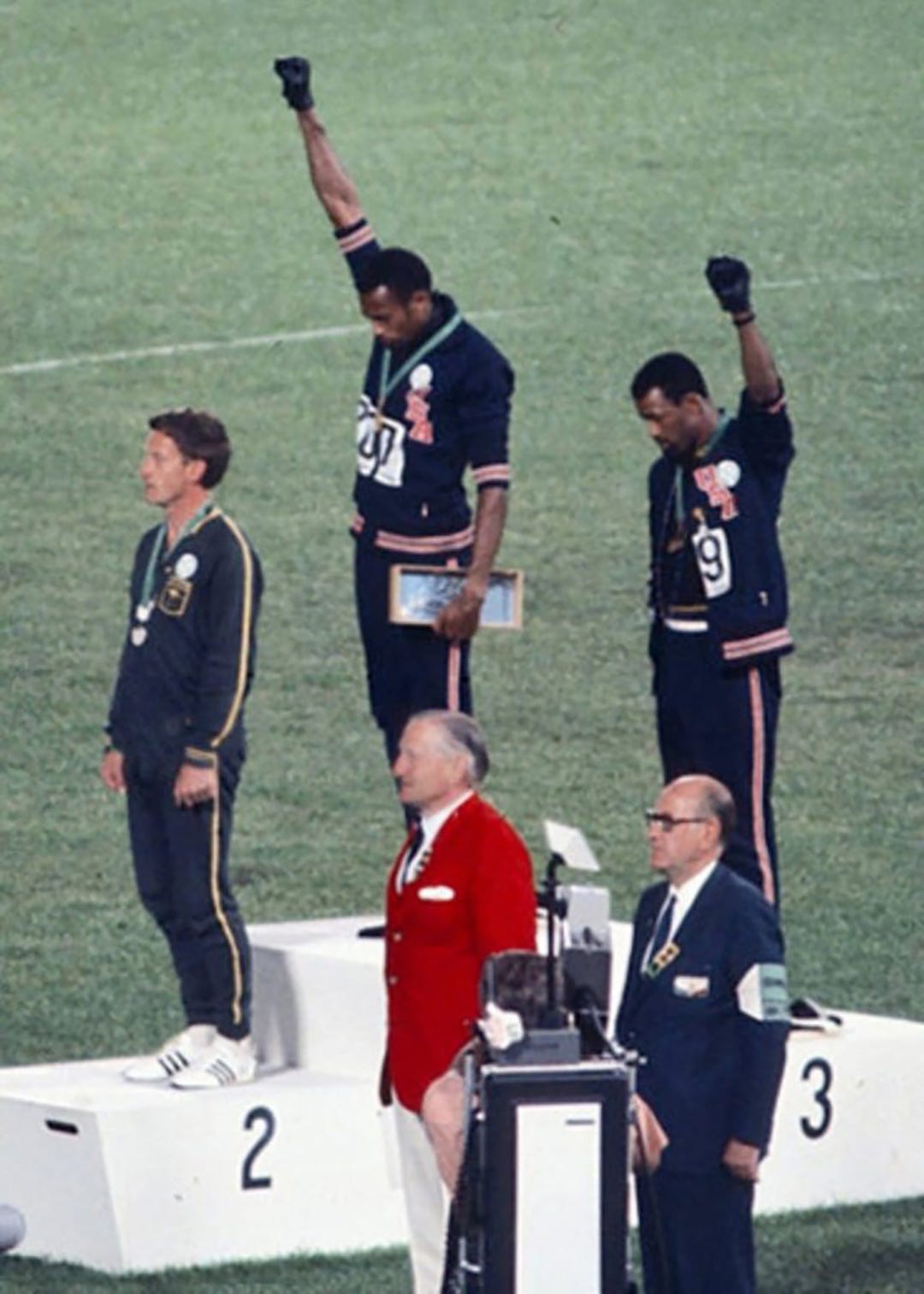
October 16, 1968 — Tommie Smith and John Carlos raise their fists on the Olympic podium in Mexico City.
Smith had won the 200 meters in a world-record 19.83 seconds, with Australia’s Peter Norman second and Carlos third. They came to the medal ceremony in black socks and no shoes, and Norman wore a human rights badge in support. Carlos had forgotten his black gloves, so Norman suggested they share Smith’s pair, which is why Smith raised his right fist and Carlos his left. John Dominis of Life was about 20 feet away, roughly two car lengths, and made the best-known picture. “I didn’t think it was a big news event,” he told Smithsonian in 2008. “I hardly noticed what was happening when I was shooting.” The New York Times reported that the gesture “actually passed without much general notice in the packed Olympic Stadium.” Smith later put it this way: “We had to be seen because we couldn’t be heard.”

THE INTERNATIONAL REVIEW OF PHOTOGRAPHY
To advertise an exhibition, book, fair, or open call to photography collectors, curators, and gallerists worldwide, email internationalphotographynews@gmail.com